穿戴式AI

Search documents
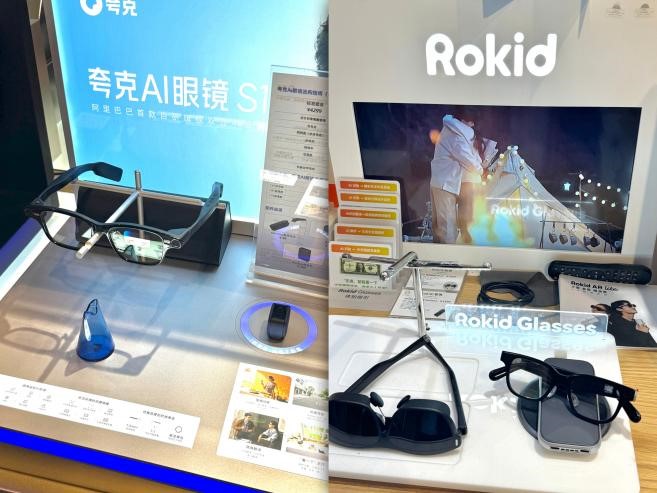
AI眼镜卖爆,产能跟不上了
3 6 Ke· 2025-12-15 07:03
Core Insights - AI glasses are transitioning from niche products to mainstream consumer items, with multiple domestic manufacturers launching new models this year and Google entering the market recently [1][11] - There is a significant supply chain bottleneck affecting popular models, with long wait times for new orders, indicating high demand [1][3][4] - The market for AI glasses is still in the early stages of consumer education, leading to high foot traffic in stores but low conversion rates for purchases [1][5][8] Company Summaries - Quark AI glasses launched two series, S1 and G1, with prices starting at 3,799 yuan and 1,899 yuan respectively, but are facing supply shortages with delivery times extending to 45 days [2][3] - Rokid has also experienced production challenges, with a goal to sell over 1 million units next year, supported by a recent increase in active users [3][4] - Both Quark and Rokid are working to enhance production capacity, with Quark adding a new assembly line and Rokid collaborating with Lens Technology to overcome production bottlenecks [4][12] Market Dynamics - The primary buyers of AI glasses are enterprise users, with applications in professional settings such as presentations and translation, while general consumers show interest mainly out of curiosity [6][8] - Despite similar functionalities, Quark and Rokid glasses have different pricing strategies and customization options for prescription lenses, affecting consumer choices [9][10] - Google’s entry into the AI glasses market, along with partnerships with major tech companies, highlights the growing potential of the industry and the diverse approaches being taken by different brands [11][13] Technical Challenges - The AI glasses industry faces significant technical hurdles, particularly in balancing battery life and performance, as well as the need for more compelling applications to drive consumer adoption [14]

AI眼镜缺货凸显产能瓶颈 产业链上市公司迎发展机遇
Xin Lang Cai Jing· 2025-12-15 03:33
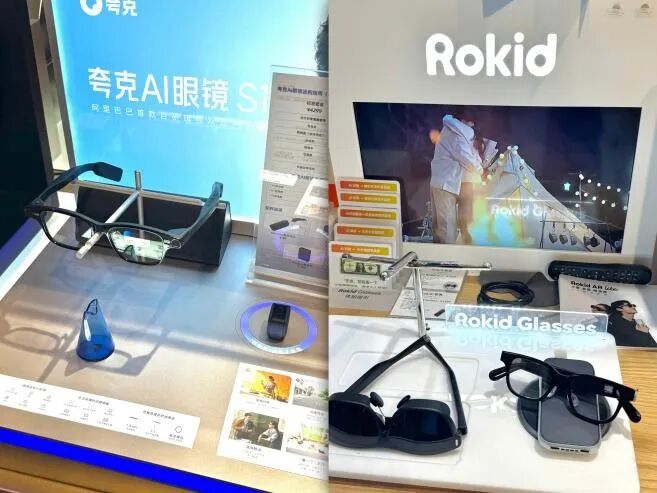
Core Insights - The AI glasses market is transitioning from niche products to mainstream consumer adoption, with multiple domestic manufacturers launching new models this year and Google entering the market recently [1][12]. Production Capacity Challenges - Quark AI glasses and Rokid are facing production bottlenecks, with Quark's new orders requiring a wait of at least 15 days, and Rokid's supply chain operating in three shifts to meet demand [1][3]. - Quark has added a new production line to increase capacity, aiming to fully release production by January to capitalize on the upcoming consumer demand during the Spring Festival [4][12]. - Rokid's active user base has surpassed 100,000, with a sales target of over 1 million units for next year, supported by improvements in production capacity for optical waveguide lenses [3][4]. Market Dynamics and Consumer Behavior - The current market for AI glasses is characterized by high product homogeneity, with various brands offering similar functionalities, yet the overall market is still in the early stages of consumer education [1][5]. - Sales are primarily driven by enterprise users, with individual consumers showing limited purchasing intent despite high foot traffic in physical stores [6][8]. - The conversion rate from trial to purchase remains low, with sales personnel noting that many customers are curious but not ready to buy [8]. Competitive Landscape - Google has announced two new AI glasses products, indicating a significant entry into the market, which could enhance the industry's growth potential [12]. - Different brands are exploring various technological paths, with some focusing on AR optical displays while others emphasize voice and audio interaction, reflecting a diverse approach to wearable AI technology [12][13]. Technical Challenges - The AI glasses industry faces several technical hurdles, including balancing battery life and performance, as well as the need for more diverse applications and ecosystems [13]. - Current products struggle with short battery life and heavy designs due to the high computational demands of AR displays, while audio devices are still defining their unique value propositions [13].