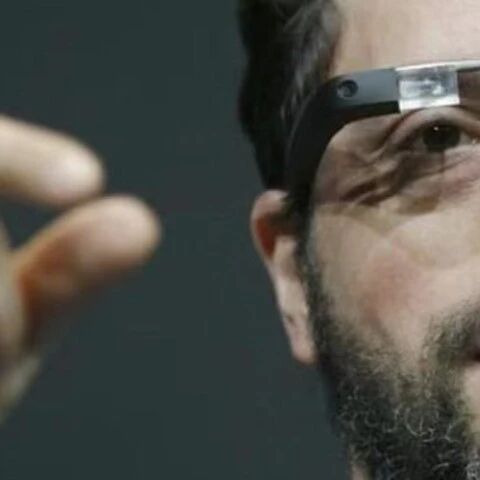
谷歌AI眼镜

Search documents
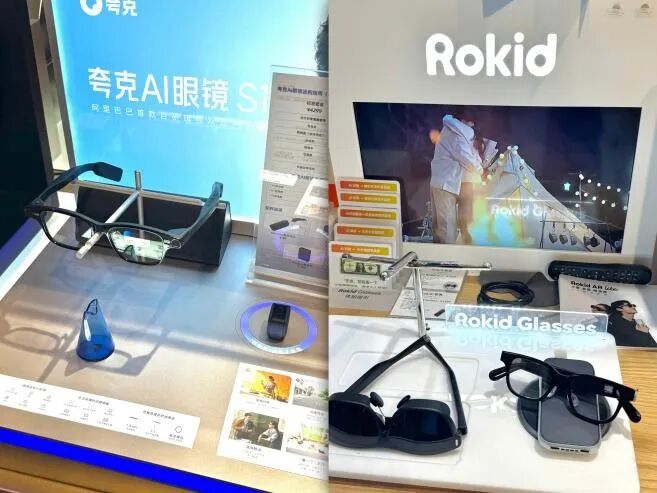
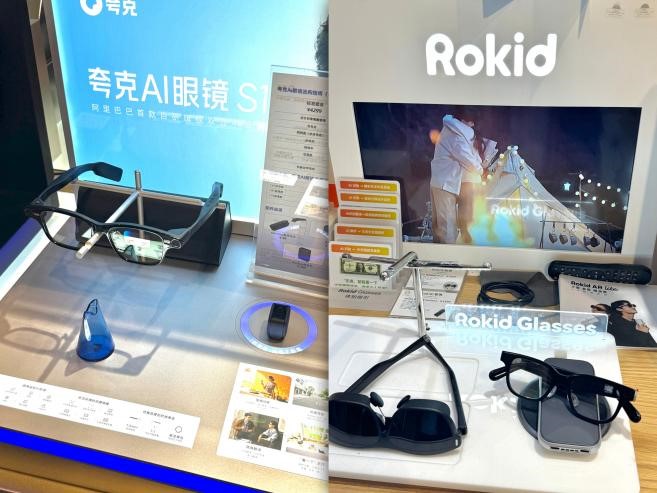
AI眼镜卖爆,产能跟不上了
3 6 Ke· 2025-12-15 07:03
Core Insights - AI glasses are transitioning from niche products to mainstream consumer items, with multiple domestic manufacturers launching new models this year and Google entering the market recently [1][11] - There is a significant supply chain bottleneck affecting popular models, with long wait times for new orders, indicating high demand [1][3][4] - The market for AI glasses is still in the early stages of consumer education, leading to high foot traffic in stores but low conversion rates for purchases [1][5][8] Company Summaries - Quark AI glasses launched two series, S1 and G1, with prices starting at 3,799 yuan and 1,899 yuan respectively, but are facing supply shortages with delivery times extending to 45 days [2][3] - Rokid has also experienced production challenges, with a goal to sell over 1 million units next year, supported by a recent increase in active users [3][4] - Both Quark and Rokid are working to enhance production capacity, with Quark adding a new assembly line and Rokid collaborating with Lens Technology to overcome production bottlenecks [4][12] Market Dynamics - The primary buyers of AI glasses are enterprise users, with applications in professional settings such as presentations and translation, while general consumers show interest mainly out of curiosity [6][8] - Despite similar functionalities, Quark and Rokid glasses have different pricing strategies and customization options for prescription lenses, affecting consumer choices [9][10] - Google’s entry into the AI glasses market, along with partnerships with major tech companies, highlights the growing potential of the industry and the diverse approaches being taken by different brands [11][13] Technical Challenges - The AI glasses industry faces significant technical hurdles, particularly in balancing battery life and performance, as well as the need for more compelling applications to drive consumer adoption [14]

AI眼镜缺货凸显产能瓶颈 产业链上市公司迎发展机遇
Xin Lang Cai Jing· 2025-12-15 03:33
Core Insights - The AI glasses market is transitioning from niche products to mainstream consumer adoption, with multiple domestic manufacturers launching new models this year and Google entering the market recently [1][12]. Production Capacity Challenges - Quark AI glasses and Rokid are facing production bottlenecks, with Quark's new orders requiring a wait of at least 15 days, and Rokid's supply chain operating in three shifts to meet demand [1][3]. - Quark has added a new production line to increase capacity, aiming to fully release production by January to capitalize on the upcoming consumer demand during the Spring Festival [4][12]. - Rokid's active user base has surpassed 100,000, with a sales target of over 1 million units for next year, supported by improvements in production capacity for optical waveguide lenses [3][4]. Market Dynamics and Consumer Behavior - The current market for AI glasses is characterized by high product homogeneity, with various brands offering similar functionalities, yet the overall market is still in the early stages of consumer education [1][5]. - Sales are primarily driven by enterprise users, with individual consumers showing limited purchasing intent despite high foot traffic in physical stores [6][8]. - The conversion rate from trial to purchase remains low, with sales personnel noting that many customers are curious but not ready to buy [8]. Competitive Landscape - Google has announced two new AI glasses products, indicating a significant entry into the market, which could enhance the industry's growth potential [12]. - Different brands are exploring various technological paths, with some focusing on AR optical displays while others emphasize voice and audio interaction, reflecting a diverse approach to wearable AI technology [12][13]. Technical Challenges - The AI glasses industry faces several technical hurdles, including balancing battery life and performance, as well as the need for more diverse applications and ecosystems [13]. - Current products struggle with short battery life and heavy designs due to the high computational demands of AR displays, while audio devices are still defining their unique value propositions [13].
奥比中光:公司未向谷歌AI眼镜供应摄像头
Zheng Quan Ri Bao Wang· 2025-12-12 13:45
Group 1 - The core point of the article is that the company, Orbbec, has not supplied cameras for Google's AI glasses as of the date of the statement [1]


明年上市 谷歌重返智能眼镜赛道
Bei Jing Shang Bao· 2025-12-10 15:25
Core Insights - Google is set to release AI-powered smart glasses in 2026, marking its return to the smart glasses market after previous failures [1] - The company will launch two models of AI glasses, one with no screen and another with internal display capabilities for navigation and voice translation [1] - Google emphasizes the development of an open and unified XR platform, integrating AI into real-world environments [2] Product Developments - The AI glasses will feature Google's Gemini large model and will be designed in collaboration with hardware manufacturers like Samsung and Warby Parker [1] - Project Aura, a wired XR glasses collaboration with XREAL, is expected to launch in 2026, showcasing advanced optical and AI integration [2] - The Aura glasses will support gesture interaction and provide a perspective effect, allowing users to see their surroundings while using the device [2] Market Competition - The competition in the AI and XR glasses market is intensifying, with Meta being a prominent player through its Ray-Ban and Oakley brands [2] - Meta has recently launched its first consumer-grade smart glasses, Meta Ray-Ban Display, priced at $799 [3] - Other companies, including Snap and Apple, are also planning to enter the AR glasses market, indicating a growing interest in this technology [4] Market Projections - Global shipments of AI glasses are projected to reach approximately 1.52 million units in 2024, a 533% increase year-over-year, with expectations to hit 35 million units by 2028 [4] - The compound annual growth rate (CAGR) for AI glasses from 2024 to 2028 is estimated at 119% [4]
谷歌将于2026年推出首款AI眼镜,与Meta展开正面竞争
Huan Qiu Wang Zi Xun· 2025-12-09 03:55
Core Insights - Google plans to launch its first AI glasses in 2026, intensifying competition with Meta in the wearable AI device market [1][3] Group 1: Product Development - Google will release two types of AI glasses: an initial version focusing on audio interaction with its Gemini AI assistant, and a more advanced model featuring a display for navigation and real-time translation [3] - The AI glasses will be built on Google's Android XR operating system designed for head-mounted devices [3] Group 2: Strategic Partnerships - Google has partnered with Warby Parker to co-develop the first AI glasses, expected to be launched in 2026 [3] - Collaborations with Samsung for hardware design and a $150 million investment in fashion eyewear brand Gentle Monster further strengthen Google's position in the smart wearable ecosystem [3] Group 3: Market Context - This initiative is a direct response to Meta's rapid expansion in the AI glasses sector, which has seen success with its AI glasses developed in collaboration with Ray-Ban and EssilorLuxottica [3] - Meta's recent product release in September includes a new generation of AI glasses with display capabilities for message previews, photo viewing, and real-time subtitles [3] Group 4: Lessons Learned - Google co-founder Sergey Brin noted that the company has learned from past failures in smart glasses, emphasizing the importance of mature AI technology and efficient supply chain integration [4] - The new generation of AI glasses is expected to provide practical value without distracting users [4] Group 5: Software Updates - Google announced several software updates for the Galaxy XR head-mounted device, including features for connecting to Windows PCs and a "travel mode" for use in airplanes and cars [4]

谷歌首款搭载Gemini的AI眼镜将于2026年推出
Zheng Quan Shi Bao Wang· 2025-12-09 00:50
Core Viewpoint - Google is developing two types of AI glasses, one with a display and another focused on audio functionality, with the first model expected to launch in 2026 [1] Group 1: Product Development - The first AI glasses will be co-developed with partners including Samsung Electronics, Warby Parker, and Gentle Monster, although final design proposals have not yet been revealed [1] - Google is collaborating with Chinese AR company Xreal on an independent glasses project called "Project Aura," which will operate on the same Android XR system and will not require a smartphone, but will need an external battery [1] Group 2: Software Upgrades - Google announced several software upgrades for the Samsung Galaxy XR headset, including a "travel mode" that allows the mixed reality device to function properly in mobile environments such as cars or airplanes [1]
超1亿港元!雷军增持小米股票;特斯拉在印度两个多月仅卖出100多辆丨Going Global
创业邦· 2025-11-30 10:48
Key Points - TikTok Shop has announced a new policy requiring all orders shipped via USPS to use official TikTok Shipping labels starting January 2026, enhancing logistics management and compliance [5] - Beyond Meat has closed its Tmall flagship store, indicating a retreat from the Chinese market after struggling with declining revenues and significant losses, with the latest stock price at $1.02 [7][10] - Xiaomi's CEO Lei Jun has increased his stake in the company by purchasing over 2.6 million shares for more than HKD 100 million, raising his ownership to 23.26% [11][12] - Shenzhen is set to establish the world's largest 3D printing factory, with plans to deploy 15,000 3D printers by Q1 2026, reflecting the growing demand in the 3D printing market [13][15] - ByteDance is in discussions to sell its gaming subsidiary, Moonton Technology, to Saudi Arabia's Savvy Games Group, following challenges in expanding its gaming portfolio [16][17][18] - Tencent has launched the international version of its Mix Yuan 3D creative engine, allowing global users to create high-quality 3D works easily [19][21] - Tesla's performance in India has been disappointing, with only over 100 cars sold since its entry in July 2023, attributed to high pricing compared to local competitors [23][24][25] - SoftBank has completed the acquisition of Ampere, a U.S. chip design company, for $6.5 billion, as part of its strategy to strengthen AI infrastructure [26] - AMD's CEO Lisa Su expressed confidence in the AI market's growth, predicting a $1 trillion market by 2030, and emphasized the importance of investment in AI infrastructure [27][28] - Google is reviving its AI glasses project, with plans for a potential release in Q4 2026, showcasing its ongoing commitment to innovation in wearable technology [29][30][32]

AI周报 | DeepSeek开源奥数金牌水平模型;前OpenAI 联创称规模扩展时代已终结
Di Yi Cai Jing· 2025-11-30 00:48
Group 1: DeepSeek's New Model - DeepSeek has open-sourced a new model, DeepSeek-Math-V2, which is the first open-source model to reach IMO gold medal level in mathematics [1] - The performance of Math-V2 surpasses that of Google's Gemini DeepThink in certain aspects, as demonstrated in the IMO-ProofBench benchmark and recent math competitions [1] Group 2: AI Scaling Era Conclusion - Ilya Sutskever, CEO of Safe Superintelligence, claims that the era of AI scaling has ended, indicating a shift back to research paradigms rather than mere expansion [2] - He emphasizes that the current computational power cannot continuously yield better scaling, blurring the line between scaling and waste [2] Group 3: Baidu's AI Department Restructuring - Baidu has established two new AI departments: the Basic Model R&D Department and the Application Model R&D Department, both reporting directly to CEO Li Yanhong [3] - The restructuring reflects Baidu's commitment to enhancing its R&D capabilities in large models, with leadership from internally cultivated talents [3] Group 4: Nvidia's Response to Short Selling - Nvidia responded to Michael Burry's claims about the minimal real demand for AI products, clarifying that its strategic investments represent a small portion of its revenue [4] - Following a significant drop in Nvidia's stock price, the company aims to prove the sustained strength of AI demand [4] Group 5: Google's AI Glasses Project - Google is accelerating its new AI glasses project, with hardware manufacturing by Foxconn and chip supply from Qualcomm, expected to enter small-scale production [6] - The project is independent of the previously announced AR glasses and is led by a key figure from Google Labs [6] Group 6: HSBC's Warning on OpenAI's Profitability - HSBC forecasts that OpenAI will face severe financial pressure over the next decade, predicting it will struggle to achieve profitability even with a projected revenue of $213 billion by 2030 [7] - The analysis highlights the significant cash flow deficit OpenAI may encounter, amounting to $207 billion [7] Group 7: Industrial Fulian's Performance Clarification - Industrial Fulian clarified rumors regarding a downward adjustment of its Q4 performance targets, stating that operations are proceeding as planned [8] - The company's stock experienced fluctuations, reflecting market concerns about its relationship with Nvidia [8] Group 8: Denial of Google Order by Tianfu Communication - Tianfu Communication denied rumors of securing a $3 billion order from Google, amidst speculation about its role as a supplier [9] - The stock prices of related companies fluctuated based on market interest in optical module stocks [9] Group 9: Meta's Interest in Google's TPU - Meta is reportedly considering a multi-billion dollar purchase of Google's TPU for its data center development, which could mark the first external sale of Google's TPU [10] - This potential shift could impact Nvidia, as Meta is currently its largest GPU customer [10] Group 10: AI's Water Consumption - A Morgan Stanley report highlights that AI not only consumes significant electricity but also requires substantial water resources for data center operations [11] - The report points out the challenges of water resource allocation for AI data centers, particularly in regions facing water supply issues [12]



理想将发布智能眼镜,不会造手机;阿里CEO吴泳铭:至少三年内,AI泡沫是不太存在的;黄仁勋内部讲话泄露|一周AI要闻汇总
36氪· 2025-11-29 09:08
Core Insights - DeepSeek has launched the DeepSeekMath-V2 model, which utilizes a self-verifying training framework and has achieved gold medal levels in international mathematics competitions [2] - Microsoft has introduced the Xbox Gaming Copilot feature on mobile devices, transforming them into AI gaming assistants [3] - Quark AI glasses have been released in two series, featuring six models equipped with Alibaba's latest AI assistant [3] - OpenAI has introduced a shopping research tool aimed at providing personalized shopping suggestions during the holiday season [4] - Nvidia's CEO Jensen Huang has emphasized the importance of AI in the company, stating that all tasks that can be automated should be done using AI [5] Group 1: AI Model Developments - DeepSeekMath-V2 model has been built on the DeepSeek-V3.2-Exp-Base and has shown significant performance improvements through high-difficulty sample optimization [2] - Anthropic has released Claude Opus 4.5, a model that excels in coding and long task processing, surpassing human performance in software engineering tests [3] Group 2: AI Applications and Innovations - The AI writing feature by NetEase Cloud Music is currently in testing, targeting musicians and select users [3] - Google is reviving its AI glasses project, with production expected to begin in late 2026, in collaboration with Foxconn and Samsung [4] - Baidu has established two new research departments focused on developing general and application-specific AI models [6] Group 3: Industry Collaborations and Investments - SK Telecom and Samsung are collaborating to develop AI-driven wireless access network technology for the next generation of 6G [6] - Google and Accel are partnering to fund early-stage AI startups in India, with a focus on various sectors [7] - "Songyan Power" has completed nearly 200 million yuan in Pre-B+ round financing to enhance technology innovation and expand application scenarios [8] Group 4: Market Trends and Projections - HSBC has projected that OpenAI may require up to $207 billion in new financing by 2030 due to increased cloud computing needs [8] - OpenAI anticipates that by 2030, it will have 220 million paid subscribers for ChatGPT, representing 8.5% of its weekly active users [11][12] - Xiaomi's CEO Lei Jun predicts that humanoid robots will significantly enter manufacturing processes in the next five years, enhancing efficiency and precision [10]



谷歌重启AI眼镜:富士康代工,三星设计,或2026Q4发布丨36氪独家
36氪· 2025-11-28 11:13
Core Insights - Google has initiated two AI glasses projects, currently in the POC (Proof of Concept) stage, with potential release as early as Q4 2026 [6][10] - The AI glasses will likely feature a waveguide optical solution and a camera, with hardware manufacturing by Foxconn and chip supply from Qualcomm [6][7] - Google aims to leverage its advanced Gemini AI model, which integrates natural language understanding and multimodal reasoning, as a core competitive advantage for its AI glasses [11][12] Group 1: Project Development - Google is working on two parallel AI glasses projects, distinct from the previously announced Project Aura, which was developed in collaboration with Chinese AR brand Xreal [6][10] - The AI glasses project is led by Michael Klug, a key figure from Google Labs and a former member of Magic Leap, indicating a strong expertise in the field [7][10] Group 2: Market Positioning - Google has a historical presence in the smart glasses industry, having launched Google Glass in 2012, which faced challenges due to privacy concerns [8][10] - After a cautious approach post-2015, Google shifted its focus from consumer-grade products to B2B applications in logistics, medical training, and remote device maintenance [10][12] - Despite trailing behind competitors like Meta's Ray-Ban, Google is strategically enhancing its infrastructure and ecosystem for AI glasses, including partnerships with Samsung and Qualcomm for an XR-specific operating system [10][12] Group 3: Competitive Landscape - The entry of Google into the AI glasses market introduces a formidable competitor, equipped with a comprehensive ecosystem that includes content, operating systems, and advanced AI capabilities [12][13] - Google's extensive experience in the eyewear industry positions it uniquely against other players in the AI glasses space, making it a well-rounded contender [12][13]