穿透式核查

Search documents
安徽证监局再亮剑:从富煌钢构并购案看监管的全链条追责
Xin Lang Cai Jing· 2026-02-13 01:30
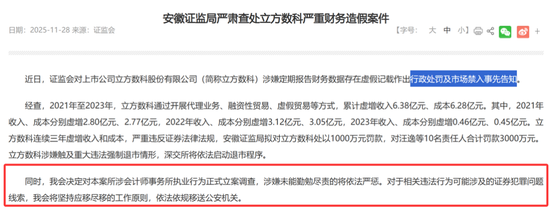
Core Viewpoint - The Anhui Securities Regulatory Bureau has imposed severe penalties on multiple parties involved in the fraudulent financial practices related to the acquisition of Zhongke Shijie by Fuhuang Steel Structure, marking a significant shift towards comprehensive accountability in the capital market [1][4][14]. Group 1: Case Overview - Fuhuang Steel Structure announced plans to acquire 100% of Zhongke Shijie for a total consideration of 1.14 billion yuan in December 2024 [3][18]. - The acquisition was approved by the board in May 2025 but was abruptly terminated in June 2025 due to allegations of information disclosure violations [3][19]. - The Anhui Securities Regulatory Bureau revealed serious violations in the disclosure documents, including financial data fraud, concealment of related party transactions, and unclear ownership of shares [4][20]. Group 2: Administrative Penalties - The Anhui Securities Regulatory Bureau issued a total of 31.8 million yuan in fines against Fuhuang Steel Structure, Zhongke Shijie, and seven responsible individuals in November 2025 [6][21]. - A second wave of penalties on December 5, 2025, targeted four intermediary institutions, imposing a total fine of 8 million yuan, highlighting a rigorous enforcement approach [1][6][12]. Group 3: Intermediary Institutions' Failures - Tianjian Accounting Firm failed to identify significant issues during the audit of Zhongke Shijie's financial statements, leading to a fine of 2.5 million yuan [8][26]. - Jinzheng (Shanghai) Asset Appraisal Co. lacked sufficient supporting materials for its valuation and was fined 2.5 million yuan for its role in the acquisition [10][11][27]. - Huatai United Securities and Guoyuan Securities, as independent financial advisors, did not exercise adequate professional caution, resulting in warnings and penalties [12][28]. Group 4: Major Violations - Zhongke Shijie inflated its revenue by approximately 25.19 million yuan, accounting for 11.36% of its total revenue for 2024, leading to a profit inflation of 898.03 million yuan, which constituted 62.82% of its total profit [13][30]. - The company concealed related party transactions totaling about 19.35 million yuan, which were not disclosed in the acquisition documents [13][30]. - Ownership issues were identified, with undisclosed shareholding arrangements affecting the clarity of asset ownership [13][30]. Group 5: Regulatory Implications - The case reflects a shift in regulatory focus from punishing individual companies to addressing the entire market chain, emphasizing the importance of accountability among all parties involved [15][31]. - The role of intermediary institutions as gatekeepers has been significantly reinforced, indicating that they must diligently prevent and detect fraudulent activities [15][31].


创业板公司哪里如我?北交所请给我道歉!98%持股实控人背着处分力推觅睿科技上市
Sou Hu Cai Jing· 2025-12-03 18:12
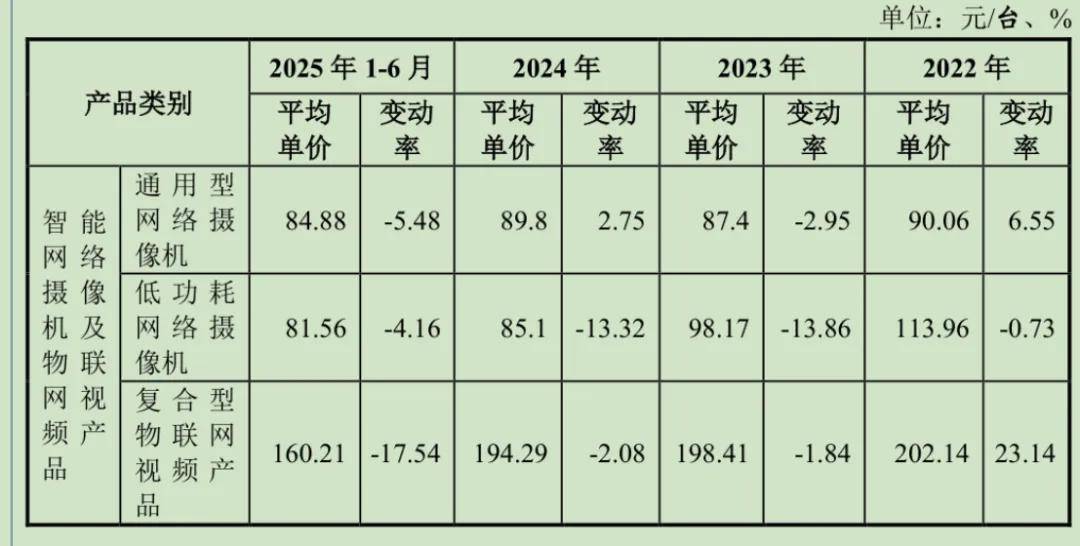
Core Viewpoint - Hangzhou Mirui Technology Co., Ltd. (referred to as "Mirui Technology") is set to go public on the Beijing Stock Exchange, marking a shift from the medical device sector to a focus on smart network cameras and IoT video products, integrating hardware, software, cloud services, and AI [1] Financial Performance - Mirui Technology's revenue for the past three years was 549 million yuan, 673 million yuan, and 743 million yuan, with net profits of 39.15 million yuan, 71.58 million yuan, and 81.66 million yuan respectively [2] - For the first half of 2025, the company reported a revenue of 356 million yuan and a net profit of 32 million yuan [6] Product Pricing - The average price of smart network cameras has shown a decline, with a price of 84.88 yuan in the first half of 2025, down from 89.8 yuan in 2024, indicating a decrease of 5.48% [2] Competitive Landscape - Compared to peers, Mirui Technology's gross profit margin remains competitive, although it has slightly decreased in 2025 compared to previous years [6][8] - The company has a lower bad debt provision ratio compared to smaller companies on the ChiNext board, indicating better financial stability [8] Management and Ownership - The actual controller of Mirui Technology, Yuan Haizhong, holds a direct stake of 65.66% and an indirect stake of 32.34%, totaling 98% control over the company [11] - Yuan has a history of involvement in other companies, including a previous attempt to list another company, Boling Electric, which faced regulatory issues [13][16] Regulatory Scrutiny - Mirui Technology has faced multiple rounds of inquiries from the Beijing Stock Exchange, focusing on revenue verification and compliance, reflecting heightened regulatory scrutiny in the IPO process [9][10]

【解析】高额银行存款之下的IPO融资需求为哪般
Sou Hu Cai Jing· 2025-08-27 00:35
Core Viewpoint - The article discusses the reasons behind companies with high bank deposits still seeking IPO financing, exploring potential motivations and implications for investors and regulators [1]. Group 1: Mismatched Funding Cycles - High bank deposit balances alongside significant financing do not necessarily indicate financial fraud, as financial statements reflect a specific point in time and have static limitations [2]. - Companies often experience long payment cycles due to industry practices, which can lead to cash flow pressures despite high bank deposits [2][3]. Group 2: Regulatory Scrutiny of Large Dividends - Some companies with substantial bank deposits engage in "clearing-style dividends" before IPOs, creating significant funding gaps in their financial statements [4]. - New regulations set to be implemented in 2024 will scrutinize dividend practices, particularly those where dividends exceed 80% of net profits or where a significant portion of raised funds is used for working capital or loan repayment [4]. Group 3: In-Depth Verification of Bank Deposits - High bank deposit balances may not reflect available funds for operations, as they could be tied up in guarantees or regulatory requirements, or used to mask financial irregularities [5]. - Auditing methods for bank deposits need to be thorough and consider underlying risks, rather than relying solely on standard verification procedures [5]. Group 4: Financing Needs and Market Dynamics - Each company with high deposits has unique financing needs, and establishing a reasonable financing scale is crucial for aligning the interests of capital markets and IPO companies [5].