第一方数据回收

Search documents
2026年零售媒体“十大营销”趋势
3 6 Ke· 2026-01-21 02:52
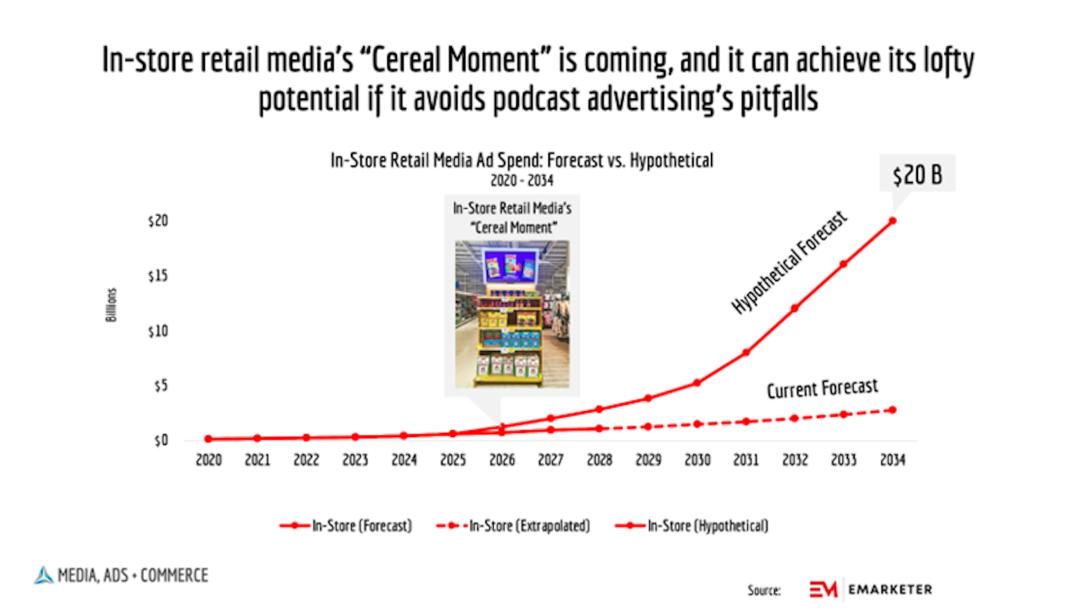
Core Insights - The rapid growth phase of retail media is coming to an end, with 2026 marking a critical turning point in digital advertising, distinguishing true market competitors from mere followers [1] Group 1: In-Store Retail Media - In-store advertising networks are becoming a battleground for top fast-moving consumer goods retailers, with major players like Kroger and Albertsons planning to roll out smart advertising screens by 2026 [1] - The U.S. market for in-store advertising networks is expected to transition from concept to reality by the end of 2026, evolving into a critical component of national advertising budgets [1] Group 2: Performance-Based TV Advertising - Performance-based TV advertising is reaching a growth inflection point, but faces challenges due to a reliance on short-term metrics like Return on Advertising Spend (ROAS) [4][7] - Amazon now controls at least 50% of the ad-supported connected TV advertising resources, indicating the arrival of closed-loop TV advertising [4] Group 3: Marketing Mix Modeling (MMM) - Marketing Mix Modeling is being scrutinized for underestimating the value of retail media, as it relies on historical data and is less effective in the fragmented digital media landscape [8][11] - Retail media networks are often undervalued in MMM assessments, leading to budget allocations favoring traditional channels despite their declining effectiveness [8] Group 4: Third-Party Market (3P Market) - The 3P market is identified as a core growth engine for retail media, with 85% of the U.S. retail media market share held by Amazon and Walmart [11] - Major retailers like Best Buy and Ulta Beauty are launching their own 3P markets to diversify revenue and enhance platform offerings [12] Group 5: Influencer Marketing - Influencer marketing is becoming a key strategy for brands to break through traditional advertising challenges, with Unilever increasing its social media marketing budget allocation to 50% [16] - Retail media networks can validate influencer marketing ROI and leverage first-party data for better influencer-brand matching [16][19] Group 6: Smart Agent Commerce - Smart agent commerce, where AI assists in shopping, is not expected to significantly disrupt e-commerce traffic, as it will create new shopping demands rather than diminish existing ones [22] Group 7: Digital Shelf Advertising - Digital shelf advertising is gaining popularity among brands as it captures user attention without requiring clicks, thus enhancing brand recognition and driving incremental sales [22] Group 8: Social Video Advertising - Brands are shifting budgets from low-precision display ads to social video advertising, which shortens the conversion path by allowing users to purchase directly from engaging video content [26][27] Group 9: Experiential Retail Media - The focus is shifting from short-term ROAS to enhancing customer lifetime value through experiential marketing, as seen in initiatives by Sam's Club [29] Group 10: Emerging Brands - New brands are expected to gain market share during economic downturns by leveraging retail media advantages, including agility in adopting new advertising channels [32] Group 11: First-Party Data Recovery - Retailers are expected to reclaim first-party data from media partners to maintain their competitive edge in advertising precision and effectiveness [35]