策略网络

Search documents
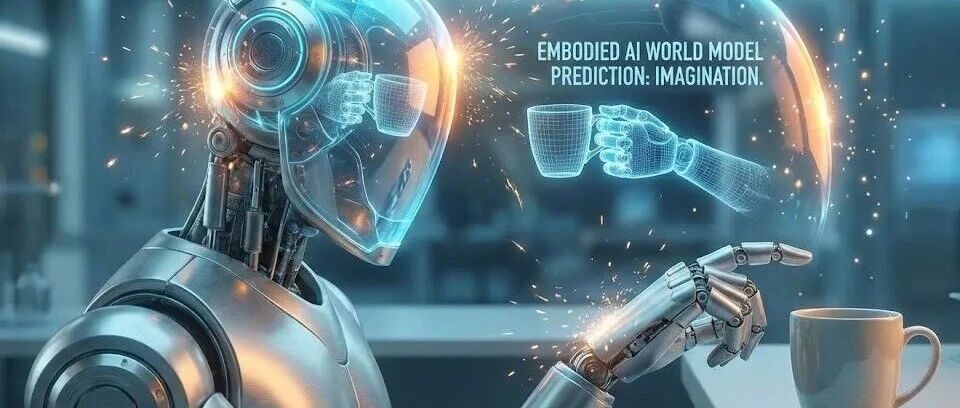
智能体如何学会「想象」?深度解析世界模型嵌入具身系统的三大技术范式
机器之心· 2025-12-22 04:23
Core Insights - The article discusses the integration of world models into embodied intelligent systems, emphasizing the shift from reactive loops to predictive capabilities [2][10] - It highlights the importance of world models in enhancing sample efficiency, long-term reasoning, safety, and proactive planning in embodied agents [11][12] Summary by Sections Introduction to World Models - Embodied intelligent systems traditionally relied on a "perception-action" loop, lacking the ability to predict future states [2] - The introduction of world models allows agents to "imagine" future scenarios, enhancing their operational capabilities [10] Research Overview - A comprehensive survey from a research team involving multiple universities presents a framework for integrating world models into embodied systems [5][7] - The paper categorizes existing research into three paradigms based on architectural integration [5][14] Paradigm Classification - The relationship between world models (WM) and policy models (PM) is described as a "coupling strength spectrum," ranging from weak to strong dependencies [15] - Three categories are identified: Modular, Sequential, and Unified architectures, each with distinct characteristics [15][16] Modular Architecture - In this architecture, WM and PM operate as independent modules with weak coupling, focusing on causal relationships between actions and states [20] - The world model acts as an internal simulator, allowing agents to predict outcomes based on potential actions [20] Sequential Architecture - This architecture involves a two-stage process where WM predicts future states, and PM executes actions based on those predictions [21] - The world model generates a valuable goal, simplifying complex long-term tasks into manageable sub-problems [22][23] Unified Architecture - The unified architecture integrates WM and PM into a single end-to-end network, allowing for joint training and optimization [24][25] - This configuration enables the agent to anticipate future states and produce appropriate actions without explicitly separating simulation and decision-making [25] Future Directions - The article outlines potential research directions, including the representation space of world models, structured intent generation, and the balance between interpretability and optimality [27][28][29] - It emphasizes the need for effective alignment mechanisms to ensure performance while exploring unified world-policy model paradigms [29]