模块化架构

Search documents
LeCun团队新论文:模仿人类智能搞AI,照猫画虎死胡同
量子位· 2026-03-09 10:05
Core Viewpoint - The pursuit of Artificial General Intelligence (AGI) may have been misguided from the start, with a new focus proposed on Superhuman Adaptable Intelligence (SAI) instead of merely mimicking human intelligence [1][2]. Group 1: Key Changes in AI Development Goals - The development goals of AI are shifting towards three key changes, emphasizing the speed of adapting to new tasks rather than achieving human-like intelligence [3][5]. - SAI aims to surpass human capabilities in tasks humans can perform and tackle areas previously unexplored by humans [5][6]. - The focus is moving from the number of skills an AI can perform to the speed at which it can learn new skills [6][12]. Group 2: Critique of Human-Centric AI Development - The traditional approach of using humans as a benchmark for intelligence is seen as problematic, as it may limit AI's potential [10][11]. - The paper argues that if the goal is merely to reach human-level performance, it could hinder AI's development [11][16]. - The authors suggest that optimizing for the speed of adapting to new tasks is more beneficial than simply imitating human capabilities [12][13]. Group 3: Understanding Human Intelligence Limitations - Human intelligence is not as "general" as often perceived; it is primarily a survival tool shaped by evolution [18][20]. - Many abilities considered "general" are actually the result of evolutionary adaptations, and humans perform poorly in tasks like complex calculations compared to computers [22][23]. - The concept of AGI may be an illusion, as it overlooks the biological limitations of human intelligence [25][30]. Group 4: Emphasis on Specialization - Specialization is presented as the norm for intelligence evolution, both in biology and AI systems [31][32]. - AI systems face pressure to optimize for specific tasks, as general models may not meet the demands of critical applications [34][40]. - The success of AI algorithms often comes from their alignment with the structure of the problems they are designed to solve [38][39]. Group 5: Proposed Technical Pathways for SAI - The authors propose three key technical pathways for achieving SAI: self-supervised learning, world models, and modular systems [43]. - Self-supervised learning allows AI to learn from real-world data without human labeling [44]. - World models enable AI to simulate environments and predict outcomes, facilitating task completion without explicit training [45][46]. - A modular architecture is favored over a single "one-size-fits-all" model, promoting collaboration among specialized systems [47][48].


深度解析世界模型嵌入具身系统的三大技术范式
具身智能之心· 2025-12-24 00:25
Core Insights - The article discusses the integration of world models into embodied intelligent systems, emphasizing the shift from reactive to predictive capabilities in these systems [1][3][8]. Summary by Sections Introduction to World Models - Embodied intelligent systems traditionally relied on a reactive loop of "perception-action" and lacked predictive capabilities. The introduction of world models allows these systems to "imagine" future scenarios [1][3]. Research Overview - A comprehensive survey from a research team including institutions like Tsinghua University and Harbin Institute of Technology categorizes existing research into three paradigms based on architectural integration [3][5]. Paradigm Classification - The relationship between world models (WM) and policy models (PM) is described as a "coupling strength spectrum," ranging from weak to strong dependencies [11]. - Three categories are identified: Modular, Sequential, and Unified architectures, each with distinct characteristics regarding gradient flow and information dependency [12]. Modular Architecture - In this architecture, WM and PM are independent, with no gradient flow between them. WM acts as a simulator, predicting future states based on current observations and candidate actions [16]. Sequential Architecture - This architecture involves two stages where WM predicts future states, and PM executes actions based on those predictions. It simplifies complex tasks into goal generation and goal-conditioned execution [17][18]. Unified Architecture - The unified architecture integrates WM and PM into a single end-to-end network, allowing for simultaneous training and optimization. This structure enables the system to predict future states and generate actions without explicitly separating simulation and decision-making [19][21]. Future Directions - The article outlines potential research directions, including the selection of representation spaces for world models, the generation of structured intentions, and the need for unified world-policy model paradigms to enhance decision-making efficiency [22][24].
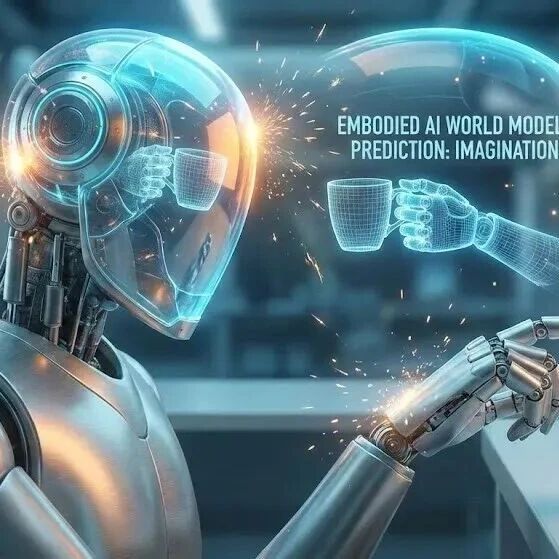
智能体如何学会「想象」?深度解析世界模型嵌入具身系统的三大技术范式
机器之心· 2025-12-22 04:23
Core Insights - The article discusses the integration of world models into embodied intelligent systems, emphasizing the shift from reactive loops to predictive capabilities [2][10] - It highlights the importance of world models in enhancing sample efficiency, long-term reasoning, safety, and proactive planning in embodied agents [11][12] Summary by Sections Introduction to World Models - Embodied intelligent systems traditionally relied on a "perception-action" loop, lacking the ability to predict future states [2] - The introduction of world models allows agents to "imagine" future scenarios, enhancing their operational capabilities [10] Research Overview - A comprehensive survey from a research team involving multiple universities presents a framework for integrating world models into embodied systems [5][7] - The paper categorizes existing research into three paradigms based on architectural integration [5][14] Paradigm Classification - The relationship between world models (WM) and policy models (PM) is described as a "coupling strength spectrum," ranging from weak to strong dependencies [15] - Three categories are identified: Modular, Sequential, and Unified architectures, each with distinct characteristics [15][16] Modular Architecture - In this architecture, WM and PM operate as independent modules with weak coupling, focusing on causal relationships between actions and states [20] - The world model acts as an internal simulator, allowing agents to predict outcomes based on potential actions [20] Sequential Architecture - This architecture involves a two-stage process where WM predicts future states, and PM executes actions based on those predictions [21] - The world model generates a valuable goal, simplifying complex long-term tasks into manageable sub-problems [22][23] Unified Architecture - The unified architecture integrates WM and PM into a single end-to-end network, allowing for joint training and optimization [24][25] - This configuration enables the agent to anticipate future states and produce appropriate actions without explicitly separating simulation and decision-making [25] Future Directions - The article outlines potential research directions, including the representation space of world models, structured intent generation, and the balance between interpretability and optimality [27][28][29] - It emphasizes the need for effective alignment mechanisms to ensure performance while exploring unified world-policy model paradigms [29]
大载重全地形机器人「觉物科技」完成超亿元融资,扎根新疆五年打磨出「变形金刚」 | 早起看早期
36氪· 2025-12-13 01:18
Core Viewpoint - The article highlights the rapid development of the global robotics industry over the past five years, focusing on the innovative modular and deformable robots designed for agricultural applications, particularly in harsh environments like Xinjiang, China [2][4]. Group 1: Company Overview - Juewu Technology, founded in 2020 in Shenzhen, has completed over 100 million RMB in Pre-A financing, led by Rihua Capital, to accelerate technology development and global expansion [2]. - The company has developed a modular deformable robot platform capable of carrying loads up to 3 tons, with features such as 27-degree continuous climbing and 8-hour battery life [5]. Group 2: Market Context - The global agricultural service market is projected to reach approximately $300 billion in 2024, with the crop protection segment accounting for about $70 billion [3]. - Traditional agricultural practices face challenges in efficiency and sustainability, necessitating innovative solutions [3]. Group 3: Product Features - The robots utilize a modular architecture that allows for quick reconfiguration, enabling the transformation between two forms: the "Hechu T3000" for large fields and the "Jilu G3000" for orchards [5]. - The "Hechu T3000" features a 20m spraying width and employs 18 cameras and 111 independent control nozzles for precise spraying, optimizing pesticide usage [6]. - The "Jilu G3000" is designed for orchards, capable of recognizing fruits and pests with dual cameras, and can adjust water usage based on the size of the trees and pest levels, improving pest control efficiency by 40% compared to manual methods [6]. Group 4: Commercialization and Expansion - Juewu Technology has received millions in orders from various provinces in China and is actively pursuing international markets, with interest from farmers in Australia and Canada [7]. - The company plans to launch the "Hechu T3000" and "Jilu G3000" globally by 2026 [8]. Group 5: Investor Insights - Rihua Capital emphasizes the urgency and feasibility of robotic solutions in agriculture, noting the reliability and economic viability of Juewu Technology's products in real-world applications [9]. - Investors see significant potential for the company's technology to address efficiency challenges in crop management and anticipate further product evolution [9].

上海中广云智投:模块化架构加速投资功能迭代速度
Sou Hu Cai Jing· 2025-12-01 02:40
Core Insights - The investment sector is undergoing a profound transformation driven by technological architecture innovations, moving away from traditional "monolithic" systems that face iterative challenges [1] - The rise of modular architecture introduces agility into investment systems, allowing for rapid response and dynamic optimization through the decoupling of functions and component reuse [1] Group 1: Modular Architecture Benefits - Modular architecture breaks down complex systems into independent functional units, enabling focused development on macroeconomic analysis, risk assessment models, and quantitative trading algorithms [1] - Investors can quickly adapt to changing market conditions by adjusting module combinations or upgrading specific functions without overhauling the entire system [1] - The ability to integrate international macroeconomic monitoring and currency risk hedging modules enhances cross-border investment capabilities efficiently [1] Group 2: Technological Support for Modular Architecture - Standardization and openness in technology are crucial for accelerating the iteration of modular architecture, ensuring seamless data access and interaction among modules [2] - Distributed computing and real-time processing technologies significantly enhance data exchange efficiency, supporting high-frequency trading scenarios [2] - The proliferation of open-source ecosystems lowers development barriers, allowing developers to quickly build and optimize new modules through community collaboration [2] Group 3: Industry Ecosystem Transformation - Modular architecture is reshaping the division of labor in the investment sector, allowing specialized institutions to focus on deep development of specific modules [3] - Investors can select module combinations to create personalized strategy factories, reducing technical barriers for smaller institutions and enhancing module quality through market competition [3] - The integration of artificial intelligence and blockchain technologies will further advance modular architecture towards intelligence and automation, providing a more reliable technical foundation for investment decisions [3]

产业链巨变,自动驾驶赛道迎来大逃杀时刻
3 6 Ke· 2025-11-24 10:08
Core Insights - The domestic autonomous driving unicorn, Haomo Zhixing, has announced a work stoppage for all employees starting November 24, indicating significant operational challenges in the industry [1] - The recent IPOs of two major autonomous driving companies, Pony.ai and WeRide, did not lead to a surge in stock prices, with both companies experiencing a decline of about one-third from their peak values [3][8] - The market sentiment towards the Robotaxi sector is shifting from a focus on technology to a more pragmatic approach centered on commercial viability and efficiency, suggesting a potential industry reshuffle [8][9] Company Developments - Pony.ai and WeRide, despite their friendly public interactions during their IPO, are facing similar stock market challenges, indicating a broader skepticism about the outsourcing model in the autonomous driving sector [3][8] - Xpeng Motors announced plans to launch three Robotaxi models by 2026, reflecting ongoing enthusiasm from traditional automakers for Robotaxi services [5][20] - Tesla showcased its Cybercab, a dedicated autonomous vehicle for its Robotaxi fleet, at the China International Import Expo, highlighting its commitment to the Robotaxi market [7] Market Trends - The autonomous driving industry is witnessing a shift from outsourcing to in-house development, with major automakers like Tesla and Xpeng increasingly opting for self-developed solutions [9][10] - The cost advantages of in-house models are becoming apparent, as evidenced by Tesla's significantly lower operational costs compared to competitors like Waymo [16][19] - The transition from modular to end-to-end technology in autonomous driving is reshaping the competitive landscape, with traditional players like Pony.ai and WeRide struggling to adapt [35][45] Financial Performance - Pony.ai has reported cumulative losses of approximately $868 million over four and a half years, with a peak loss of $274 million in 2024, indicating severe financial strain [25][28] - WeRide's financial situation is even more dire, with total losses of about $759.6 million during the same period, reflecting the challenges faced by outsourcing players in the current market [26][30] - Both companies have invested heavily in R&D, with Pony.ai's R&D expenditures reaching $784 million, underscoring the financial burden of keeping pace with rapid technological advancements [28][30] Industry Outlook - The autonomous driving and Robotaxi sectors are entering a phase of intense competition, with established players facing existential threats from both traditional automakers and new entrants like Nvidia [24][46] - The success of companies like Momenta, which have embraced end-to-end solutions, suggests that there may still be opportunities for outsourcing models, albeit in a redefined market context [46]


Alcon(ALC) - 2025 Q4 - Earnings Call Transcript
2025-08-28 02:00
Financial Data and Key Metrics Changes - The company reported a record revenue of $40.8 million, representing a 10% increase compared to the prior period [9][21] - Annual recurring revenue (ARR) reached $28.5 million, up 31% year-over-year, marking the first time the company provided ARR at a specific point in time [10][23] - The company achieved a record underlying EBITDA of $5.1 million, an improvement of $8.5 million over the previous year [12] - Positive operating cash flow of $5.8 million was generated during the year, a turnaround of $12.9 million from the prior year [13][29] Business Line Data and Key Metrics Changes - The company signed new total contract value (TCV) of $73.8 million, more than doubling the previous year's figures [12][30] - The UK market contributed 63% of total revenue, surpassing the ANZ region for the first time [25] - The modular architecture of the Mya Precision platform allows for incremental sales without extensive implementation efforts, enhancing customer flexibility [5][39] Market Data and Key Metrics Changes - The company operates in three main geographies: Australia, New Zealand, and the United Kingdom, with plans for potential expansion into Canada, Saudi Arabia, and the UAE [6][42] - The company has seen significant investment and attention in patient flow solutions, which are critical for hospital administrators [34] Company Strategy and Development Direction - The company aims to scale existing core products and markets, particularly in EPR flow and virtual care opportunities [42] - There is a focus on leveraging Mya Precision capabilities in other health verticals such as aged care and community care [42] - The company is exploring mergers and acquisitions that are strategic and synergistic in nature [43] Management's Comments on Operating Environment and Future Outlook - Management expressed optimism about the growth trajectory, highlighting the importance of customer referenceability and the modular sales strategy [34][39] - The company anticipates continued growth in contracted revenue and expects EBITDA and positive operating cash flow for FY 2026 [41] Other Important Information - The company appointed new directors with extensive healthcare executive experience to strengthen its leadership team [15][17] - The North Cumbria contract, valued at over $39 million over ten years, is a significant milestone for the company [35] Q&A Session Summary Question: Can you provide more detail on the structure of capital license purchases? - The capital license includes an upfront component for a ten-year period, with ongoing support and maintenance fees that are annually recurring [46][47] Question: What does the pipeline look like for new contracts? - The pipeline continues to build due to customer deployments and market opportunities, but specific contract timelines cannot be predicted [48][49] Question: What are the expectations around staffing and expenses moving forward? - Staffing levels are expected to remain stable, with investments in sales and marketing capabilities [52][53] Question: How does the company plan to ensure future M&A activities deliver value to shareholders? - The company evaluates M&A opportunities based on valuation, expected returns, and support for future growth [55] Question: Should we expect gross margin expansion in FY 2026? - Gross margin expansion is expected to continue as ARR increases, barring any significant changes in product mix [57] Question: What is the opportunity in the UK market? - The UK market presents significant opportunities for digitization and modular solutions, although exact dollar values are uncertain [59][60] Question: Can the company offer trial software to new markets? - The company has successfully used trial software in the past to enter new markets and may consider similar approaches in the future [61][63]

Notion 最近怎么用 AI:模块化很有用!
Founder Park· 2025-07-02 12:24
Core Viewpoint - Notion is transforming into an All-In-One AI platform by integrating AI deeply into its core architecture, rather than as an add-on feature, allowing it to adapt to various user workflows and thinking styles [1][4]. Group 1: AI Features and Architecture - Notion introduced three new AI features in May, including AI Meeting Notes, which seamlessly integrates generated content into existing workflows [1]. - The modular "block" architecture of Notion allows for deep contextual information, reducing AI hallucinations and enhancing understanding of the workspace's structure and logic [2][8]. - Notion's AI is designed to match the best model for different tasks, considering quality, latency, and cost [5][10]. Group 2: Product Development and Evaluation - The modular technology architecture enables rapid product iteration and continuous performance evaluation through a unique "LLM referee system" managed by AI data experts [6][7]. - This system allows for quick assessment and deployment of new models from various sources, ensuring ongoing quality and performance improvements [6][11]. Group 3: Practical Applications - Notion's AI can construct complete project trackers, summarize project progress across teams, and use real data for roadmap reasoning, all based on a structured knowledge graph of user work content [11]. - The structured foundation of Notion's AI facilitates smarter model allocation, faster evaluations, and true integration with the product rather than a simple overlay [11].

“中国速度”走向世界
Zhong Guo Qi Che Bao Wang· 2025-06-18 01:54
Core Viewpoint - The automotive industry is undergoing a transformation towards electrification and intelligence, with "Chinese speed" becoming a benchmark for efficiency and competitiveness in product development [2][3][4]. Group 1: Industry Trends - The traditional automotive product development cycle, which used to take 3 years or more, has been significantly reduced to 12-18 months in China, reflecting a shift towards faster iteration and innovation [3][4]. - Major global automakers like Volkswagen and Nissan are adopting strategies to shorten their product development timelines, with Volkswagen aiming to reduce its new model development time from 54 months to 36 months [3][5]. - The shift towards a "fast consumer era" is prompting automotive companies to align their development processes more closely with those in the consumer electronics sector, leading to quicker product launches and iterations [3][6]. Group 2: Impact of Chinese Companies - Chinese automakers such as BYD, Chery, and Leap Motor are leveraging their rapid development capabilities to expand globally, responding quickly to local market demands [2][4]. - The competitive pressure from Chinese companies is forcing international automakers to accelerate their own product development cycles to keep pace [4][5]. - Nissan has committed to reducing its product development cycle in China to under 24 months, emphasizing the need to maintain "Chinese rhythm" in its global strategy [5][11]. Group 3: Technological Innovations - Advances in technology, including AI, big data, and cloud computing, are reshaping the automotive industry's development processes, enabling faster product iterations [6][8]. - The application of digital twin and virtual simulation technologies is significantly shortening vehicle development cycles, while modular architectures enhance efficiency [6][8]. - The integration of new technologies in electric and intelligent vehicles is allowing for more frequent product updates and iterations [6][8]. Group 4: Global Collaborations - International automakers are increasingly collaborating with Chinese companies to enhance their product development capabilities, as seen in partnerships between Volkswagen and local firms like Xpeng Motors [9][10]. - The trend of "reverse technology transfer" is emerging, where Chinese innovations are being adopted globally, with companies like Mercedes-Benz leveraging Chinese R&D for global projects [10][11]. - Chinese automotive companies are expanding overseas, establishing production bases and R&D centers in various countries, thus promoting "Chinese speed" on a global scale [12][13].