类脑器官

Search documents
人造大脑也能产生意识吗?
3 6 Ke· 2025-10-27 23:37
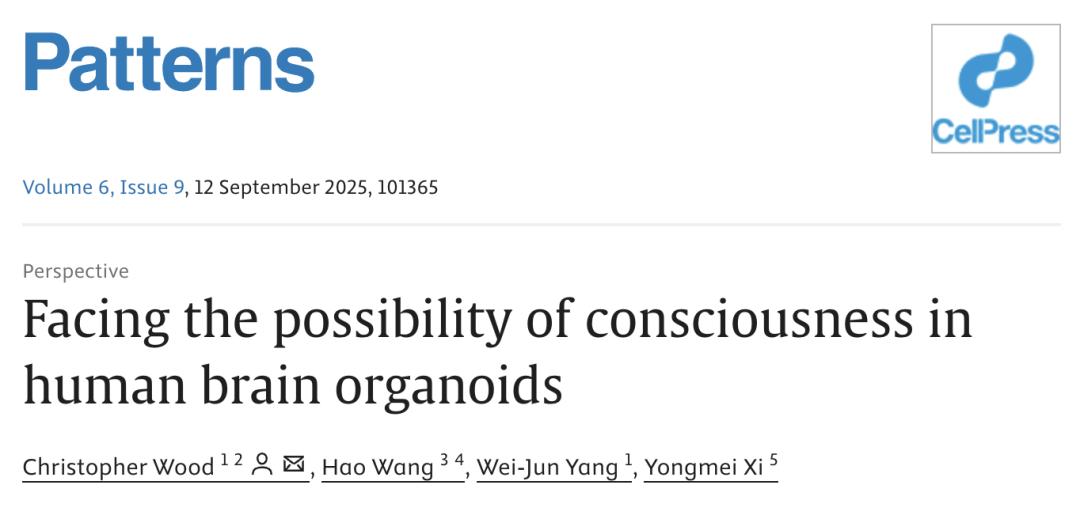
Core Viewpoint - Scientists are approaching the ability to "grow" human brains in laboratories, raising ethical debates about the welfare of these lab-grown organoids [1][2] Summary by Sections Ethical Concerns - The core of the debate revolves around "brain organoids," which are small pieces of brain tissue grown from stem cells and are too simple to function like a real human brain. The scientific community generally believes these organoids lack consciousness, leading to relatively lenient regulations on related research [1] - Christopher Wood from Zhejiang University argues that the academic stance has swung too far in fear of hype and sci-fi exaggeration, suggesting that advancements in technology may soon lead to the creation of "conscious organoids" [1][2] Definition of Consciousness - Defining consciousness is challenging, as current organoids lack the complex structures necessary for consciousness. They are grown in two-dimensional planes but can form three-dimensional structures in specific environments, resembling embryonic brain morphology [3] - Many neuroscientists believe that true brain consciousness arises from communication between different brain regions, while organoids only mimic parts of the brain. Current organoids are less than 0.16 inches (approximately 4 mm) in diameter, indicating a lack of essential structures for consciousness [3] - Andrea Lavazza, a moral philosopher, suggests that organoids may possess a basic level of consciousness, such as the ability to feel pain and pleasure [3] Measuring Consciousness - There is no objective method to measure consciousness, even in humans. The only definitive way to assess consciousness is to ask individuals about their feelings, which is complicated for those who cannot communicate [5] - Indirect signals, such as brain activity, are often used to infer consciousness in patients with severe conditions. The complexity of brain signals is considered a potential indicator of consciousness [5] Complexity and Consciousness - Skeptics argue that organoids cannot achieve consciousness due to insufficient structural complexity. However, Wood believes that advancements in technology over the next 5 to 10 years may enable the creation of more complex organoids that could potentially possess consciousness [6] - Recent studies have demonstrated methods to implant blood vessels into organoids and introduce new cell types, which could enhance their complexity [6] Regulatory Considerations - Current regulations on organoid research are relatively lenient, partly due to the International Society for Stem Cell Research (ISSCR) stating that organoids cannot perceive pain. However, experts argue that this stance should be re-evaluated in light of recent technological breakthroughs [7] - Ethical concerns arise regarding the potential for organoids to feel pain or have autonomous thoughts. If conscious organoids are created, they would require moral consideration and regulatory oversight similar to that of animal research [7][8]