纤维电子系统

Search documents
弯折、拉伸都不怕!我国科学家实现芯片领域新突破
中国能源报· 2026-01-22 11:48
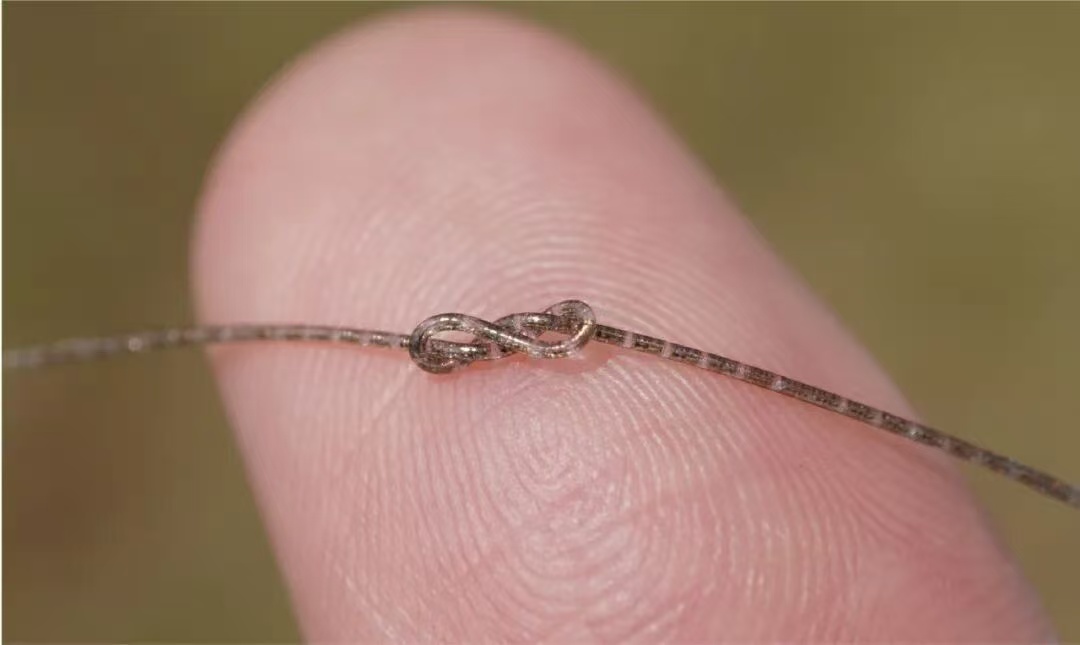
Core Viewpoint - Fudan University has developed a new "fiber chip" that integrates large-scale circuits within elastic polymer fibers, addressing the flexibility challenge in smart devices [1]. Group 1 - The research team led by Peng Huisheng and Chen Peining successfully constructed integrated circuits within elastic fibers, marking a significant advancement in flexible electronics [1]. - The design optimizes space within the fiber, achieving high-density integration in a one-dimensional constrained size [1]. - The team developed a preparation route compatible with current photolithography processes, utilizing plasma etching to achieve a surface roughness below 1 nanometer [1]. Group 2 - A dense polystyrene film layer is deposited on the elastic polymer surface, providing a "flexible armor" for the circuits [1]. - This protective layer effectively resists the polar solvents used in photolithography and buffers the circuit layer against strain, ensuring stability after repeated bending and stretching [1]. - The innovation is expected to pave the way for new integration paths in fiber electronic systems, facilitating advancements in brain-machine interfaces, electronic textiles, and virtual reality [1].

中国科学家全球首创“纤维芯片” 对现有芯片有何影响
Di Yi Cai Jing· 2026-01-22 04:44
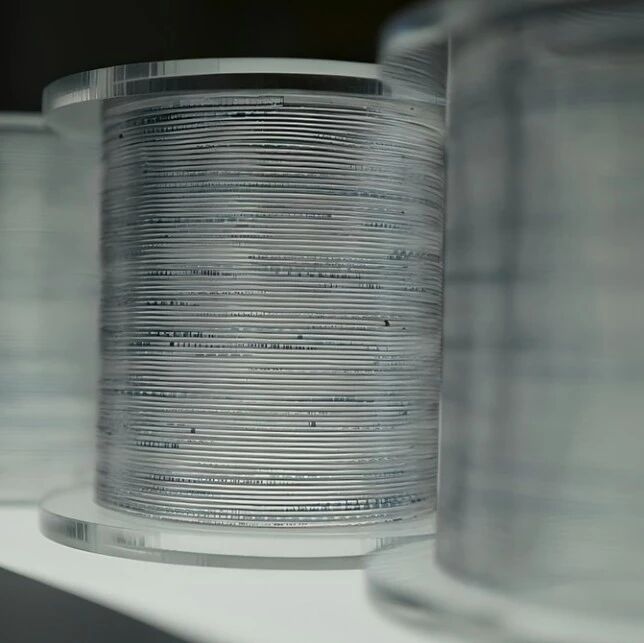
Core Insights - Fudan University has developed a novel "fiber chip" that integrates large-scale circuits within elastic polymer fibers, breaking away from traditional silicon-based chip paradigms [1][2] - The "fiber chip" offers comparable information processing capabilities to classic commercial chips while maintaining unique advantages such as high flexibility and adaptability to complex deformations, which could support emerging industries like brain-machine interfaces and electronic textiles [2][8] Research and Development - The research team, led by Professors Peng Huisheng and Chen Peining, aims to create a new pathway for applications in emerging fields rather than replacing existing chips [2][10] - The development of the "fiber chip" began in 2020 alongside fabric display devices, focusing on creating a comfortable and stable connection for wearable technology [2][3] Application Scenarios - The "fiber chip" is expected to eliminate reliance on external information processing devices in various fields, such as brain-machine interfaces, where traditional electrodes require rigid external modules [8][9] - In the electronic textile sector, the "fiber chip" could enable the creation of fully flexible, breathable electronic fabrics without the need for external processors, allowing for dynamic pixel displays [8][9] - In virtual reality, the "fiber chip" can enhance tactile interfaces by providing better flexibility and comfort, addressing limitations in precision signal collection and output [9] Performance and Challenges - The "fiber chip" demonstrates superior flexibility, capable of withstanding bending, stretching, and twisting, and remains functional after exposure to washing, temperature variations, and pressure [10] - The development process involves multiple disciplines, including materials synthesis, electronic device construction, and circuit design, highlighting the complexity of the project [10] - The research team has established a comprehensive research platform and aims to collaborate with various academic disciplines to enhance semiconductor materials and device integration density [10][11]