
电子织物

Search documents
纤维芯片来了 衣服能变成随身电脑?
Ke Ji Ri Bao· 2026-02-02 01:18
Core Insights - The development of flexible fiber chips represents a significant breakthrough in the field of electronics, enabling the integration of information processing capabilities directly into fibers, thus addressing the limitations of traditional rigid silicon-based chips [1][2][6] Group 1: Technology and Innovation - The research team from Fudan University has successfully created a new type of information processor called fiber chips, which are highly flexible and can adapt to complex deformations, making them suitable for applications in brain-machine interfaces, electronic textiles, and virtual reality [1][2] - The innovative design approach involves a "multi-layer stacking architecture" that allows for the integration of a large number of transistors within the fiber, potentially exceeding the transistor count of traditional computer processors [2][3] - The team has achieved a high-density integration of 100,000 transistors per centimeter within the fibers, enabling both digital and analog circuit functionalities [3] Group 2: Manufacturing Process - The research team developed a novel fabrication method that allows for direct photolithography on elastic polymer fibers, overcoming challenges related to the rough surface and deformation of the fibers [3][4] - This new method is compatible with existing chip manufacturing processes, allowing for scalable production of fiber chips [4] Group 3: Applications and Future Prospects - The fiber chips are expected to facilitate the transition from embedded to woven smart systems, with potential applications in electronic textiles that integrate power generation, storage, sensing, display, and information processing [5][6] - In the field of brain-machine interfaces, the fiber chips can integrate high-density sensing and stimulation electrode arrays along with signal preprocessing circuits, enhancing the safety and efficacy of implanted devices [6] - The research team aims to collaborate with scholars from various disciplines to further enhance device integration density and information processing performance, while establishing a proprietary intellectual property system for broader industrial applications [7]
新型“纤维芯片”问世
Xin Lang Cai Jing· 2026-02-01 20:19
Core Viewpoint - Fudan University's team has developed a groundbreaking "fiber chip" that integrates large-scale circuits within elastic polymer fibers, offering comparable information processing capabilities to traditional commercial chips while providing unique advantages such as flexibility and adaptability to complex deformations [1][2]. Group 1: Technological Breakthrough - The team has introduced the concept of "fiber devices" and has created over 30 new types of fiber devices with functionalities including power generation, energy storage, lighting, display, and biosensing, with some achieving preliminary industrial applications [1]. - The design of the "fiber chip" utilizes a multi-layer stacking architecture, moving beyond the traditional approach of only utilizing the fiber surface, and has developed a method compatible with existing chip manufacturing processes [2]. Group 2: Performance and Capabilities - The "fiber chip" achieves an integration density of 100,000 electronic components per centimeter, enabling efficient interconnection of transistors for digital and analog circuit operations [2]. - The architecture and manufacturing method of the "fiber chip" are versatile, allowing for the integration of organic electrochemical transistors capable of performing neural computation tasks [2]. Group 3: Application Potential - In the field of brain-machine interfaces, the fiber system is expected to provide new tools for brain science and the diagnosis and treatment of neurological diseases [3]. - The "fiber chip" enables the creation of soft, breathable electronic fabric systems that do not require external processors, enhancing the development of flexible electronic textiles [3]. - In virtual reality, smart tactile gloves based on the "fiber chip" can significantly improve user interaction experiences in scenarios such as remote surgery and virtual object interaction [3].
复旦大学“纤维芯片”刷屏!有望成脑机接口重要支撑
Shang Hai Zheng Quan Bao· 2026-01-22 14:32
Core Viewpoint - Fudan University has developed a groundbreaking "fiber chip" that breaks the traditional silicon-based chip paradigm, enabling advanced applications in brain-machine interfaces, electronic textiles, and virtual reality [1][5]. Group 1: Research and Development - The research was led by Professor Peng Huisheng and Professor Chen Peining, with support from various national and local scientific funding bodies [5]. - The paper titled "Fiber Integrated Circuits Based on Multi-layer Stacking Architecture" was published in the journal Nature [1]. Group 2: Technical Innovations - The "fiber chip" maintains the intrinsic properties of fibers, such as flexibility and weavability, while achieving high-precision interconnections of electronic components like resistors, capacitors, diodes, and transistors [7]. - A 1mm long "fiber chip" can integrate tens of thousands of transistors, with potential to reach millions if extended to 1 meter, comparable to traditional computer processors [7][8]. Group 3: Applications in Brain-Machine Interfaces - The "fiber chip" can potentially overcome limitations of traditional devices in brain-machine interfaces, providing new tools for brain science research and treatment of neurological diseases [8]. - Initial experiments show that the fiber can integrate a high-density array of electrodes and signal processing circuits, achieving a signal-to-noise ratio of 7.5 dB, comparable to commercial devices [8][9]. Group 4: Applications in Electronic Textiles and Virtual Reality - The "fiber chip" can transform ordinary clothing into interactive displays, allowing for real-time health data display and video playback without external devices [11]. - In virtual reality, the fiber chip enables the development of smart haptic gloves that can accurately simulate touch sensations, enhancing remote surgical procedures and gaming experiences [11][12]. Group 5: Future Prospects - The research team aims to enhance interdisciplinary collaboration and industrial partnerships to improve chip yield and integration, facilitating high-quality applications of the "fiber chip" across various fields [12][13].

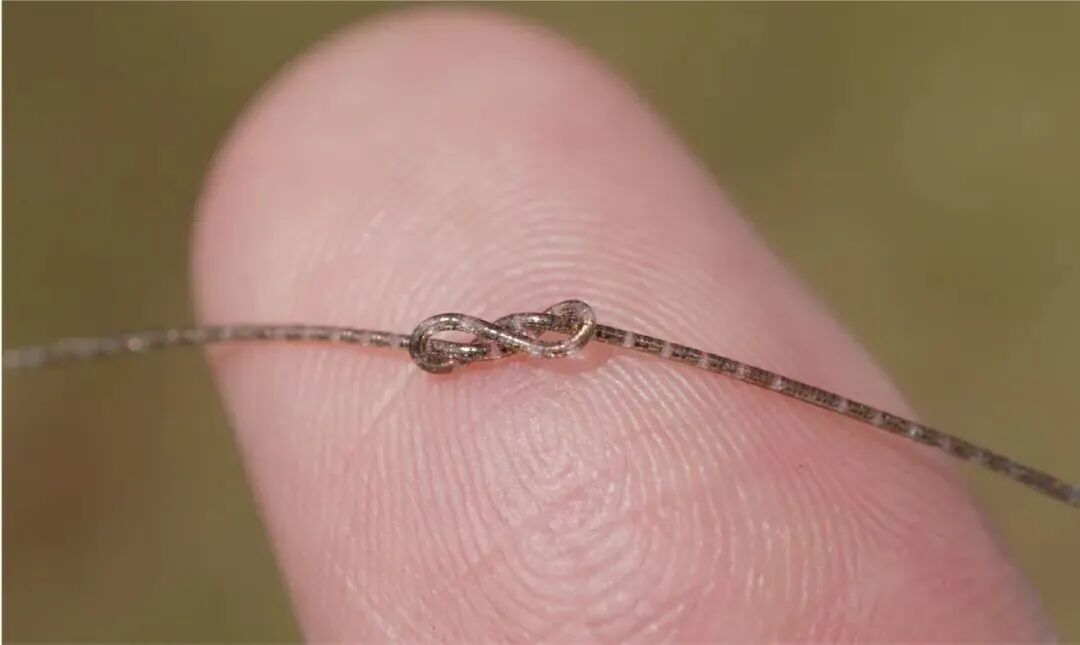
弯折、拉伸都不怕!我国科学家实现芯片领域新突破
中国能源报· 2026-01-22 11:48
Core Viewpoint - Fudan University has developed a new "fiber chip" that integrates large-scale circuits within elastic polymer fibers, addressing the flexibility challenge in smart devices [1]. Group 1 - The research team led by Peng Huisheng and Chen Peining successfully constructed integrated circuits within elastic fibers, marking a significant advancement in flexible electronics [1]. - The design optimizes space within the fiber, achieving high-density integration in a one-dimensional constrained size [1]. - The team developed a preparation route compatible with current photolithography processes, utilizing plasma etching to achieve a surface roughness below 1 nanometer [1]. Group 2 - A dense polystyrene film layer is deposited on the elastic polymer surface, providing a "flexible armor" for the circuits [1]. - This protective layer effectively resists the polar solvents used in photolithography and buffers the circuit layer against strain, ensuring stability after repeated bending and stretching [1]. - The innovation is expected to pave the way for new integration paths in fiber electronic systems, facilitating advancements in brain-machine interfaces, electronic textiles, and virtual reality [1].
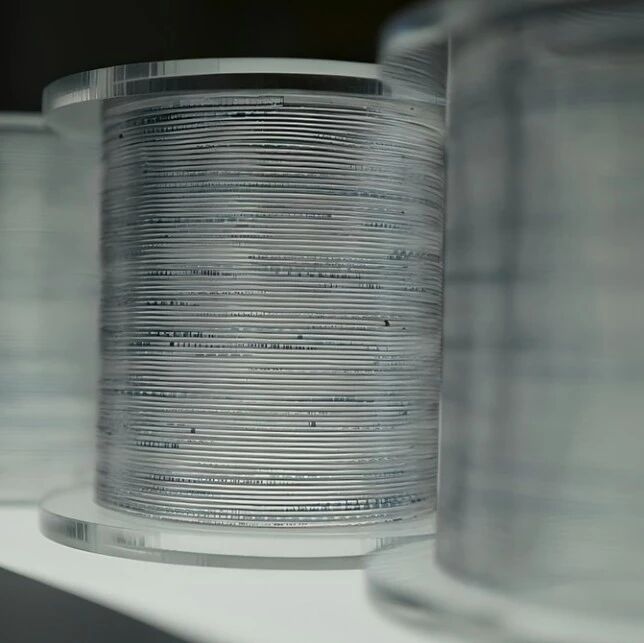
我国芯片突破关键难题!弯折变形后仍可使用
Ke Ji Ri Bao· 2026-01-22 09:02
Core Insights - The development of flexible electronics has been hindered by the rigidity of chips, which are essential components. A team from Fudan University has successfully created a new type of "fiber chip" by integrating large-scale circuits within elastic polymer fibers, providing a new effective pathway to address the flexibility challenge [1]. Group 1 - The design maximizes the internal space of the fiber, achieving high-density integration within a one-dimensional constrained size [1]. - The team developed a fabrication route compatible with current photolithography processes, utilizing plasma etching to achieve a surface roughness below 1 nanometer, meeting commercial photolithography requirements [3]. - A dense polystyrene film layer is deposited on the elastic polymer surface, acting as a "flexible armor" that protects the circuit from solvents used in photolithography and buffers strain, ensuring stability of the circuit structure and performance after repeated bending and stretching [3]. Group 2 - This breakthrough is expected to provide new pathways for the integration of fiber electronic systems, facilitating a transition from "embedding" to "weaving," which could revolutionize emerging fields such as brain-machine interfaces, electronic textiles, and virtual reality [3].
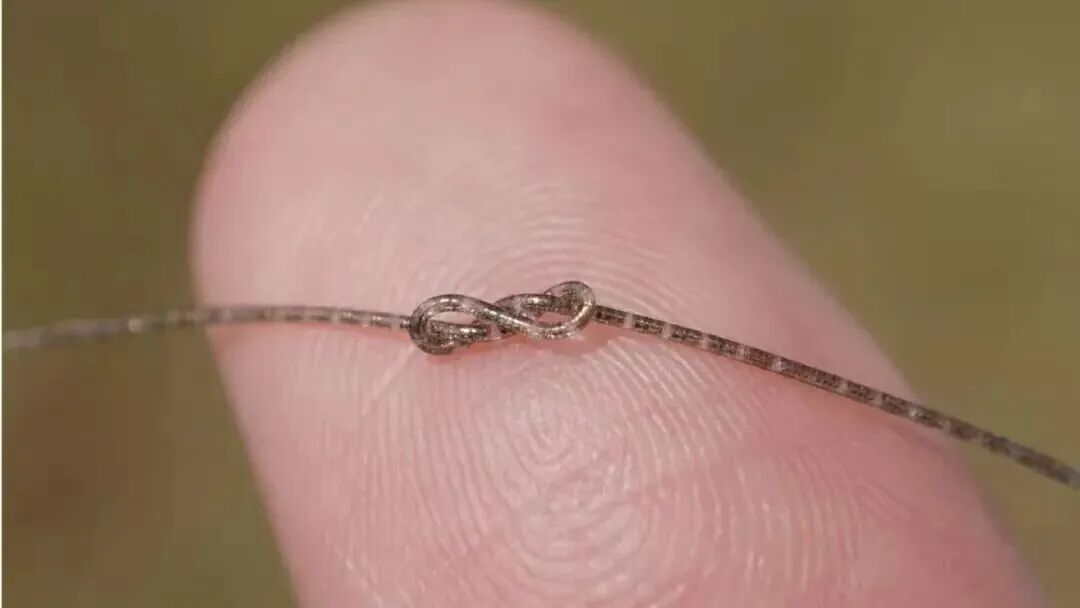
复旦大学研究人员研发出“纤维芯片”,可集成数万个晶体管
Xin Lang Cai Jing· 2026-01-22 06:52
Core Viewpoint - Fudan University has developed a "fiber chip" that integrates multiple electronic functions into a single polymer fiber, marking a significant advancement in flexible electronics and opening new pathways for fiber electronic systems [1][3]. Group 1: Technological Breakthrough - The "fiber chip" maintains the intrinsic properties of flexibility and weavability while achieving high-precision interconnections of electronic components such as resistors, capacitors, diodes, and transistors [3]. - The light lithography precision of the "fiber chip" reaches the highest level of laboratory-grade lithography machines, allowing for the integration of light-emitting and sensing modules directly into a single fiber [3]. Group 2: Potential Applications - This technology is expected to provide strong technical support for emerging industries such as brain-machine interfaces, electronic textiles, and virtual reality [3]. - In the field of brain-machine interfaces, the ultra-fine "fiber chip" could integrate high-density electrodes and preprocessing circuits, leading to the development of softer and more biocompatible neural probes [4]. Group 3: Performance Metrics - Experimental estimates suggest that a 1-millimeter long "fiber chip" can integrate tens of thousands of transistors, with information processing capabilities comparable to some medical implantable chips [3]. - If the length of the "fiber chip" is extended to 1 meter, the number of integrated transistors could reach millions, achieving integration levels comparable to classic computer central processing units [3].
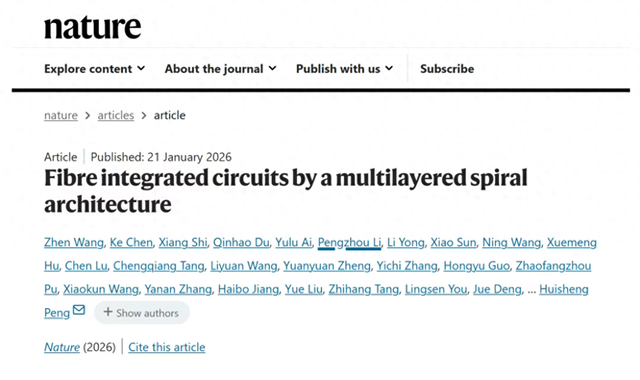
中国科学家全球首创“纤维芯片”
第一财经· 2026-01-22 05:25
Core Viewpoint - The research team from Fudan University has developed a "fiber chip" that integrates large-scale circuits into elastic polymer fibers, offering a new path for applications in emerging fields such as brain-machine interfaces, electronic textiles, and virtual reality [2][4][5]. Group 1: Technology and Innovation - The "fiber chip" achieves information processing capabilities comparable to traditional commercial chips while maintaining unique advantages such as high flexibility, adaptability to complex deformations, and the ability to be woven into fabrics [4][5]. - The team aims to provide a new solution for applications that traditional rigid chips struggle to address, particularly in wearable technology and flexible electronics [5][9]. - The "fiber chip" can integrate a closed-loop system for sensing, signal processing, and stimulation output within a fiber as thin as 50 micrometers, demonstrating comparable signal-to-noise ratios to commercial external signal processing devices [9][10]. Group 2: Application Scenarios - In brain-machine interfaces, the "fiber chip" can eliminate the need for bulky external signal processing modules, enhancing comfort and stability in wearable devices [9]. - The technology has the potential to create fully flexible electronic textiles that do not require external processors, allowing for dynamic pixel displays directly woven into the fabric [9][10]. - In virtual reality, the "fiber chip" can improve the precision of tactile interfaces, addressing limitations in current rigid signal processing modules [10]. Group 3: Performance and Challenges - The "fiber chip" exhibits superior flexibility, capable of withstanding bending, stretching, and twisting, and remains functional after exposure to washing, temperature variations, and physical pressure [11]. - The development of the "fiber chip" involves interdisciplinary collaboration across materials science, electronics, and biomedical engineering, highlighting the complexity of the project [12][13]. - Future research aims to enhance device integration density and information processing performance, with a focus on scaling production and application [13].
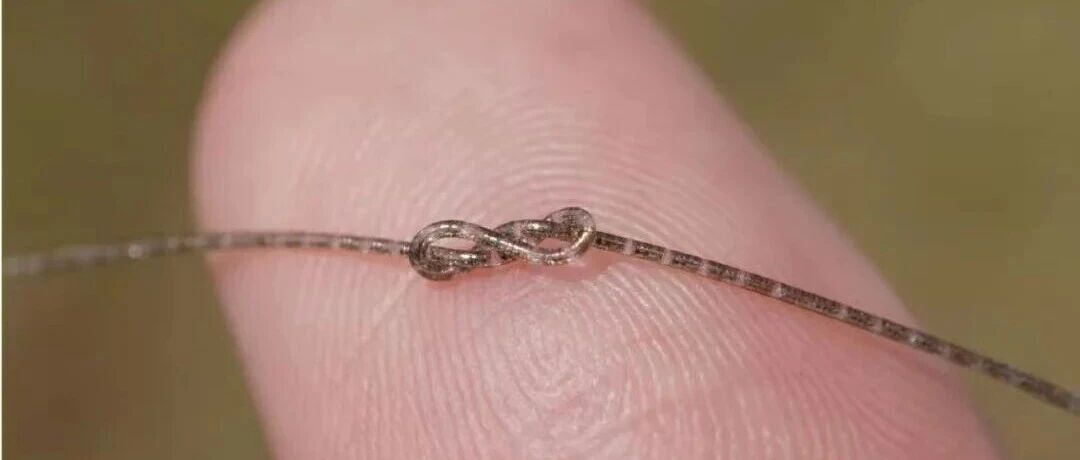
中国学者成功开发“纤维芯片”:丝线般细软、为纤维电子系统集成提供新路径
Zhong Guo Xin Wen Wang· 2026-01-22 05:13
Core Viewpoint - The research team from Fudan University has developed a "fiber chip" that is as thin and flexible as a silk thread, providing a new pathway for integrating fiber electronic systems [1][3]. Group 1: Development and Features - The "fiber chip" achieves an integration density of 100,000 transistors per centimeter, enabling digital and analog circuit operations [3]. - It exhibits superior flexibility, capable of withstanding bending, stretching, and twisting, while maintaining stable performance even after washing, exposure to extreme temperatures, and being crushed by a truck [3]. - The team utilized a multi-layer stacking architecture to maximize the internal space of the fiber, allowing for significant transistor integration [3][5]. Group 2: Scalability and Applications - The fabrication method developed is compatible with existing mature photolithography processes, enabling scalable production of the "fiber chip" [5]. - The "fiber chip" opens new applications in brain-machine interfaces, electronic textiles, and virtual reality, integrating power supply, sensing, display, and signal processing functions into a single fiber [5][7]. - In brain-machine interfaces, the technology allows for a closed-loop system integrated within a fiber as thin as a hair, eliminating the need for external signal processing modules [5]. - The "fiber chip" can facilitate the creation of fully flexible electronic textile systems, which can directly weave into fabrics without external processors, enhancing wearability [5][7]. - In virtual reality, the smart tactile gloves utilizing the "fiber chip" can accurately simulate different tactile sensations, improving user interaction with virtual environments [7].
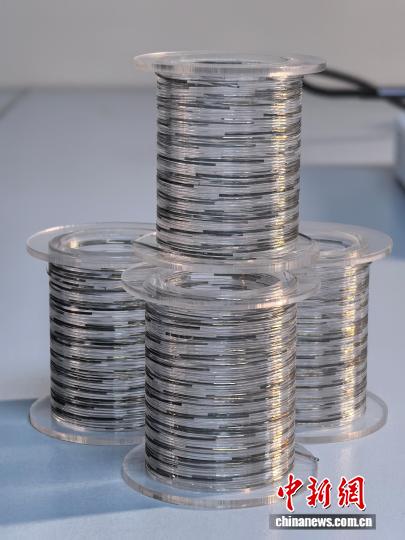
中国科学家全球首创“纤维芯片” 对现有芯片有何影响
Di Yi Cai Jing· 2026-01-22 04:44
Core Insights - Fudan University has developed a novel "fiber chip" that integrates large-scale circuits within elastic polymer fibers, breaking away from traditional silicon-based chip paradigms [1][2] - The "fiber chip" offers comparable information processing capabilities to classic commercial chips while maintaining unique advantages such as high flexibility and adaptability to complex deformations, which could support emerging industries like brain-machine interfaces and electronic textiles [2][8] Research and Development - The research team, led by Professors Peng Huisheng and Chen Peining, aims to create a new pathway for applications in emerging fields rather than replacing existing chips [2][10] - The development of the "fiber chip" began in 2020 alongside fabric display devices, focusing on creating a comfortable and stable connection for wearable technology [2][3] Application Scenarios - The "fiber chip" is expected to eliminate reliance on external information processing devices in various fields, such as brain-machine interfaces, where traditional electrodes require rigid external modules [8][9] - In the electronic textile sector, the "fiber chip" could enable the creation of fully flexible, breathable electronic fabrics without the need for external processors, allowing for dynamic pixel displays [8][9] - In virtual reality, the "fiber chip" can enhance tactile interfaces by providing better flexibility and comfort, addressing limitations in precision signal collection and output [9] Performance and Challenges - The "fiber chip" demonstrates superior flexibility, capable of withstanding bending, stretching, and twisting, and remains functional after exposure to washing, temperature variations, and pressure [10] - The development process involves multiple disciplines, including materials synthesis, electronic device construction, and circuit design, highlighting the complexity of the project [10] - The research team has established a comprehensive research platform and aims to collaborate with various academic disciplines to enhance semiconductor materials and device integration density [10][11]
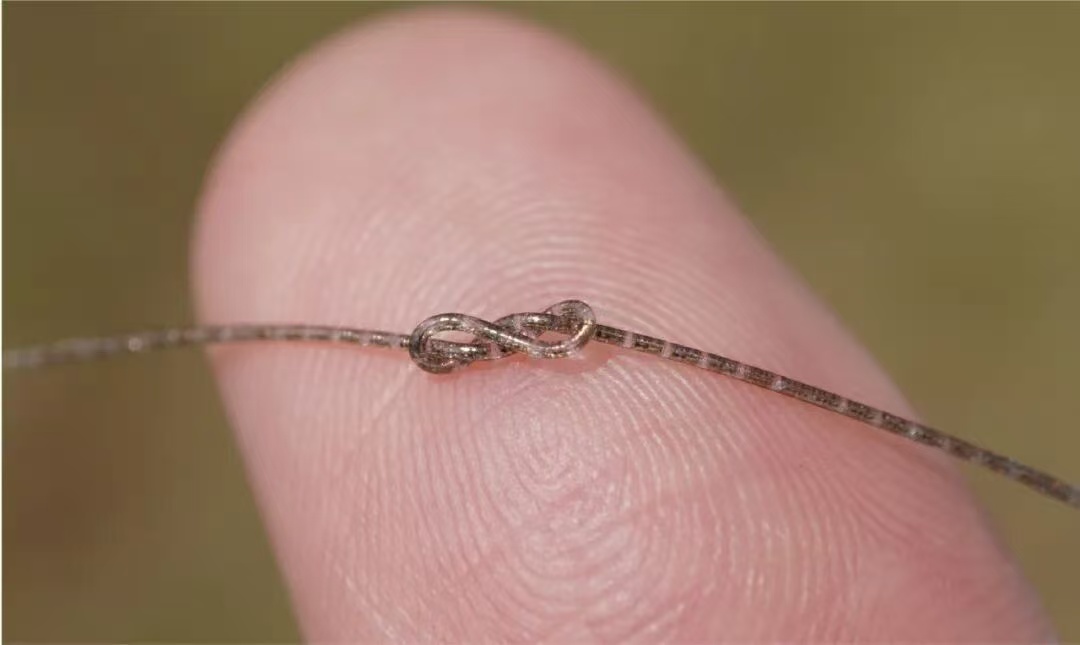
中国科学家全球首创“纤维芯片”,对现有芯片有何影响
Di Yi Cai Jing· 2026-01-22 04:36
Core Insights - Fudan University has developed a "fiber chip" that integrates large-scale circuits into elastic polymer fibers, breaking the traditional silicon-based chip paradigm [1][2] - The fiber chip offers comparable information processing capabilities to classic commercial chips while maintaining unique advantages such as flexibility, adaptability to complex deformations, and the ability to be woven into fabrics [2][8] Group 1: Research and Development - The research team, led by Professors Peng Huisheng and Chen Peining, aims to provide a new pathway for emerging applications rather than replacing existing chips [2][10] - The development of the fiber chip began in 2020 alongside the creation of fabric display devices, focusing on integrating information processing modules into a fiber form [2][10] Group 2: Application Scenarios - The fiber chip is expected to eliminate reliance on external rigid signal processing devices in various fields, such as brain-machine interfaces, electronic textiles, and virtual reality [8][9] - In brain-machine interfaces, the fiber chip can integrate sensing, signal processing, and stimulation output functions within a fiber as thin as a hair, demonstrating flexibility and biocompatibility [8][10] - In electronic textiles, the fiber chip can enable the creation of fully flexible, breathable electronic fabric systems without the need for external processors [8][9] - In virtual reality, the fiber chip can enhance tactile interfaces by providing better flexibility and comfort, addressing limitations of traditional rigid modules [9] Group 3: Performance and Challenges - The fiber chip exhibits superior flexibility, capable of withstanding bending, stretching, and twisting, and remains functional after exposure to washing, temperature variations, and pressure [10] - The development of the fiber chip involves interdisciplinary collaboration across chemistry, electronics, and medicine, highlighting the complexity of the project [10][11] - Future research will focus on improving device integration density and information processing performance to meet the demands of more complex applications [10][11]