组氨酸扫描法

Search documents
改造T细胞 升级“安检仪”
Xin Lang Cai Jing· 2026-02-19 07:37
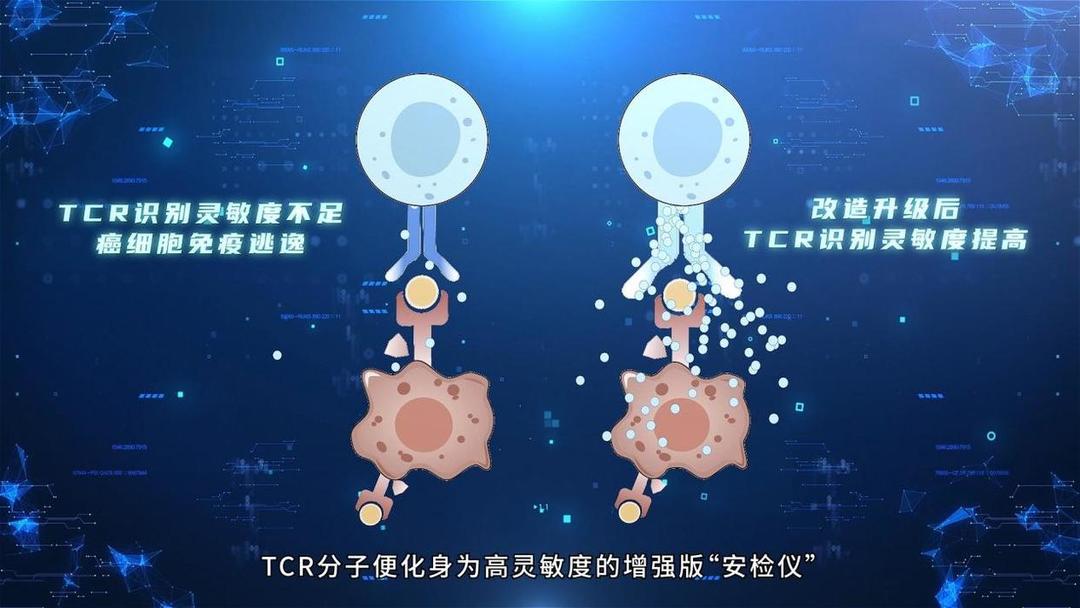
Core Insights - The research team from the Chinese Academy of Sciences has developed a method called "histidine scanning" to enhance T-cell receptor (TCR) molecules, enabling them to more effectively identify and eliminate cancer cells [1][2]. Group 1: T-Cell Functionality - T-cells act as a specialized force in the immune system, conducting "security checks" on body cells [1]. - TCR molecules are crucial for executing these checks and identifying cancer cells [1]. Group 2: Innovation in Cancer Treatment - The "histidine scanning" method allows for the rapid identification of key sites within TCR molecules that are responsible for recognizing cancer cells [1]. - Modifying these key sites transforms TCRs into high-sensitivity "security devices," significantly improving T-cells' ability to eliminate cancer cells [1]. - The modified T-cells show higher activation levels and enhanced killing power while accurately distinguishing between cancerous and healthy cells [2]. Group 3: Research Outcomes - The strategy has demonstrated promising anti-cancer effects in mouse experiments [1]. - The research findings have been published in the international academic journal "Cell" [1].
科研人员开发新方法 提升T细胞清除癌细胞能力
Xin Lang Cai Jing· 2026-02-19 06:34
Core Viewpoint - A research team from the Chinese Academy of Sciences has developed a new method to significantly enhance the ability of T cells to eliminate cancer cells, with results published in the journal Cell [1] Group 1: Research Development - The research utilized a mouse model to demonstrate the effectiveness of the new method [1] - The team identified specific T cell receptor (TCR) molecules that can accurately recognize cancer cells and modified them to improve their sensitivity [1] - The newly developed "histidine scanning method" allows for the rapid identification of key sites within TCR molecules that are responsible for recognizing cancer cells [1] Group 2: Implications for Cancer Treatment - The modifications made to the TCR molecules resulted in a high-sensitivity version that significantly enhances T cell capabilities in clearing cancer cells [1] - The study has shown promising results in mouse experiments, paving the way for the development of a new generation of efficient and precise cancer immunotherapies [1]
打造消灭癌细胞的“超级守护者”,中国科学家最新成果为癌症免疫疗法提供新思路
Yang Shi Xin Wen· 2026-02-19 01:34
Group 1 - The research team from the Chinese Academy of Sciences has developed a method called "histidine scanning" to enhance the sensitivity of T cell receptors (TCRs) in identifying and eliminating cancer cells [1][3] - The modified TCRs act as high-sensitivity "security checks," significantly improving T cells' ability to clear cancer cells, as demonstrated in mouse experiments [1][3] - This method does not rely on the three-dimensional structural information of TCRs, allowing for simultaneous modification of multiple "key points" to enhance their ability to capture cancer cells [1][2] Group 2 - The study provides a new approach for developing a next-generation, efficient, and precise cancer immunotherapy, showing significant efficacy in animal models [3]