经世致用精神

Search documents
秉勤实之心 蕴和雅之气
Xin Lang Cai Jing· 2026-02-05 23:23
Group 1 - The core idea emphasizes the importance of practicality and hard work in the culture and economy of Jiangnan, particularly in Jiaxing, where agriculture and commerce thrive through diligent efforts and integrity [3][5][8] - The historical context highlights the transformation of barren land into fertile fields through the efforts of early settlers, establishing a foundation for Jiaxing's prosperity [4][6] - The article discusses the evolution of agricultural practices in Jiaxing, showcasing a model of sustainable farming that integrates various sectors like agriculture, aquaculture, and livestock [5][6] Group 2 - The significance of honesty and trust in commerce is illustrated through historical figures like Fan Li, who exemplified the principles of practical business ethics and social responsibility [5][6] - The legacy of integrity in Jiaxing's commercial practices is reflected in the enduring success of local brands that adhere to quality and authenticity [5][6] - The article notes the contributions of Jiaxing's intellectuals throughout history, who have combined knowledge with practical applications to address societal needs [6][8] Group 3 - The concept of diligence is deeply ingrained in the local culture, with references to historical agricultural practices that emphasize hard work and continuous improvement [9][11][14] - The article highlights the development of modern agricultural techniques in Jiaxing, such as high-standard farmland and smart irrigation systems, which continue the tradition of hard work leading to prosperity [14][17] - The industrious nature of Jiaxing's people is further illustrated through the thriving handcraft and trade industries that have evolved over centuries [15][16] Group 4 - The article discusses the harmonious relationship between people and nature in Jiangnan, emphasizing the cultural significance of water in shaping the region's identity and lifestyle [21][23][30] - The historical context of the Grand Canal is presented as a symbol of cooperation and cultural exchange, contributing to the prosperity of Jiaxing [22][30] - The narrative reflects on the importance of community and collaboration in achieving social harmony and economic development in Jiaxing [24][30]

芷江入列国家历史文化名城,湖南这5座城凭什么?
Xin Lang Cai Jing· 2026-01-31 15:24
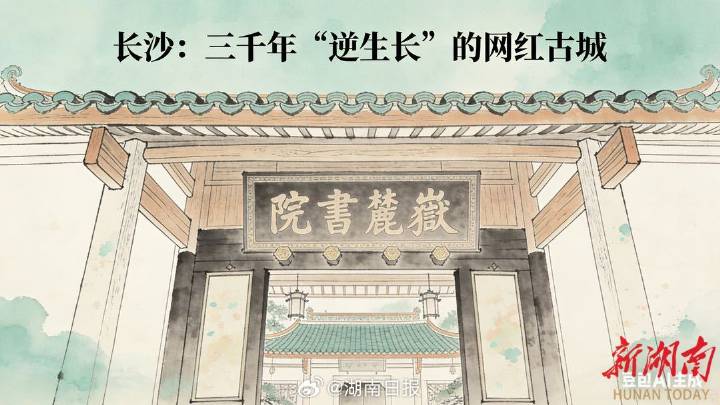
Core Viewpoint - The State Council has approved the designation of Zhijiang Dong Autonomous County in Hunan Province as a National Historical and Cultural City, expanding the list of such cities in Hunan to five: Changsha, Yueyang, Fenghuang, Yongzhou, and Zhijiang [1] Group 1: Changsha - Changsha is the only city from Hunan included in the first batch of National Historical and Cultural Cities, with a history of nearly 3,000 years without changing its name or location [3] - The city has a rich historical heritage, including significant archaeological finds such as the Mawangdui Han Tomb and the Tang Dynasty copper kiln, which produced the earliest underglaze colorful porcelain [4] - Changsha has transformed its historical cultural legacy into a modern "internet celebrity" city, blending ancient literary traditions with contemporary life [5] Group 2: Yueyang - Yueyang, with over 2,500 years of history, is renowned for its cultural significance, particularly due to the famous essay "Yueyang Tower" by Fan Zhongyan, which has shaped the spirit of Chinese scholars [7] - The city is a historical hub with archaeological sites dating back to the Paleolithic era and has been a vital cultural exchange point throughout history [8] - Yueyang is home to several national historical and cultural towns and villages, preserving traditional architecture and vibrant local customs [8] Group 3: Fenghuang - Fenghuang gained recognition as a National Historical and Cultural City due to its unique blend of literature and geography, largely popularized by writer Shen Congwen [10] - The city features well-preserved ancient architecture and is a melting pot of various ethnic cultures, including Miao and Tujia [10] - Fenghuang is characterized by its picturesque landscapes and rich cultural heritage, making it a significant tourist destination [11] Group 4: Yongzhou - Yongzhou, known as "Xiangnan," has a history of over 2,100 years and is recognized for its contributions to agricultural history and literature [13] - The city is famous for its scenic beauty and has been a source of inspiration for many renowned poets and writers throughout history [13] - Yongzhou is also the birthplace of Neo-Confucianism, with significant philosophical contributions that have influenced East Asian thought [14] Group 5: Zhijiang - Zhijiang has been designated as a National Historical and Cultural City, marking its importance in modern Chinese history as the site of Japan's surrender during World War II [16] - The city is recognized as an "International Peace City," promoting peace through cultural festivals and events [16] - Zhijiang is also a center for Dong ethnic culture, featuring unique architectural structures and cultural practices [16] Group 6: Cultural Significance - The five cities—Changsha, Yueyang, Fenghuang, Yongzhou, and Zhijiang—collectively represent the rich tapestry of Hunan's cultural heritage, encompassing various cultural themes such as Chu culture, ethnic diversity, Neo-Confucianism, and revolutionary history [17] - Understanding these cities provides insight into the historical and cultural essence of Hunan Province [18]