
维护国家法治统一

Search documents
新修订《贵州省档案条例》即将落地实施,四个思路护航档案工作高质量发展
Xin Lang Cai Jing· 2026-01-08 03:31
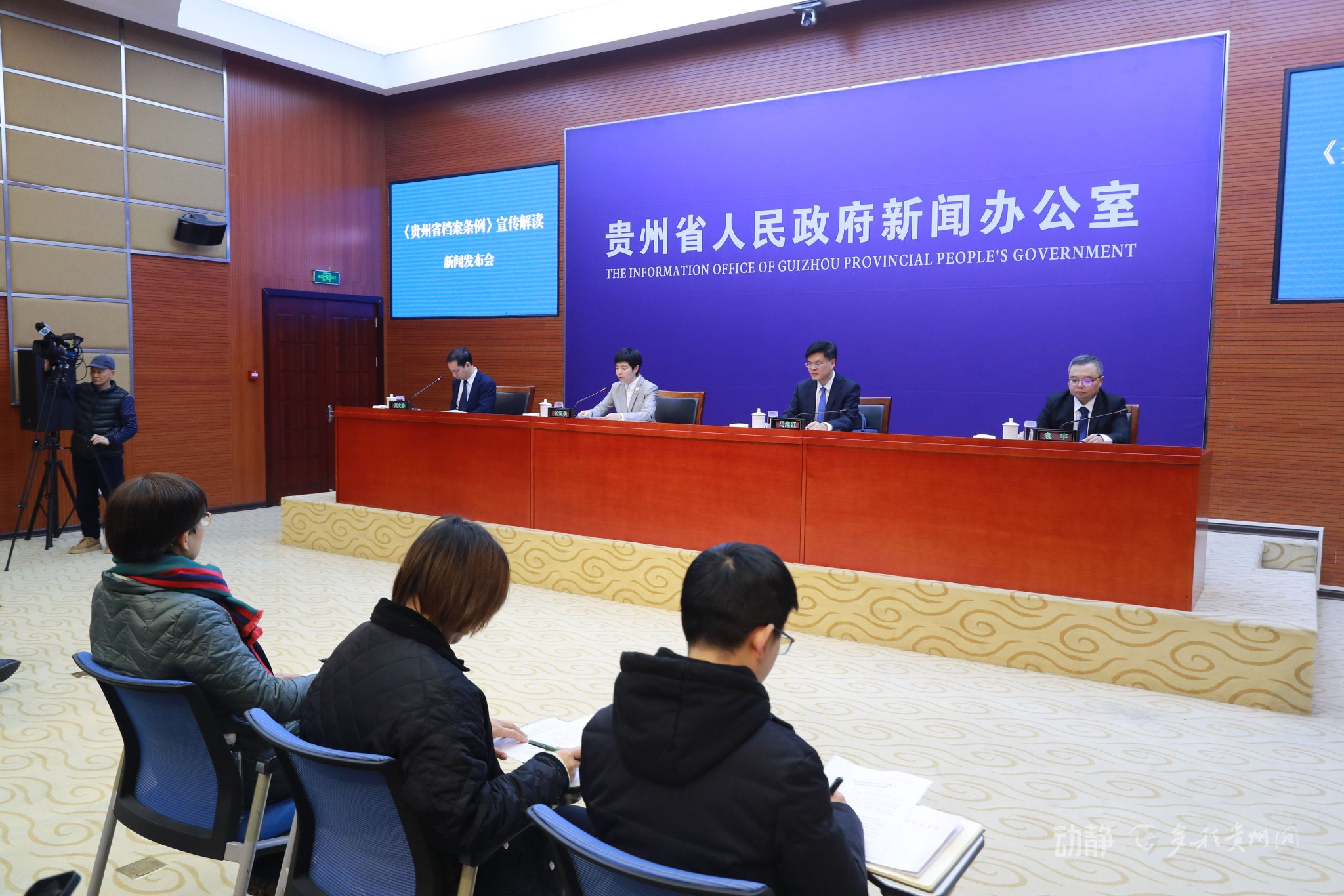
Core Viewpoint - The revised Guizhou Province Archives Regulations will officially take effect on January 15, 2026, emphasizing the strengthening of party leadership, innovation, problem orientation, and the maintenance of national legal unity in archival work [2][3]. Group 1: Strengthening Party Leadership - The regulations mandate that archival work must adhere to and strengthen the leadership of the Communist Party of China, ensuring that the party's policies and decisions are fully implemented in all aspects of archival work [2]. Group 2: Innovation and Improvement - The revision retains and modifies existing provisions related to recognition, responsibilities of relevant parties, and the transfer and utilization of archives, while also incorporating new regulations based on the latest achievements in archival work, including detailed provisions for talent cultivation and enterprise management [2]. Group 3: Problem Orientation - The regulations focus on addressing key issues in Guizhou's archival work, emphasizing the collection, organization, protection, and utilization of archives related to red culture, Yangming culture, ethnic culture, and significant construction projects [3]. Group 4: Legal Unity - The regulations align with the principles and provisions of the Archives Law and its implementation regulations, ensuring consistency with higher laws and effective coordination with departmental rules regarding archival management [3].

维护国家法治统一 保障全国统一大市场建设(深入学习贯彻习近平新时代中国特色社会主义思想·原创性概念标识性概念纵横谈)
Ren Min Ri Bao· 2025-11-17 22:01
Core Concept - The concept of "maintaining national legal unity" is a significant theoretical innovation in Xi Jinping's legal thought, emphasizing the importance of a unified legal framework for the socialist market economy [1][2]. Group 1: Importance of National Legal Unity - Maintaining national legal unity is crucial for building a unified national market and ensuring the efficient operation of a high-level socialist market economy [3][4]. - The natural alignment between the universal qualities of law and the demands for market unification highlights the necessity of a unified legal framework to reduce transaction costs and facilitate the free flow of goods and resources [3][4]. Group 2: Strategic Deployment and Legal Mechanisms - The 20th Central Committee's Fourth Plenary Session has strategically deployed measures to strengthen the implementation and supervision of constitutional laws, aiming to enhance the legal mechanisms for maintaining national legal unity [2]. - The establishment of a robust legal framework is essential for accelerating the construction of a unified national market and a high-level socialist market economy [2][4]. Group 3: Challenges and Solutions - Current issues affecting national legal unity include local protectionism and legislative discrepancies that hinder the establishment of a unified market [6]. - To address these challenges, it is necessary to improve the legal system comprehensively, covering the entire process of law creation, implementation, supervision, and guarantee [6][11]. Group 4: Fair Competition and Equal Treatment - The principle of equal treatment for private and public economic entities is fundamental, ensuring that all types of economic organizations have equal legal status and market opportunities [5]. - Strengthening fair competition mechanisms is vital to eliminate local protection and administrative monopolies, thereby fostering a more equitable market environment [5][9]. Group 5: Legislative and Judicial Mechanisms - Enhancing the legislative review system is crucial for maintaining the unity of the legal framework, preventing overreach and redundant legislation [7][8]. - The establishment of a unified legal application mechanism is necessary to resolve discrepancies in judicial decisions, ensuring consistent legal interpretations and applications [12][13]. Group 6: Implementation and Enforcement - The effectiveness of laws relies on their implementation, necessitating a unified enforcement and judicial system to protect the rights of all economic entities [11][12]. - Addressing issues such as inconsistent administrative enforcement and judicial decisions is essential for achieving a cohesive legal environment [12][13]. Group 7: Future Directions - The construction of a unified national market and a high-level socialist market economy is both a challenge and a long-term endeavor, requiring a comprehensive approach to enhance the legal framework [14]. - Continuous efforts to adapt legal mechanisms to changing economic and social structures will be necessary to maintain market unity and economic security [14].