美以关系

Search documents
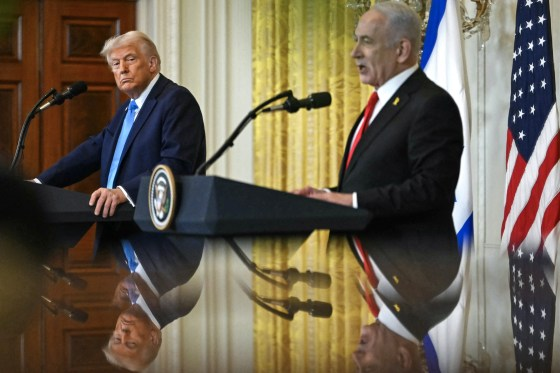
内塔尼亚胡访美 特朗普:双方并非“百分百一致”
Xin Lang Cai Jing· 2025-12-30 06:40
Group 1 - The core focus of the meeting between President Trump and Prime Minister Netanyahu is the advancement of the Gaza ceasefire and the second phase of the peace framework, with Trump emphasizing that Hamas must disarm or face serious consequences [4][5][12] - The meeting occurs at a sensitive time, with the Gaza ceasefire framework entering a critical phase, and various key elements such as military withdrawal and the establishment of an international security force facing significant delays [3][4] - There is a notable shift in Trump's stance towards Iran, with a more direct and aggressive warning that any attempts by Iran to rebuild nuclear or missile programs will lead to severe consequences, indicating a potential for military action [5][7] Group 2 - The meeting reveals a lack of complete alignment between the U.S. and Israel, particularly regarding the situation in the West Bank, where Trump acknowledges differences, especially concerning settler violence [8][12] - Both leaders express different priorities regarding the ceasefire and post-war governance, with Trump focusing on a lasting arrangement and Netanyahu emphasizing the need for demilitarization and ensuring security against Hamas [12][13] - The domestic U.S. debate reflects a divide, with conservative media supporting strong U.S.-Israel ties while liberal voices question the adequacy of U.S. constraints on Israel, highlighting a growing war fatigue among the American public [14][15]

美媒:以色列多名官员称袭击卡塔尔前已向美方通报,若特朗普阻止会叫停
Huan Qiu Wang· 2025-09-16 01:26
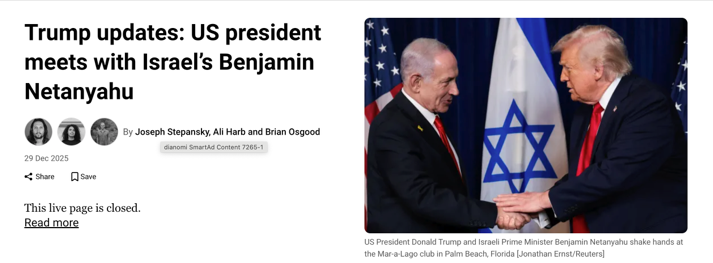
Core Viewpoint - The article discusses the recent Israeli airstrike on Qatar's capital, Doha, and the communication between Israeli Prime Minister Netanyahu and U.S. President Trump regarding the operation, highlighting the complexities of U.S.-Israel relations and the differing narratives surrounding the event [1][3][4]. Group 1: Communication and Coordination - Israeli officials revealed that Netanyahu informed Trump about the planned airstrike before it occurred, and Trump did not oppose the action at that time [3][4]. - The airstrike was executed shortly after Netanyahu's call to Trump, with the first explosion reported at 8:51 AM, just over 50 minutes after the call [3]. - Israeli officials indicated that if Trump had opposed the strike, Israel would have canceled it, suggesting a level of coordination between the two leaders [3][4]. Group 2: U.S. Response and Denials - Trump publicly denied having prior knowledge of the airstrike and expressed opposition to it, emphasizing Qatar's status as an important U.S. ally [3][4]. - U.S. military officials stated they were informed of the Israeli aircraft taking off but received no explanation until the airstrike commenced [3]. - Following the airstrike, U.S. officials claimed that the notification from Israel was too short to allow for any intervention [4]. Group 3: Political Implications - Israeli officials acknowledged that they chose to align with the White House's narrative of ignorance regarding the airstrike to maintain U.S.-Israel relations [4]. - There are indications that the Trump administration has previously downplayed or misrepresented communications with Israel for political reasons [4]. - The article suggests a tension between the need for U.S. support and the operational independence of Israel in military actions [4].
以军密集空袭加沙 45名平民死亡!鲁比奥到访以色列:不满 但两国关系不动摇!卡塔尔:继续推动止战
Mei Ri Jing Ji Xin Wen· 2025-09-15 00:24
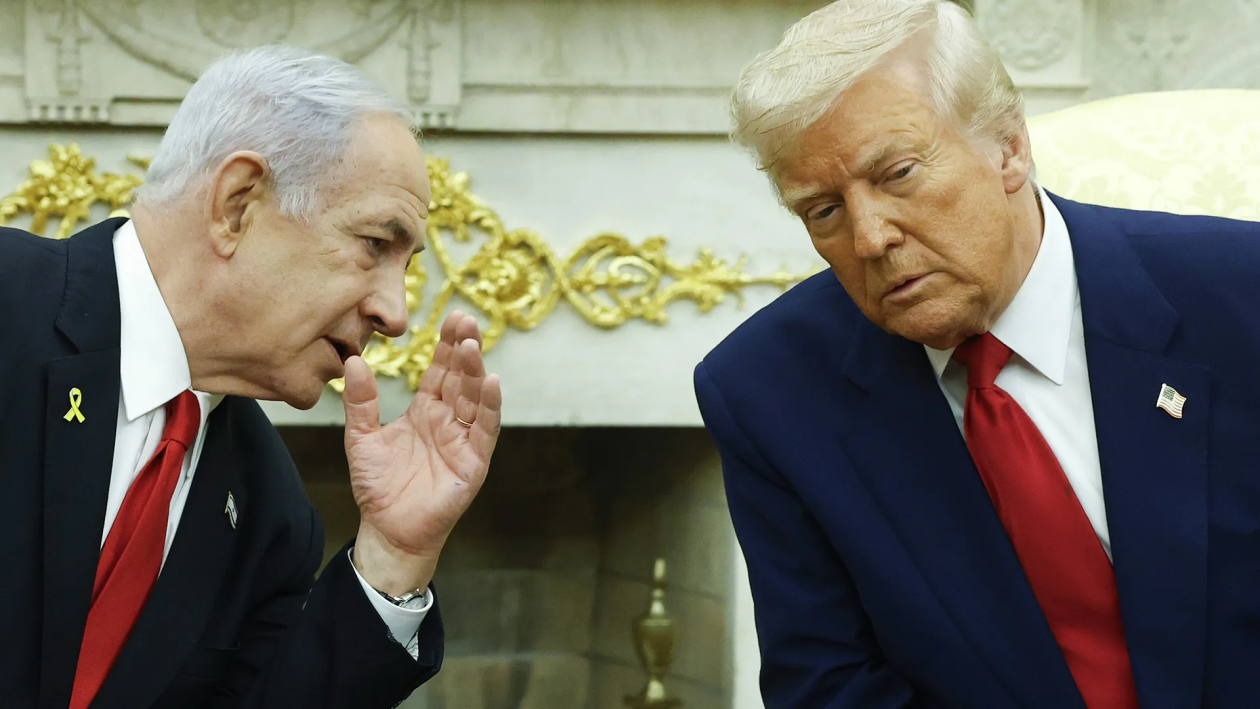
Core Viewpoint - The ongoing conflict in Gaza has resulted in significant civilian casualties, with recent Israeli airstrikes causing at least 45 deaths, primarily in Gaza City. The visit of U.S. Secretary of State Rubio to Israel underscores the strong alliance between the U.S. and Israel, despite some tensions regarding military actions in the region [1][4]. Group 1: Civilian Impact and Humanitarian Crisis - Israeli airstrikes in Gaza have led to the death of 45 civilians, with 32 fatalities reported in Gaza City alone [1]. - The United Nations Relief and Works Agency has stated that thousands of Gazans are fleeing due to the airstrikes, resulting in severe shortages of drinking water, food, and tents, exacerbating the humanitarian crisis [5]. Group 2: U.S.-Israel Relations - U.S. Secretary of State Rubio's visit to Israel is intended to discuss military objectives and plans regarding the ongoing operations in Gaza, reinforcing the notion that the U.S.-Israel alliance remains strong despite recent tensions [4]. - Rubio emphasized that the U.S. relationship with Israel will not be shaken by dissatisfaction over Israeli airstrikes, indicating a commitment to coordinate on issues such as ceasefire negotiations and the release of hostages [4][5]. Group 3: Regional Diplomatic Efforts - A preparatory meeting for an Arab-Islamic summit was held in Doha, Qatar, where the Qatari Prime Minister stated that Qatar will continue its mediation efforts to end the conflict in Gaza [4]. - The meeting condemned Israeli actions as a violation of international law and diplomatic norms, highlighting regional discontent with the ongoing violence [5].

视频丨美国务卿:以色列空袭多哈不会改变美以两国的牢固关系
Yang Shi Xin Wen· 2025-09-14 11:56
Core Viewpoint - The U.S. Secretary of State Rubio expressed that the U.S. is not pleased with Israel's airstrike on Doha, Qatar, but this action will not alter the strong relationship between the U.S. and Israel [1] Group 1 - The U.S. will discuss the implications of Israel's actions and its future plans with Israel [1] - Prior to this, Rubio met with the Prime Minister and Foreign Minister of Qatar, Mohammed, at the White House on September 12 [1] - Later that day, Mohammed also met with U.S. President Trump [1]
淡化裂痕?被爆和内塔尼亚胡“关系紧张”后,特朗普表态:没对他感到失望
Huan Qiu Wang· 2025-05-18 04:39
Group 1 - The core viewpoint of the articles is that there are claims of tension between U.S. President Trump and Israeli Prime Minister Netanyahu due to differences over Iran and Gaza, which both U.S. and Israeli officials have denied [1][3] - Trump stated in an interview that he is not disappointed with Netanyahu, suggesting that the relationship is not as strained as reported [1][3] - Critics have pointed out that Trump's recent Middle East trip, which included visits to Saudi Arabia, Qatar, and the UAE but excluded Israel, indicates that Israel is being sidelined in U.S. regional diplomatic efforts [3] Group 2 - Trump described Netanyahu as an "angry man" who has been "severely hurt" by the recent military actions of Hamas against Israel [3] - Reports from Turkish media suggested that Trump believes Netanyahu is manipulating him, leading to a cut in direct communication [3] - U.S. Middle East envoy Wittekopf dismissed claims of a strained relationship between Trump and Netanyahu as "absurd," while Netanyahu publicly denied any rumors of a relationship breakdown, asserting that their relationship is "very good" [3]
国际观察|“画饼”还是寻突破?特朗普宣布解除对叙制裁有何考量
Xin Hua She· 2025-05-15 13:11
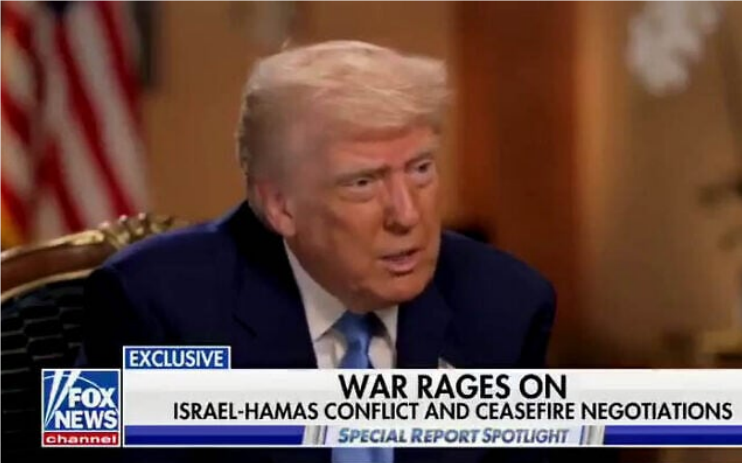
Core Viewpoint - President Trump announced the intention to lift sanctions on Syria during his visit to Saudi Arabia, aiming to strengthen relations with Gulf countries and seek diplomatic breakthroughs in the Middle East [1][2]. Group 1: Announcement and Context - Trump made the announcement after discussions with Saudi Crown Prince Mohammed bin Salman and Turkish President Erdogan regarding the situation in Syria [2]. - The U.S. has imposed sanctions on Syria since 1979, with measures intensifying after the Syrian crisis began in 2011, including the 2019 Caesar Syria Civilian Protection Act [2]. Group 2: Motivations Behind the Decision - Analysts suggest that the decision to lift sanctions is partly to align with Gulf nations like Saudi Arabia, which have been advocating for the lifting of sanctions [3]. - The move is also seen as an attempt to achieve a diplomatic victory in the Middle East, where the Trump administration has faced limited success [3]. Group 3: Implications for Syria - Lifting sanctions is viewed as a necessary step for Syria to recover from economic hardships, with approximately 90% of the population currently living in poverty [3]. - The reconstruction of Syria is estimated to require hundreds of billions of dollars, and lifting sanctions could improve the investment environment [3]. Group 4: Challenges and Legislative Hurdles - Analysts indicate that the process of lifting sanctions may be complex and lengthy, potentially requiring Congressional approval for certain measures [4]. - The specific methods for lifting the sanctions remain unclear, suggesting that the implementation may not be straightforward [4]. Group 5: Regional Reactions and Concerns - The announcement is likely to provoke dissatisfaction and concern from Israel, which has historically been wary of the Syrian regime [5][6]. - There are indications of growing divergences between U.S. and Israeli interests in regional affairs, as the U.S. has engaged in negotiations and agreements that bypass Israel [7].
特朗普中东外交释放何种信号?
第一财经· 2025-05-15 00:56
Core Viewpoint - The article discusses President Trump's first official foreign visit to the Middle East, focusing on the significant investments and military agreements made with Saudi Arabia, as well as the unexpected announcement regarding the lifting of sanctions on Syria [1][3]. Investment and Military Agreements - During the visit, Saudi Arabia committed to investing $600 billion in the U.S., and a military sales agreement worth nearly $142 billion was signed between the two nations [1]. - Trump's visit marks a shift in U.S. foreign policy, emphasizing business and military cooperation with Middle Eastern countries [1]. Sanctions on Syria - Trump announced the lifting of sanctions on Syria, stating it would help the war-torn country reintegrate into the international community and provide an opportunity for significant achievements [3]. - This decision follows discussions with Saudi Crown Prince Mohammed bin Salman and Turkish President Erdogan regarding the situation in Syria [3]. - The Syrian government welcomed Trump's announcement, indicating it would aid in the country's reconstruction efforts [3]. U.S.-Israel Relations - Notably, Trump's itinerary did not include Israel, which contrasts with his previous visit in 2017, raising concerns in Israel about U.S. policy direction [6]. - Recent U.S. actions, such as negotiating with Iran and reaching agreements with Hamas, have caused unease in Israel, suggesting a potential shift in the U.S.'s approach to Middle Eastern diplomacy [6][7]. - Analysts suggest that Israel's role may transition from an active participant to a more passive observer in U.S. Middle Eastern strategies [7].
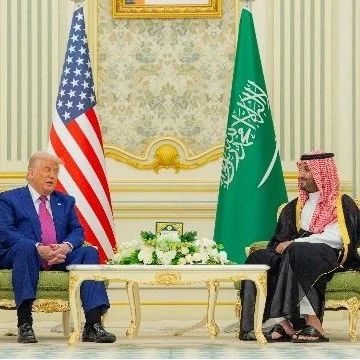
特朗普访中东却不去以色列表明美国将以色列边缘化?以方回应:两国利益并不总是“一致”
Huan Qiu Wang· 2025-05-13 09:30
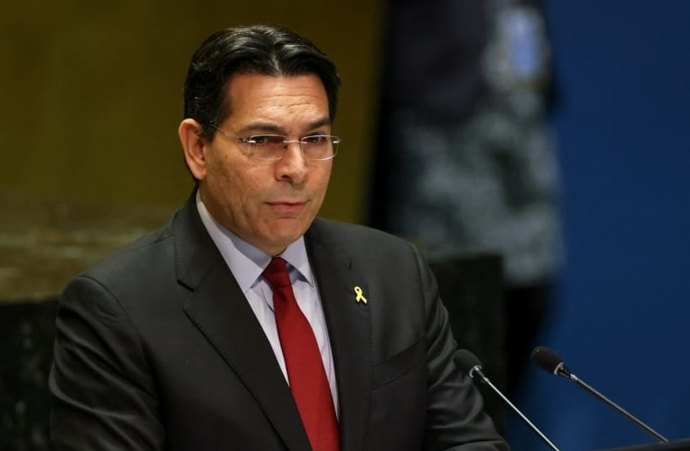
Core Viewpoint - The relationship between the United States and Israel is experiencing subtle changes, with indications that U.S. interests may not always align with those of Israel, as highlighted by recent comments from Israel's UN representative, Danny Danon [1][3]. Group 1 - Danny Danon stated that while Israel and the U.S. remain long-term allies, their interests do not always align [1][3]. - Danon's remarks come in response to reports of a noticeable rift between Israeli Prime Minister Netanyahu and President Trump, particularly as the U.S. engages with parties like the Houthis and Iran without consulting Israel [3]. - The U.S. is perceived to be prioritizing its own interests, which is seen as reasonable by Danon, who also emphasized Israel's right to take necessary actions for its own protection [3]. Group 2 - Trump's recent visit to Saudi Arabia marks his first significant international trip during his second term, focusing on strengthening trade relations [3]. - Reports indicate that tensions between Trump and Netanyahu are rising due to disagreements over issues related to Iran and Gaza [3]. - Israeli media has denied rumors of a distancing between the U.S. and Israel, despite the emerging complexities in their relationship [3].
特朗普与内塔尼亚胡“关系紧张”?美国中东问题特使否认
Huan Qiu Wang· 2025-05-12 05:22
Core Viewpoint - Tensions between U.S. President Trump and Israeli Prime Minister Netanyahu are escalating due to differing approaches to the issues of Hamas and Iran, with Trump advocating for a ceasefire in Gaza while Netanyahu favors military action against Iran's nuclear facilities [1][3]. Group 1: Relationship Dynamics - Reports indicate that Trump believes Netanyahu is manipulating him, leading to a decision to cut direct communication [1]. - As the conflict in Gaza intensifies, Trump's push for a ceasefire contrasts with Netanyahu's military strategy, creating friction in their relationship [3]. - Concerns have been raised by Israel regarding any potential agreements Trump may reach with Iran, reflecting a lack of trust [3]. Group 2: Official Responses - U.S. Middle East envoy, Wittekov, has denied claims of a rift between Trump and Netanyahu, labeling such reports as "absurd" [1][3]. - Netanyahu's office has not responded to requests for comments regarding the reported tensions [3]. - Reports from Lebanese media suggest growing disappointment between Trump and Netanyahu, particularly regarding military action against Iran [3].