
美伊关系紧张

Search documents
“数千名美军计划27日抵中东”
第一财经· 2026-03-24 00:09
Group 1 - The U.S. military's 31st Marine Expeditionary Unit and its amphibious ships are set to arrive in the Middle East on the 27th, coinciding with a deadline set by President Trump for Iran to open the Strait of Hormuz [1] - The "New Orleans" amphibious landing ship and the "Tripoli" amphibious assault ship, carrying over 2,000 members of the 31st Marine Expeditionary Unit, will enter the operational area of the U.S. Central Command, but it will take several days to reach the Strait of Hormuz [1] Group 2 - The "Tripoli" is currently docked at Diego Garcia in the central Indian Ocean [2] - President Trump issued a threat to Iran, demanding the opening of the Strait of Hormuz within 48 hours, or else the U.S. would destroy Iran's power stations [2] - Trump stated that the U.S. and Iran had engaged in "very good and productive" dialogue over the past two days, leading to a five-day delay in airstrikes on Iranian power stations and energy infrastructure [2] - The Iranian Foreign Ministry has denied any negotiations between the U.S. and Iran [2]

伊朗称3天内完成核协议草案
Xin Lang Cai Jing· 2026-02-20 23:50
Core Viewpoint - Iran's Foreign Minister announced that a draft nuclear agreement will be completed within 2 to 3 days, pending final approval from Iranian leadership, amidst escalating tensions with the U.S. [1] Group 1: Iran's Nuclear Agreement - Iran is set to finalize the nuclear agreement draft in the next 2 to 3 days [1] - The draft will be submitted to the U.S. after receiving approval from Iranian leaders [1] Group 2: U.S. Military Actions - President Trump is considering a "limited military strike" against Iran [1] - U.S. officials indicated that potential military actions could include targeted strikes and efforts to change the Tehran regime [1] Group 3: Military Deployment - The U.S. has deployed its largest nuclear-powered aircraft carrier, the USS Gerald R. Ford, to the Mediterranean Sea [1] - The USS Ford and a destroyer have arrived near Gibraltar, having been redirected from the Caribbean to the Middle East [1] - This deployment follows a previous order to send a second aircraft carrier to the region, joining the USS Abraham Lincoln strike group in the Persian Gulf [1]
美官员向伊朗严肃传话:特朗普对军事打击威胁是认真的
Xin Lang Cai Jing· 2026-02-20 03:08
Core Viewpoint - A U.S. government official privately communicated with Iranian officials, emphasizing that President Trump's statements regarding potential military action against Iran are serious and credible [1] Group 1: U.S. Diplomatic Strategy - The official suggested that Iran should consider Trump's handling of Venezuela, the Russia-Ukraine conflict, relations with Europe, and the use of tariffs to assess U.S. policy determination [1] - It was recommended that the U.S. focus on nuclear issues while temporarily easing demands on Iran's ballistic missile program and support for proxy forces to potentially gain concessions from Iran in the short term [1] Group 2: Iranian Response - Iran's permanent representative to the United Nations accused the U.S. of violating the United Nations Charter with recent military action threats and urged the Security Council to take immediate action [1] - Iran stated it does not seek tension or war and will respond if faced with military aggression, declaring that all bases, facilities, and assets of "hostile forces" in the region would become legitimate targets [1]
特朗普:美伊双方必须达成协议,否则后果将“非常严重”
财联社· 2026-02-13 00:10
Group 1 - The core viewpoint is that President Trump aims for the U.S. and Iran to reach an agreement within approximately one month, emphasizing the urgency of the situation [1][4] - Trump warned that failure to reach an agreement would result in severe consequences for Iran, indicating a potential for military action [2][4] - The U.S. has been increasing pressure on Iran, including deploying multiple naval vessels, such as the USS Abraham Lincoln, to the Middle East, signaling a readiness for military intervention [4][5] Group 2 - The Pentagon has instructed a second aircraft carrier strike group to prepare for deployment to the Middle East, indicating heightened military readiness [5] - Iranian officials have stated that no direct communication has been made with the U.S., and discussions are ongoing to ensure both sides can evaluate the situation before proceeding with negotiations [5]
美国考虑扣押涉伊朗油轮,但担心被伊朗报复
Xin Lang Cai Jing· 2026-02-11 04:18
Core Viewpoint - The U.S. government is considering seizing oil tankers transporting Iranian oil as a means to exert pressure on Iran, but there are concerns about potential retaliatory actions from Iran [1]. Group 1: U.S. Actions and Considerations - U.S. officials have discussed the possibility of seizing tankers involved in transporting Iranian oil, with over 20 vessels already sanctioned by the U.S. Treasury this year, making them potential targets for seizure [1]. - There are significant obstacles to this pressure tactic, as preventing sanctioned vessels from loading oil in Iran could severely impact Iran's primary source of revenue [1]. Group 2: Potential Iranian Response - Iran is likely to retaliate by seizing oil tankers belonging to U.S. allies or even laying mines in the Strait of Hormuz, which could lead to a substantial increase in oil prices and create political turmoil for the White House [1]. Group 3: Ongoing Negotiations - Indirect negotiations regarding nuclear issues took place between Iran and the U.S. in Muscat, Oman, on the 6th, with both sides signaling a willingness to continue talks, although the "war alarm" has not been lifted [1]. - President Trump mentioned the consideration of deploying a second aircraft carrier strike group to the Middle East in preparation for potential military action if negotiations with Iran fail [1].
中东的“战争警报”解除了吗?
Xin Lang Cai Jing· 2026-02-07 15:36
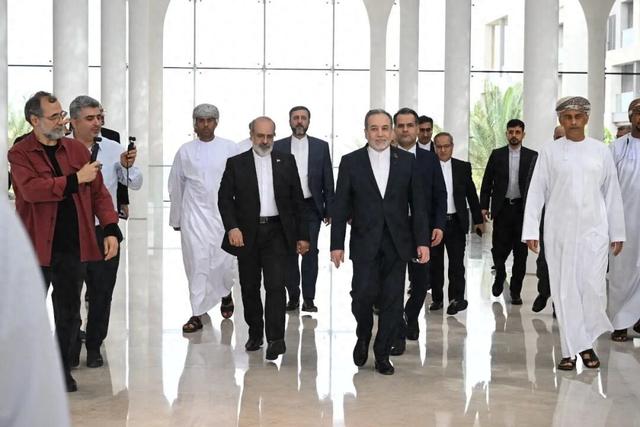
Core Viewpoint - The indirect negotiations between Iran and the United States in Muscat, Oman, signal a continuation of dialogue, but deep-rooted differences regarding Iran's nuclear program and U.S. sanctions remain unresolved, keeping the "war alarm" in the Middle East active [1][8]. Group 1: Negotiation Dynamics - The Iranian delegation was led by Foreign Minister Zarif, while the U.S. delegation included special envoy Jared Kushner and General Cooper from the U.S. Central Command, with Omani Foreign Minister Badr mediating the talks [1][6]. - Both sides expressed a willingness to continue negotiations, with Zarif stating that the talks had a good start and consensus on further discussions, emphasizing that avoiding threats and pressure is essential for dialogue [3][4]. - U.S. President Trump described the talks as "very good" but reiterated that Iran must not possess nuclear weapons, warning of severe consequences if an agreement is not reached [3][4]. Group 2: Key Issues and Divergences - The U.S. demands include prohibiting Iran from developing nuclear weapons, enriching uranium, and limiting missile range, as well as stopping support for regional proxy forces [4][6]. - Iran maintains that it does not seek nuclear weapons but insists on its right to peaceful nuclear energy, opposing discussions on missile capabilities and regional issues [6][8]. - A significant lack of mutual trust hampers progress, as evidenced by the indirect nature of the talks and the contentious selection of Muscat as the negotiation venue [6][7]. Group 3: Regional Context and Military Posturing - The negotiations are seen as a tactical de-escalation rather than a strategic shift, prompted by heightened military tensions and mutual threats that risk direct conflict [8][10]. - The U.S. has increased military presence in the region, deploying the USS Abraham Lincoln carrier strike group and additional aircraft, while Iran showcased its missile capabilities [8][10]. - Analysts suggest that the current talks serve more as a "safety valve" to reduce miscalculations rather than addressing the underlying structural issues, with the potential for Israeli actions to disrupt future negotiations [10][11].
美政府发布安全警告:美国公民尽快自行离开伊朗,如暂时无法离境,应就地避险
Xin Lang Cai Jing· 2026-02-06 05:30
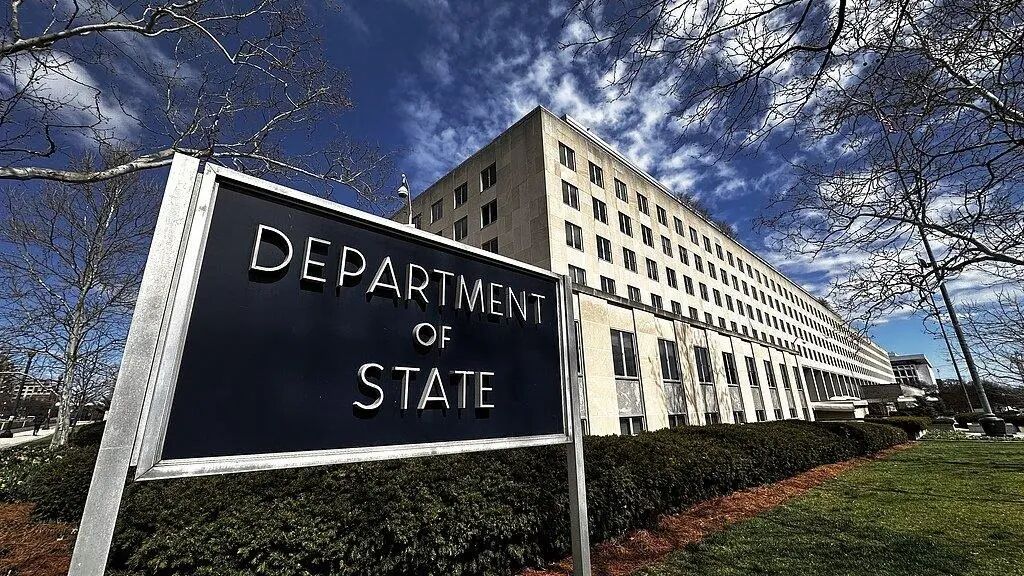
Group 1 - The U.S. State Department issued a security warning urging American citizens to leave Iran promptly due to heightened security measures and ongoing tensions across the country [1][3] - Americans are advised to create exit plans that do not rely on U.S. government assistance and to stockpile necessary supplies while avoiding demonstrations and maintaining a low profile [3] - Dual nationals must exit using an Iranian passport, as Iran does not recognize dual citizenship, and there is a high risk of questioning and detention for U.S. citizens in the region [3] Group 2 - Land borders between Iran and Armenia, as well as Turkey, remain open, while exiting through Turkmenistan and Azerbaijan requires special permission in advance [3] - The U.S. government warns against travel to Afghanistan, Iraq, or the Iran-Pakistan border areas [3] - Due to the lack of diplomatic relations between the U.S. and Iran, the Swiss embassy in Tehran serves as a limited representative for U.S. interests [3]
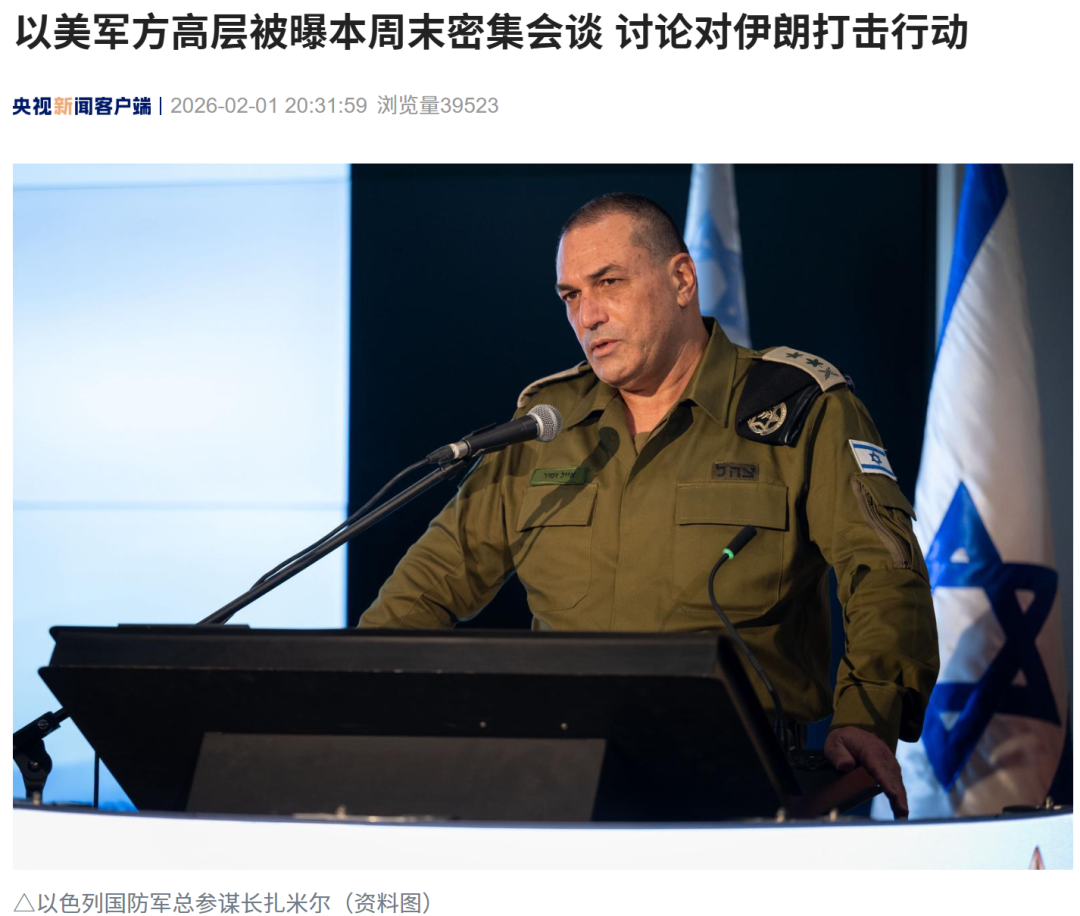
以美军方高层被曝周末密集会谈,讨论对伊朗打击行动!哈梅内伊:如果美国挑起战争,冲突将不再局限于一地
Mei Ri Jing Ji Xin Wen· 2026-02-01 16:43
Group 1 - The Israeli Defense Forces Chief of Staff, Aviv Kochavi, held intensive talks with U.S. officials in Washington, focusing on potential military strikes against Iran and tactical coordination between the U.S. and Israel [1][4] - Kochavi's discussions included a meeting with U.S. military leaders, emphasizing the need for advance warning from the U.S. before any potential strikes on Iran to prepare for defensive measures [4] Group 2 - Iranian Supreme Leader Ali Khamenei warned that any U.S. provocation could lead to a regional war, indicating a serious escalation in tensions [5][7] - Khamenei's public appearance aimed to stabilize domestic sentiment and demonstrate control over the Iranian government amidst rising tensions with the U.S. [10] - The Iranian parliament speaker declared that European military forces would be classified as "terrorist organizations" in response to the EU's designation of the Iranian Revolutionary Guard Corps as a terrorist entity [11][13] Group 3 - Iran conducted military exercises in the Strait of Hormuz, showcasing its defensive capabilities amid increasing U.S. military presence in the region [14][16] - The exercises included live-fire drills and demonstrated Iran's ability to control the Strait of Hormuz, a critical passage for global oil transportation [16]
伊朗正保持警惕 做好应对任何情况准备
Yang Shi Xin Wen Ke Hu Duan· 2026-02-01 10:29
Group 1 - The United States is sending mixed signals regarding its stance on Iran, issuing threats of military action while also indicating ongoing negotiations [1] - Iran is responding to these developments with caution, remaining vigilant and preparing for any potential scenarios [1]
哈梅内伊:面对任何发起进攻和骚扰的势力,伊朗必将予以重拳回击
Xin Lang Cai Jing· 2026-02-01 08:57
Core Viewpoint - The Supreme Leader of Iran, Ayatollah Khamenei, responded to recent U.S. threats regarding military actions involving Iran, asserting that such threats are not new and will not intimidate the Iranian people [1] Group 1: U.S. Military Threats - Khamenei highlighted that the U.S. has a history of making threats, including the claim that "all options are on the table," which includes military action [1] - He noted that the current U.S. President, Donald Trump, has frequently mentioned the deployment of aircraft carriers as a show of force [1] Group 2: Iran's Stance - Khamenei emphasized that Iran will not initiate war or attack any country, but will respond decisively to any aggression or provocation [1] - He warned the U.S. that if they provoke a conflict, it could escalate into a regional war [1]