美元贬值贸易

Search documents
ATFX:美国PPI公布前夕黄金持稳 降息预期将如何定下月末行情
Xin Lang Cai Jing· 2026-02-27 12:09
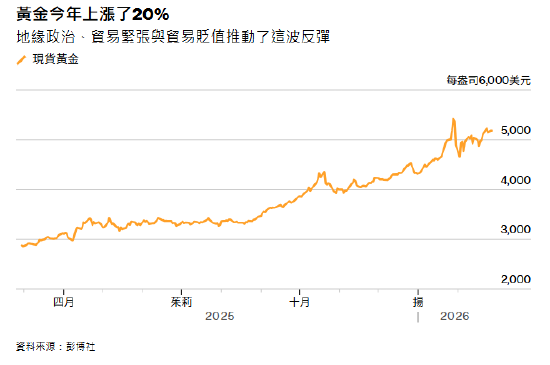
Core Viewpoint - The recent agreement between the U.S. and Iran to continue nuclear negotiations has led to a stabilization in gold prices, despite ongoing military tensions in the Middle East [1][8]. Group 1: Gold Price Trends - Gold has increased approximately 20% year-to-date, surpassing $5,000 per ounce after reaching a historical high at the end of January [1][8]. - The price of gold bars is expected to rise for the seventh consecutive month, marking the longest streak since 1973 [1][8]. - Gold prices have shown a rebound, with three consecutive weeks of gains in late February, stabilizing above $5,100 per ounce and testing resistance at $5,200 per ounce [7][15]. Group 2: Market Influences - Geopolitical tensions, trade disputes, and concerns over the depreciation of the dollar have contributed to the recent rally in gold prices [1][8]. - Investors have begun to increase their holdings in gold-backed exchange-traded funds (ETFs), with inflows this week surpassing earlier sell-offs, indicating a return of market interest [4][11]. - The market is closely monitoring the Federal Reserve's interest rate cut prospects, with expectations of a potential cut if inflation decreases, which could further support gold prices [7][14]. Group 3: Economic Indicators - The upcoming U.S. Producer Price Index (PPI) report is anticipated to show a year-on-year slowdown to 2.6%, down from 3%, which could influence market expectations regarding the Fed's next actions [7][14][15]. - If the PPI data comes in below expectations, it may reinforce the market's anticipation of further rate cuts, benefiting gold prices [15]. - Conversely, if the data exceeds expectations, it could indicate persistent inflation, potentially diminishing the urgency for rate cuts and exerting downward pressure on gold [15].