美日印澳四边机制

Search documents
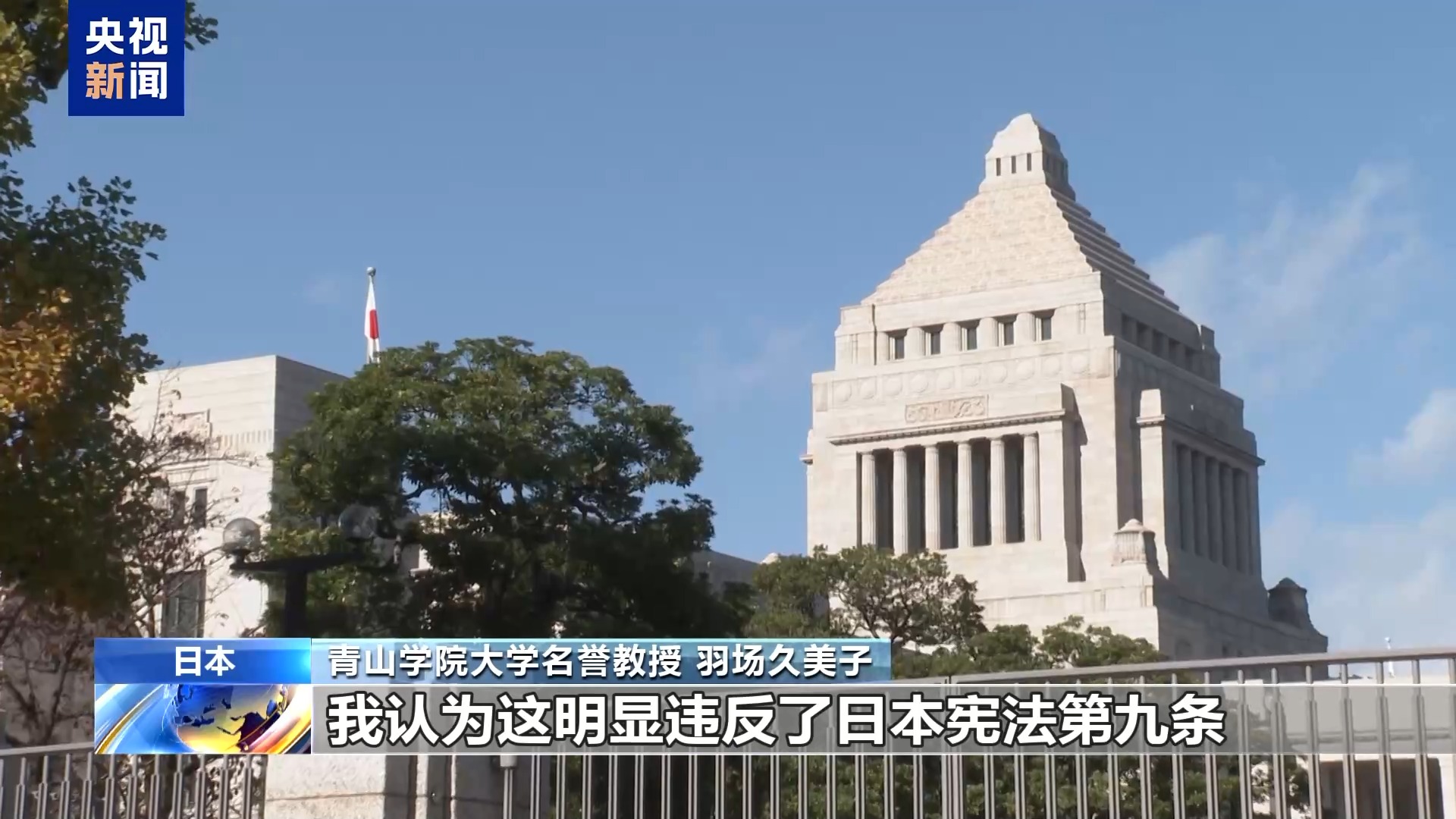
日本学者:高市早苗错误言论触及宪法和国际法红线
Yang Shi Xin Wen Ke Hu Duan· 2025-11-24 12:35
Core Viewpoint - The remarks made by Japanese Prime Minister Sanae Takaichi regarding Taiwan represent a significant deviation from Japan's longstanding government stance, potentially violating constitutional and international law principles [1][3]. Group 1: Constitutional Implications - Takaichi's use of the term "survival crisis situation" suggests Japan may enter a state of collective self-defense, implying potential military involvement, which contradicts Japan's constitutional commitment to pacifism under Article 9 [1][3]. - The assertion that Japan could engage militarily in Taiwan issues is seen as a violation of Japan's constitutional principles, particularly regarding the prohibition of war [3]. Group 2: International Law Considerations - From an international law perspective, any proactive military action by Japan under the guise of collective self-defense, without being attacked, would be considered illegal [3]. - The remarks reflect a broader trend of militarization in Japan, influenced by U.S. intentions, which could undermine Japan's historical commitment to peace [5]. Group 3: Regional Military Dynamics - Since late 2022, there has been an increase in military presence around Okinawa, including U.S. forces and troops from allied nations, contributing to a heightened sense of crisis among local populations [5]. - The involvement of foreign naval forces in military exercises in the Sea of Japan further illustrates the growing militarization and regional tensions [5].