
日本宪法第九条

Search documents
日本律师:日本政府扩军举动违背宪法
Yang Shi Xin Wen Ke Hu Duan· 2025-12-18 02:21
Group 1 - The Japanese government is advancing military expansion measures, raising concerns among various sectors and citizen groups regarding the contradiction with Article 9 of the Japanese Constitution, which emphasizes peace principles [1] - Legal experts argue that the current security laws, including the "Collective Self-Defense" provisions, violate the constitutional framework and have led to the establishment of the so-called "Security Three Documents" [1] - There is a call to take action to prevent the ongoing trend of military policy advancement in Japan [1] Group 2 - Comments made by Prime Minister Suga Yoshihide in the Diet are viewed as crossing legal boundaries and deviating from Japan's longstanding stance on China, necessitating a retraction [3] - Legal experts assert that Suga's remarks regarding Taiwan are illegal and significantly impact Japan-China relations, urging for an immediate retraction and acknowledgment of the error [5]


日本学者:高市错误言论影响恶劣 损害国家信誉
Yang Shi Xin Wen Ke Hu Duan· 2025-11-27 07:58
Group 1 - The core viewpoint of the article highlights that Japan's Prime Minister, Sanae Takaichi, made erroneous statements regarding Taiwan, contradicting Japan's established policy that recognizes the Taiwan issue as a domestic matter of China, which could harm Japan's national credibility and regional stability [1][3] - Professor Yoshinobu Nakamura from Okinawa University emphasized that Takaichi's comments represent interference in China's internal affairs, which is unacceptable, as the Taiwan issue is not an international problem but a domestic one [1] - The article mentions Japan's Constitution Article 9, which clearly states that Japan renounces war and the use of military force to resolve international disputes, indicating that Takaichi's statements could have serious negative implications [3]
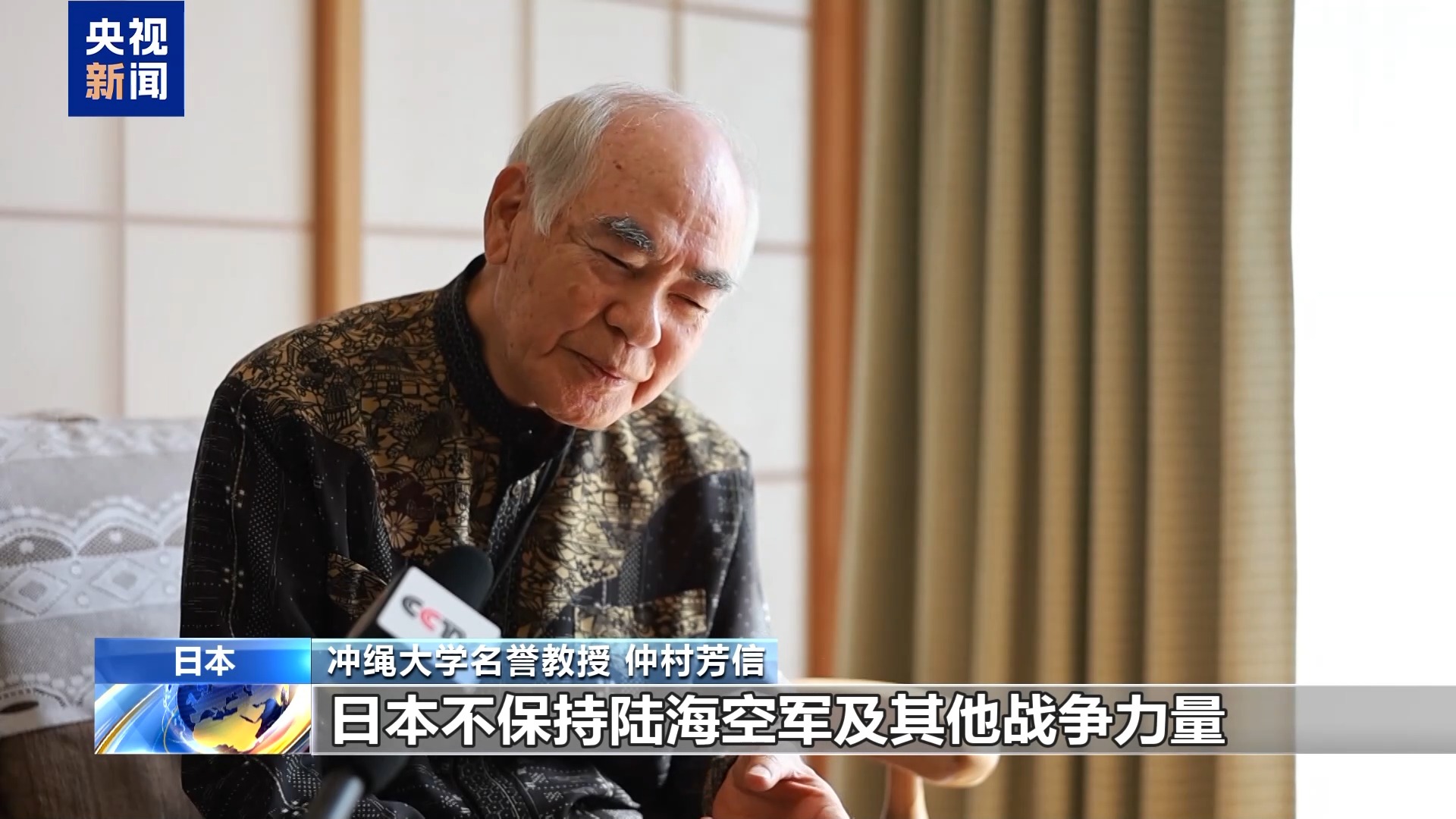
视频丨日本学者:高市早苗错误言论触及宪法和国际法红线
Yang Shi Xin Wen Ke Hu Duan· 2025-11-24 14:43
Core Viewpoint - The statements made by Japanese politician Sanae Takaichi regarding Taiwan represent a significant deviation from Japan's constitutional principles and could potentially alter Japan's long-standing pacifist stance [2][4][5]. Group 1: Constitutional Implications - Takaichi's use of the term "crisis of survival" in relation to Taiwan suggests a shift towards the exercise of collective self-defense, implying Japan's potential involvement in military conflict [2]. - This stance is seen as a violation of Article 9 of the Japanese Constitution, which renounces war and prohibits military intervention in foreign conflicts [4]. - Scholars argue that advocating for military intervention in Taiwan contradicts Japan's established position that the Taiwan issue is a domestic matter for China [2][4]. Group 2: Military Trends - There is a noted increase in militarization in Japan, particularly since late 2022, with the presence of not only the Japanese Self-Defense Forces but also U.S. military forces and troops from allied nations such as Australia, France, and Germany in the region [5]. - The local population in Okinawa and surrounding areas has expressed heightened concerns regarding the military buildup and foreign military exercises occurring in the vicinity [5].
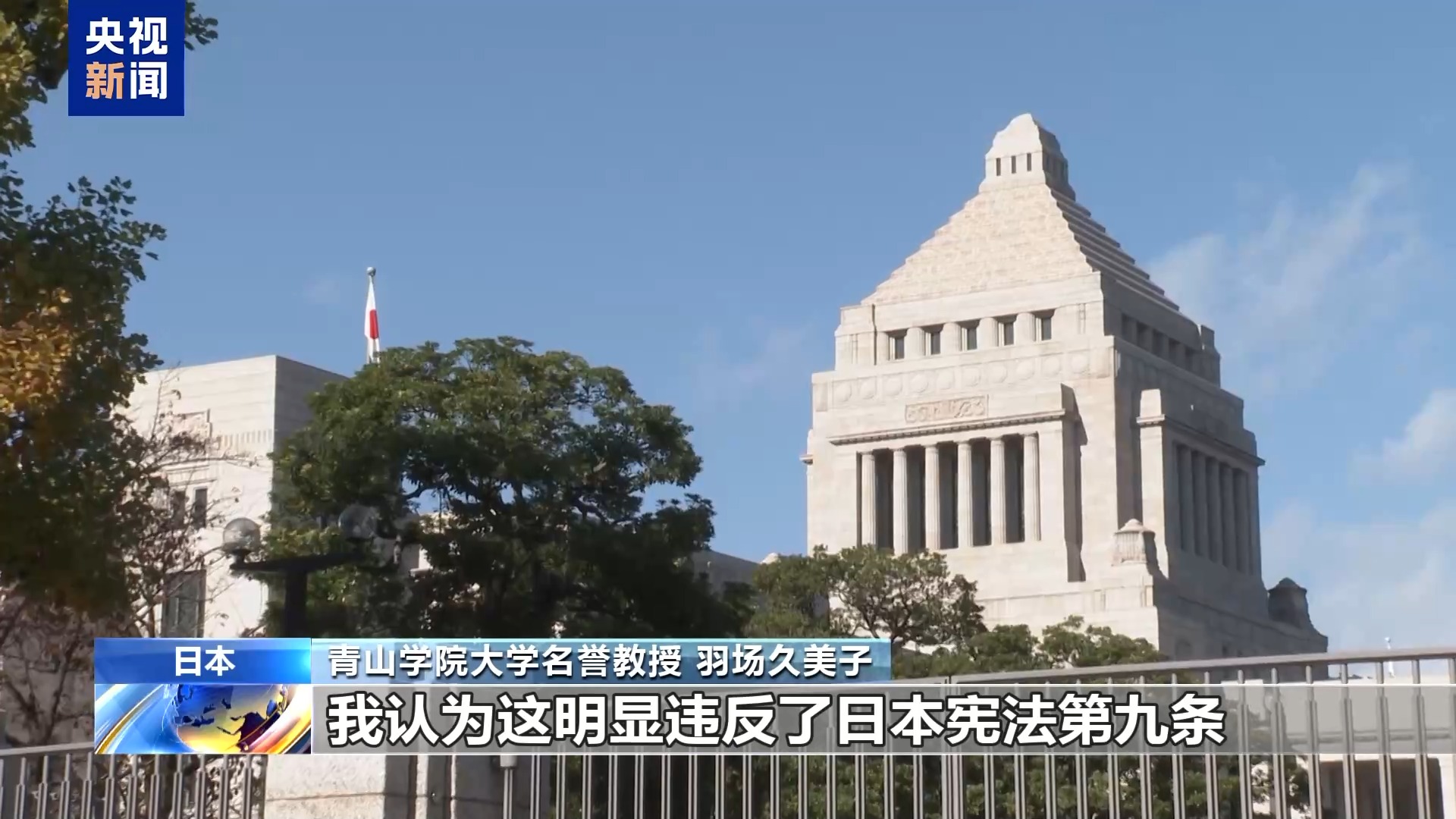
日本学者:高市早苗错误言论触及宪法和国际法红线
Yang Shi Xin Wen Ke Hu Duan· 2025-11-24 12:35
Core Viewpoint - The remarks made by Japanese Prime Minister Sanae Takaichi regarding Taiwan represent a significant deviation from Japan's longstanding government stance, potentially violating constitutional and international law principles [1][3]. Group 1: Constitutional Implications - Takaichi's use of the term "survival crisis situation" suggests Japan may enter a state of collective self-defense, implying potential military involvement, which contradicts Japan's constitutional commitment to pacifism under Article 9 [1][3]. - The assertion that Japan could engage militarily in Taiwan issues is seen as a violation of Japan's constitutional principles, particularly regarding the prohibition of war [3]. Group 2: International Law Considerations - From an international law perspective, any proactive military action by Japan under the guise of collective self-defense, without being attacked, would be considered illegal [3]. - The remarks reflect a broader trend of militarization in Japan, influenced by U.S. intentions, which could undermine Japan's historical commitment to peace [5]. Group 3: Regional Military Dynamics - Since late 2022, there has been an increase in military presence around Okinawa, including U.S. forces and troops from allied nations, contributing to a heightened sense of crisis among local populations [5]. - The involvement of foreign naval forces in military exercises in the Sea of Japan further illustrates the growing militarization and regional tensions [5].