
台湾问题

Search documents
外交部:日方纵容挑衅和恣意妄为必将付出代价
中国能源报· 2026-03-09 08:24
Group 1 - The Chinese Ministry of Foreign Affairs expresses strong opposition to Japan's actions regarding Taiwan, emphasizing that Japan's provocations will have consequences [1] - The spokesperson criticizes the visit of Taiwan's "Executive Yuan" head to Japan as a covert attempt to promote "independence," labeling it as despicable behavior [1] - China reaffirms its commitment to countering "Taiwan independence" forces and opposing external interference in Taiwan issues, asserting the defense of national sovereignty and territorial integrity [1]

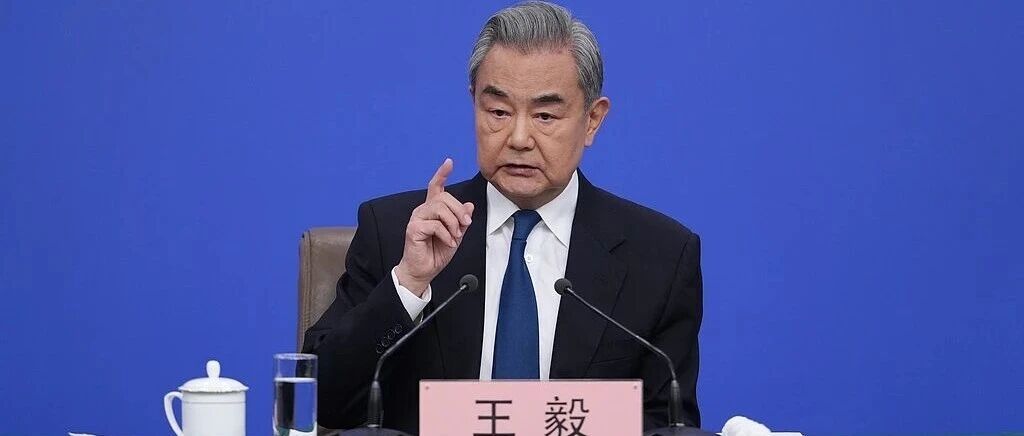
两会丨王毅:解决台湾问题 实现祖国完全统一不可阻挡
证券时报· 2026-03-08 03:59
Core Viewpoint - The Taiwan issue is considered an internal matter of China and a core interest that must not be violated. The international community has reached a strong consensus on the one-China principle, and the process of achieving complete reunification is unstoppable [1]. Group 1 - Wang Yi emphasized that the Taiwan issue is a core interest of China and any attempts to separate Taiwan from China will not be tolerated [1]. - The historical process of resolving the Taiwan issue and achieving national reunification is described as inevitable [1]. - There is a prevailing consensus in the international community supporting the one-China principle [1].
王毅:解决台湾问题,实现祖国完全统一不可阻挡
财联社· 2026-03-08 03:36
Core Viewpoint - Taiwan issue is a core interest of China and is considered an internal matter, with a strong emphasis on the historical context and legal documents supporting China's claim over Taiwan [1][2] Group 1: China's Stance on Taiwan - Taiwan is regarded as an inseparable part of China, and any attempts to separate it are deemed unacceptable [1] - The international community has reached a consensus on the one-China principle, reinforcing China's position on Taiwan [1] - The historical process of achieving complete reunification with Taiwan is described as unstoppable, with a clear warning against opposing this movement [1] Group 2: Legal Basis for Taiwan's Status - Taiwan's status has been solidified by various international legal documents, including the Cairo Declaration, Potsdam Proclamation, and UN General Assembly Resolution 2758 [2] - The narrative that Taiwan could be recognized as a separate "country" is firmly rejected, emphasizing that Taiwan's return to China is a result of historical victories [2] - Any attempts to create a "two Chinas" or "one China, one Taiwan" scenario are predicted to fail [2]
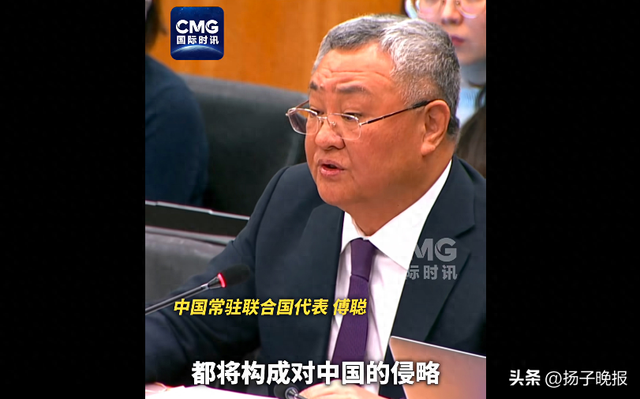
中方:日本无论以任何借口行使所谓“集体自卫权”介入台湾问题,都将构成对中国的侵略,中方必将迎头痛击!
Xin Lang Cai Jing· 2026-02-19 01:26
Group 1 - The core viewpoint of the article highlights China's strong opposition to Japan's recent statements linking Taiwan to Japan's so-called "survival crisis," which China perceives as an attempt to justify military intervention under the guise of collective self-defense [1][3] - China's permanent representative to the UN, Ambassador Fu Cong, emphasized that Japan's claims lack legal standing and violate Japan's international obligations as a defeated nation [3] - Fu Cong warned that any attempt by Japan to exercise collective self-defense in relation to Taiwan would be viewed as an act of aggression against China, which would respond decisively [3]
美国逼中国摊牌?中国前驻美大使:可能发生惊涛骇浪之事
Sou Hu Cai Jing· 2026-02-18 07:17
Group 1: U.S.-China Relations Overview - The U.S. perceives China's rapid rise as a threat to its global leadership, leading to a strategic competition designation since 2017 [1] - The trade war escalated in 2018, with the U.S. imposing tariffs on $34 billion worth of Chinese goods, followed by retaliatory measures from China [1] - By 2019, the U.S. expanded tariffs to cover $250 billion in Chinese products, while China responded with tariffs on $110 billion of U.S. goods [1] Group 2: Technology and Trade Dynamics - The U.S. enacted export control laws in 2018 and placed Huawei on an entity list in 2019, restricting U.S. companies from supplying chips to Huawei [1] - In response, China accelerated its self-sufficiency in technology, with Huawei developing its own Harmony operating system [1] - The U.S. continued to impose restrictions on advanced semiconductor equipment exports, causing global supply chain disruptions [1] Group 3: Taiwan and Military Tensions - U.S. arms sales to Taiwan increased significantly, including an $8 billion sale of F-16 fighter jets in 2019 [3] - The frequency of Chinese military aircraft entering Taiwan's air defense identification zone has risen, reflecting heightened tensions [3] - The U.S. has pushed for Taiwan's semiconductor industry relocation, further straining relations [3] Group 4: Diplomatic Insights - Ambassador Cui Tiankai emphasized that the U.S. sees China as its largest strategic competitor, a stance unlikely to change regardless of elections [5] - He criticized U.S. policies that oppose anything China does or proposes, which hinders cooperation in technology and culture [5] - The long-term nature of U.S.-China competition was highlighted, with China focusing on strengthening its national power and hard diplomacy [5][7] Group 5: Economic Context - The U.S. faces a severe debt crisis and economic challenges, while China aims to drive economic growth through innovation and strengthen ties with ASEAN [7] - Ambassador Cui's warnings about the long-term nature of U.S.-China rivalry suggest that China must rely on its own strength to respond to U.S. pressures [7]
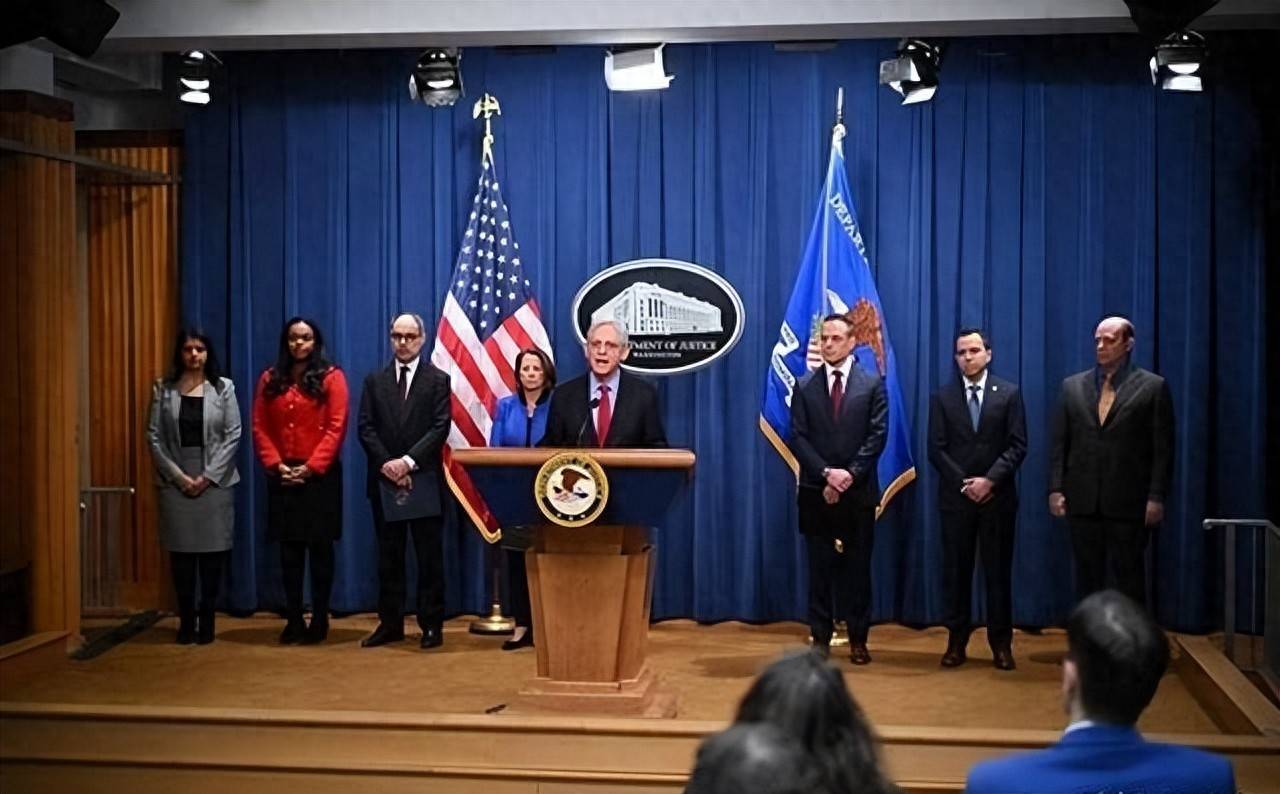
美国高官秘密访华,能否完成世纪之举全在特朗普一念之间
Sou Hu Cai Jing· 2026-02-16 06:16
Group 1 - The core focus of the article is on the potential for a trilateral summit involving China, the U.S., and Russia, which hinges on Trump's decisions and determination [1][19] - China's diplomatic efforts are highlighted, showcasing its role as a mediator between the U.S. and Russia, with significant phone calls occurring on the same day [3][8] - The article discusses the historical context of U.S.-China relations, noting the initial trade war under Trump but emphasizing a return to rational dialogue and a stable relationship thereafter [5][11] Group 2 - The relationship between the U.S. and Russia is examined, contrasting Trump's approach to Biden's, with Trump focusing on peace in the Ukraine conflict and easing tensions [6][11] - The simultaneous invitations for both U.S. and Russian leaders to visit China suggest an increasing likelihood of a summit, with preparations reportedly underway [9][11] - The article raises concerns about domestic opposition Trump may face regarding the summit, indicating potential political challenges that could affect its realization [11][19] Group 3 - The article mentions the U.S. Treasury Secretary's discreet visit to China to discuss new economic negotiations, hinting at a desire for tangible outcomes before Trump's visit [15][17] - Speculation arises regarding the U.S. possibly seeking an agreement with China on the Taiwan issue, which is expected to be a critical topic during Trump's visit [17][18] - The article concludes that despite preparations, the success of the summit ultimately depends on Trump's resolve and ability to navigate external pressures [19]
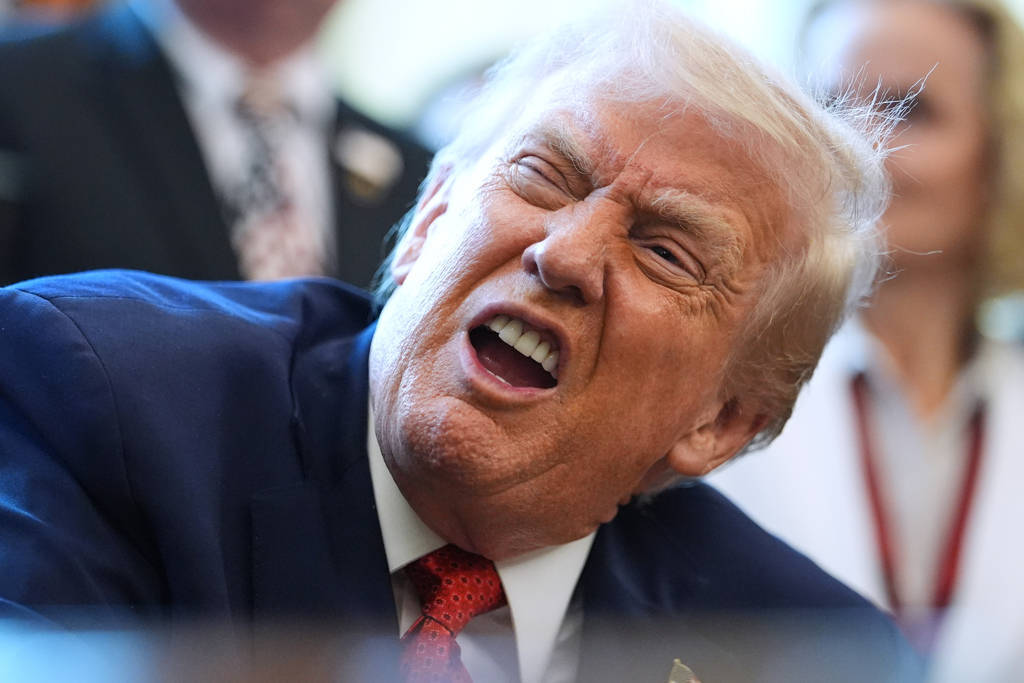
王毅就中日关系重申严正立场
第一财经· 2026-02-14 13:31
Core Viewpoint - The article discusses the remarks made by Wang Yi, China's Foreign Minister, at the Munich Security Conference, emphasizing China's role as a stabilizing force in Asia and expressing concerns over Japan's recent statements regarding Taiwan, which are seen as a challenge to China's sovereignty [3][4]. Group 1: China's Role in Regional Stability - Wang Yi asserts that Asia remains largely peaceful compared to other regions, despite recent localized conflicts, such as the one at the Cambodia-Thailand border, which were resolved quickly with China's involvement [3]. - He positions China as a key player in maintaining peace and stability in Asia, highlighting its constructive role in regional affairs [3]. Group 2: Concerns Over Japan's Statements - Wang Yi criticizes the Japanese Prime Minister's comments regarding Taiwan, interpreting them as a revival of militarism and a challenge to China's sovereignty, marking a significant shift in Japan's post-war stance [4]. - He draws a historical parallel between Japan's current rhetoric and its past aggressive actions, warning that such attitudes could lead to dangerous consequences if not addressed [4]. Group 3: Historical Context and Warnings - The article contrasts Japan's post-war handling of its militaristic past with Germany's approach, noting Japan's continued veneration of war criminals, which Wang Yi argues is a root cause of current tensions [4]. - Wang Yi calls for vigilance among peace-loving nations and warns Japan against being swayed by extreme right forces, suggesting that a return to militarism would lead to self-destruction [4].
王毅:日本如果不思悔改,势必重蹈覆辙
Ren Min Ri Bao· 2026-02-14 13:28
Core Viewpoint - The speeches by Wang Yi at the Munich Security Conference emphasize China's role as a stabilizing force in Asia and criticize Japan's recent statements regarding Taiwan, which are seen as a revival of militarism and a challenge to China's sovereignty [1][2]. Group 1: China's Position on Regional Stability - Wang Yi asserts that Asia remains generally peaceful, despite recent tensions, and highlights China's constructive role in maintaining regional stability [1]. - He points out that localized conflicts, such as the recent Cambodia-Thailand border skirmish, were quickly resolved with China's involvement [1]. Group 2: Criticism of Japan's Actions - Wang Yi condemns the Japanese Prime Minister's remarks about Taiwan, interpreting them as a direct challenge to China's sovereignty and a revival of Japan's militaristic ambitions [2]. - He draws a historical parallel, noting that Japan's past justifications for aggression echo current rhetoric, warning that failure to learn from history could lead to disastrous consequences [2]. - The speech calls for vigilance among peace-loving nations regarding Japan's potential return to militarism, urging the Japanese people to resist extreme right-wing influences [2].
台湾不得不面对的现实世界
Xin Lang Cai Jing· 2026-02-06 06:35
Group 1 - The core message emphasizes the importance of stability and certainty in international relations, particularly regarding Taiwan's status as a part of China, which is framed as a historical fact that must be acknowledged [1][4][5] - Xi Jinping's firm stance on Taiwan is highlighted, stating that Taiwan is an integral part of China and that any attempts at separation will not be tolerated, urging the U.S. to handle arms sales to Taiwan with caution [2][4] - The article critiques Taiwan's leadership for maintaining unrealistic expectations regarding U.S. support and emphasizes that military purchases do not guarantee safety, but rather escalate tensions [2][3] Group 2 - The article notes the recent diplomatic engagements between China and other global leaders, indicating China's growing influence and the need for collaboration in a rapidly changing world [4] - It discusses the misconception among Taiwanese citizens regarding democracy and international support as shields against military threats, stressing that true political reality is based on strength and legal principles [4][5] - The narrative suggests that the unification of Taiwan with mainland China is essential for the rejuvenation of the Chinese nation, framing it as a necessary step towards national completeness [5]
习近平同美国总统特朗普通电话 积累互信,走出一条正确相处之道
Xin Hua She· 2026-02-05 03:03
Group 1 - The core message emphasizes the importance of maintaining good communication and cooperation between China and the United States, with both leaders expressing a commitment to navigate challenges together [1][2] - Xi Jinping highlighted the significance of the Taiwan issue as the most critical aspect of Sino-U.S. relations, asserting China's stance on national sovereignty and territorial integrity [1] - Both leaders acknowledged the upcoming significant events in 2026, including the 250th anniversary of the United States and the APEC and G20 summits, indicating opportunities for enhanced dialogue and cooperation [1][2] Group 2 - Trump expressed respect for Xi Jinping and acknowledged the positive interactions in trade and other areas under their leadership, indicating a willingness to strengthen bilateral relations [2] - The dialogue reflects a mutual understanding of each country's concerns, particularly regarding Taiwan, with an emphasis on maintaining stable relations during Trump's presidency [2]