集体自卫权

Search documents
日本按现行法律难向霍尔木兹海峡派自卫队
日经中文网· 2026-03-18 08:03
Core Viewpoint - Japan's constitutional Article 9 restricts overseas military deployment, requiring specific conditions to be met for any military action, which have not been previously activated [2][4][5]. Group 1: Legal Framework and Military Actions - Japan's government is discussing potential responses by the Self-Defense Forces (SDF) due to the blockade of the Strait of Hormuz by Iran, but current legal frameworks make it difficult to fulfill U.S. expectations for troop deployment [2][4]. - The SDF has never operated in combat zones, and any action in the Persian Gulf is deemed unrealistic under current constitutional constraints [4][5]. - Actions such as mine-sweeping and vessel protection could be interpreted as the use of force under international law, which complicates Japan's ability to engage militarily [4][5]. Group 2: Conditions for Military Engagement - For Japan to engage in military action, it must classify the situation as a "survival crisis" or an "important influence situation," both of which require a legal basis that has not been previously established [5][6]. - Any military cooperation with the U.S. against Iran would necessitate a justification under international law, which is currently weak due to the lack of a UN resolution supporting U.S.-Israeli actions [5][6]. - Japan's past military actions were based on international cooperation under UN resolutions, such as support during the Gulf War and the Iraq War, which are not applicable in the current context [5][6]. Group 3: Current Military Deployments and Diplomacy - Japan has deployed the "Yuudachi" destroyer and P-3C patrol aircraft for intelligence-gathering missions in the region, operating under the Defense Ministry's investigative provisions [6]. - Recent diplomatic efforts include discussions between Japan's Foreign Minister and Iran's Foreign Minister, emphasizing the need for Iran to ensure the safety of vessels in the Strait of Hormuz [6].


美国给日本出了难题:派军舰“护航”霍尔木兹
中国能源报· 2026-03-15 08:17
Core Viewpoint - The article discusses the complexities and legal challenges Japan faces regarding the potential deployment of its Self-Defense Forces to escort ships in the Strait of Hormuz, following a request from the United States amid rising tensions with Iran [1][2][12]. Group 1: Historical Context - In 2019, Japan received a similar request from the U.S. during heightened tensions between the U.S. and Iran, which led to oil tanker attacks in the Strait of Hormuz [4][3]. - The then Prime Minister Shinzo Abe's government ultimately decided against joining the U.S.-led escort coalition, citing Japan's historical relationship with Iran and the need to balance U.S. interests with Japan's diplomatic stance [6]. Group 2: Legal Framework - Japan has four potential legal frameworks to consider if it decides to assist the U.S.: 1. Utilizing security-related legislation that allows for collective self-defense and support for foreign military operations [5]. 2. Applying the Self-Defense Forces Act for maritime security operations, which would limit actions to Japanese vessels only [10]. 3. Using the Anti-Piracy Act, which permits joint operations with other nations but is limited to actions against piracy, not applicable to Iranian threats [11]. 4. Creating special measures legislation, which would require new legal provisions [5]. Group 3: Diplomatic Implications - If Japan were to invoke collective self-defense to assist U.S. forces, it would signify a major shift in Japan's foreign policy, effectively categorizing Iran as an adversary despite historical ties [9]. - The current geopolitical landscape is more complex than in 2019, with Japan facing increased pressure from the U.S. under President Trump, who has adopted a more forceful diplomatic approach [12].

王毅四问日本
第一财经· 2026-03-08 04:17
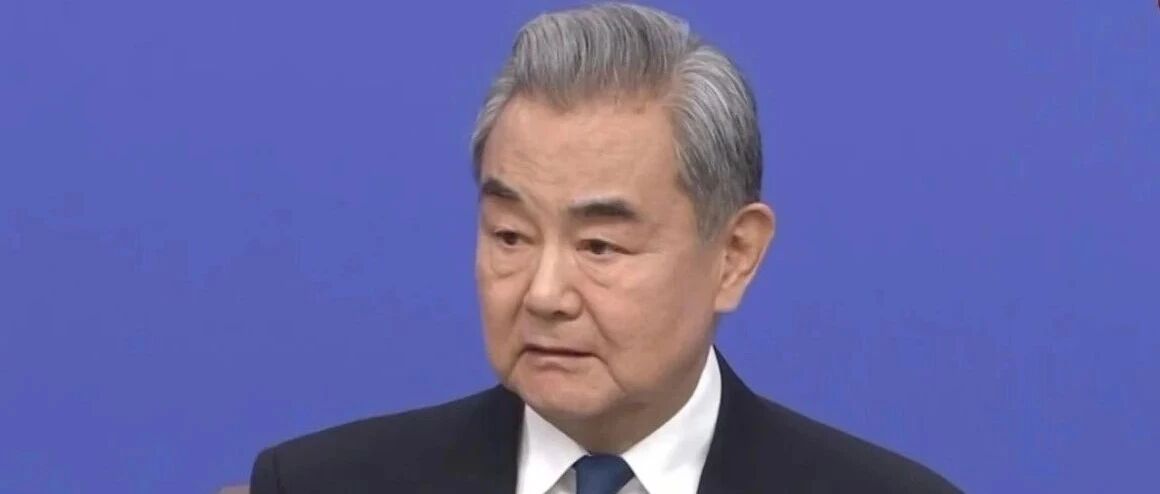
Group 1 - The core viewpoint of the article emphasizes that the direction of China-Japan relations depends on Japan's choices, particularly in light of historical reflections on past aggressions [5][7] - Wang Yi highlights the significance of the 80th anniversary of the Tokyo Trials, which served to expose Japan's militaristic crimes and calls for Japan to reflect on its historical actions [7][9] - Concerns are raised regarding Japan's current leadership claiming that Taiwan's issues could trigger Japan's collective self-defense, questioning Japan's right to intervene in China's internal affairs [5][9] Group 2 - The article stresses that the Chinese government and its people will not allow any attempts to justify colonialism or rewrite history regarding past invasions [6][7] - There is a warning that Japan's invocation of collective self-defense could undermine its pacifist constitution, raising alarms among China and other Asian nations about Japan's future intentions [9]
王毅四问日本!
中国能源报· 2026-03-08 03:26
Core Viewpoint - The article discusses China's stance on foreign relations, particularly regarding Japan's involvement in Taiwan affairs, emphasizing that Taiwan is an internal matter for China and questioning Japan's right to intervene [2]. Group 1: China-Japan Relations - Wang Yi, a member of the Political Bureau of the Communist Party of China and Foreign Minister, asserts that Taiwan issues are China's internal affairs and questions Japan's qualifications to intervene [2]. - The article highlights concerns over Japan's potential military actions, referencing historical precedents of Japanese militarism and the implications of Japan's collective self-defense rights [2]. Group 2: Historical Context - The year marks the 80th anniversary of the Tokyo Trials, which are framed as a judgment of human conscience and historical justice, reinforcing China's position against colonialism and invasion [2].
霍尔木兹海峡封锁,日本直面“存亡危机”?
凤凰网财经· 2026-03-03 14:07
Core Viewpoint - The article discusses Japan's strategic response to the potential blockade of the Strait of Hormuz by Iran, emphasizing the importance of this waterway for Japan's energy imports and the implications for Japan's collective self-defense policy [1][3]. Group 1: Strategic Importance of the Strait of Hormuz - The Strait of Hormuz is critical for Japan, with over 90% of its crude oil imports coming from the Middle East, and approximately 80% of oil tankers passing through this strait [1]. - The Japanese government has previously considered a blockade of the strait as a scenario that could trigger the exercise of collective self-defense under its security laws [1]. Group 2: Government's Cautious Stance - The current Japanese administration, led by Prime Minister Kishi Nobuo, is taking a cautious approach, stating that it is still gathering information and has not yet classified the situation as a significant security threat [3]. - Historically, Japan has never activated collective self-defense in response to threats to resources from the Strait of Hormuz, indicating a high threshold for such a decision [3][4]. Group 3: Potential Future Developments - If the situation escalates to a blockade involving mines, the U.S. may seek Japan's assistance for mine-clearing operations, presenting a significant test for the current administration's security policy since the enactment of the security laws [4].

【8点见】交警回应多人在国道边停车捡“银子”
Yang Shi Wang· 2026-02-20 00:12
Group 1 - The Spring Festival travel period in 2026 is expected to see daily transportation numbers exceeding 300 million people [2] - The Chinese government is enhancing safety management across the entire supply chain of fireworks and firecrackers following a tragic explosion incident in Hubei [2] - Significant advancements have been made by Chinese scientists in optical communication and 6G technology, achieving record data transmission rates through a newly developed integrated communication system [2] Group 2 - A fire truck accident in Hunan resulted in the sacrifice of six firefighters [8] - A fireworks explosion in Hubei led to 12 fatalities, with all victims' identities confirmed [8] - Tourist attractions like Jiuzhaigou are reaching maximum booking capacity, urging visitors to plan their travel times accordingly [8]

中方必将迎头痛击
Xin Lang Cai Jing· 2026-02-19 20:57
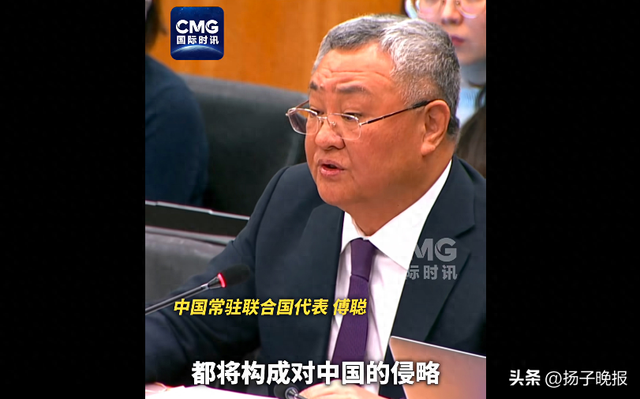
Core Points - The Chinese representative to the United Nations, Fu Cong, emphasized that any attempt by Japan to exercise "collective self-defense" regarding Taiwan would be considered an act of aggression against China, which would be met with a strong response [1][2] - Fu highlighted the importance of the principles established by the UN Charter, which prohibits the use of force or threats of force, in maintaining international order and preventing a third world war [1] - He criticized Japanese leaders for linking Taiwan to Japan's "survival crisis" and attempting to justify military intervention based on the Japan-U.S. alliance [1][2] Legal and Historical Context - Fu argued that the notion of Japan's self-defense in relation to Taiwan is legally unfounded, asserting that Taiwan is an inseparable part of China and that its resolution is a domestic issue that other countries have no right to interfere with [2] - He stated that such claims violate Japan's obligations as a defeated nation under international law, specifically referencing the Cairo Declaration, the Potsdam Proclamation, and Japan's surrender documents [2] - The representative warned that these claims challenge the post-war international order and should raise alarms among peace-loving nations [2]
中国代表:日本行使“集体自卫权”介入台湾问题 中方必将迎头痛击
Xin Hua She· 2026-02-19 01:54
Core Viewpoint - The Chinese representative to the United Nations, Fu Cong, emphasized that any attempt by Japan to exercise "collective self-defense" regarding Taiwan would be considered an act of aggression against China, which would be met with a strong response [1] Group 1: Legal and Historical Context - Fu Cong highlighted that the United Nations Charter establishes the fundamental principle of prohibiting the use of force or threats of force, which is crucial for maintaining post-war international order and preventing a third world war [1] - He criticized Japanese leaders for linking Taiwan to Japan's "survival crisis" and attempting to justify military intervention based on the Japan-U.S. alliance, which he deemed a misinterpretation of international law [1] - The representative asserted that Taiwan is an inseparable part of China, and the resolution of the Taiwan issue is a matter of China's internal affairs, with no foreign interference or military action permitted [1] Group 2: International Obligations and Principles - Fu Cong stated that Japan's claims violate its obligations as a defeated nation under international agreements such as the Cairo Declaration, Potsdam Proclamation, and Japan's surrender documents [1] - He argued that these claims contravene the United Nations Charter's principles of respecting national sovereignty and territorial integrity, as well as non-interference in internal affairs, representing a serious provocation to the post-war international order [1] - The representative called for vigilance and opposition from all peace-loving nations against Japan's attempts to justify military intervention in Taiwan under the guise of "collective self-defense" [1]
傅聪在联合国四批日方谬论
Xin Lang Cai Jing· 2026-02-19 01:26
Core Viewpoint - The Chinese representative at the United Nations, Fu Cong, criticized Japan's recent statements linking Taiwan to Japan's so-called "survival crisis," asserting that Japan's claims are legally unfounded and violate international obligations [1] Group 1: Japan's Actions and Statements - Fu Cong highlighted that Japanese leaders are moving against historical trends by associating Taiwan with Japan's security concerns [1] - The representative emphasized that Japan's claims are based on a misinterpretation of the Japan-U.S. alliance and the concept of "collective self-defense" [1] Group 2: Legal and International Implications - The Chinese representative stated that Japan's assertions contradict its obligations as a defeated nation and violate the fundamental principles of the United Nations Charter [1] - Fu Cong warned that Japan's potential military intervention in Taiwan under the guise of "collective self-defense" would be considered an act of aggression against China [1]

中方:日本无论以任何借口行使所谓“集体自卫权”介入台湾问题,都将构成对中国的侵略,中方必将迎头痛击!
Xin Lang Cai Jing· 2026-02-19 01:26
Group 1 - The core viewpoint of the article highlights China's strong opposition to Japan's recent statements linking Taiwan to Japan's so-called "survival crisis," which China perceives as an attempt to justify military intervention under the guise of collective self-defense [1][3] - China's permanent representative to the UN, Ambassador Fu Cong, emphasized that Japan's claims lack legal standing and violate Japan's international obligations as a defeated nation [3] - Fu Cong warned that any attempt by Japan to exercise collective self-defense in relation to Taiwan would be viewed as an act of aggression against China, which would respond decisively [3]