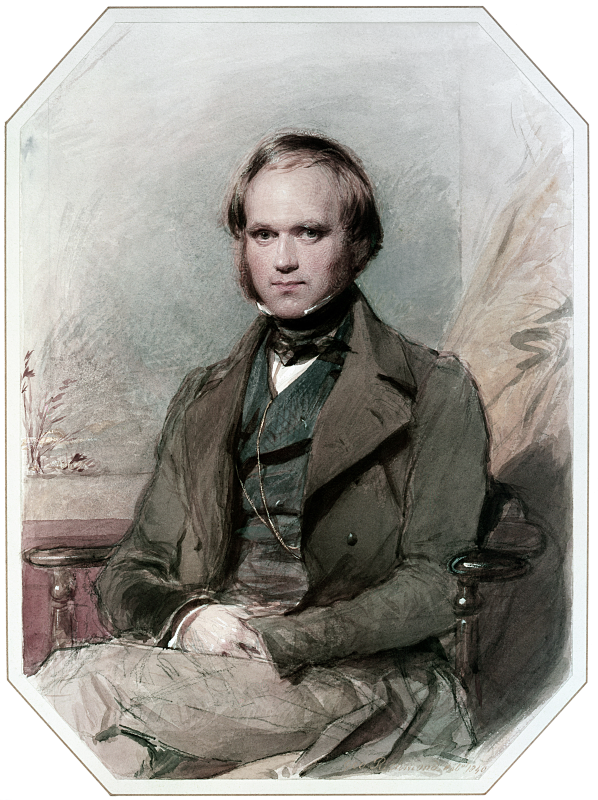
群体选择理论

Search documents
中泰资管天团 | 姜诚的新一期年度推荐书单
中泰证券资管· 2026-01-08 11:33
Core Viewpoint - The article presents a recommended reading list by Jiang Cheng for 2026, emphasizing the importance of reading and engaging with great books to enhance investment decision-making and market understanding [2]. Summary by Relevant Sections - **Book Recommendations and Insights** - "The Age of Downward Mobility": Discusses the division in American society and the firm beliefs of opposing sides [4]. - "Fermat's Last Theorem": Chronicles the history of solving the theorem and serves as a brief history of mathematics, highlighting curiosity as a primary human drive [6]. - "The Glorious Sunset: Zhang Juzheng and the Political Landscape of the Ming Dynasty": Explores the balance between idealism and realism in achieving goals, and the dual nature of power [8]. - "The Social Conquest of Earth": Examines the evolution of altruism and critiques Hamilton's kin selection theory, proposing group selection as a key evolutionary force [10]. - "Kangxi's Red Ticket": Offers a narrative on historical events, emphasizing the interplay of politics and culture in Sino-Western relations [12]. - "Inside the Matter: The Chinese Government and Economic Development": Stresses the necessity of understanding the government's role in China's economic growth [14]. - "China's Choices: US-China Rivalry and Strategic Decisions": Highlights the Chinese government's effective governance compared to other global governments, amidst Western media criticism [16]. - "The Cost of Prosperity: The Decline and Revival of Wealthy Empires": Challenges the notion that economic prosperity leads to social stability, linking low national morale to increased crime [18]. - "The Senses of Birds": Discusses the intriguing aspects of avian sensory perception [20]. - "The Formation of Modern China": Provides insights into China's transition from an ancient empire to a modern state [22]. - "The Road to Reform: China's Economic Reforms from 1978 to 1992": Emphasizes the role of practical experience in driving theoretical breakthroughs [24]. - "The Hesitation Between Principles and Achievements: Zeng Guofan, Li Hongzhang, Zhang Zhidong, and Their Era": Explores the balance between ideals and practical achievements [26]. - "The Shanghai Trilogy": Combines detailed historical materials with narrative skill to create a vivid portrayal of history [28]. - "War and Obsession": A narrative of ideals being defeated by reality [30]. - "Chiang Kai-shek's Strategic Layout: 1939-1941": Provides a case study on decision-making in complex situations [32]. - "Piecing Together the Truth": Highlights the importance of accurate statistical data in understanding reality [34]. - "Why Data Lies": Warns against the pitfalls of using metrics as mere targets, which can distort their value [36].


从生命之树到生命之珊瑚:达尔文的选择和AI时代的回响
Di Yi Cai Jing· 2025-09-12 02:48
Core Insights - The article discusses the significance of coral reefs in understanding evolutionary biology, suggesting that the coral metaphor offers a richer perspective than the traditional tree diagram used by Darwin [1][8][10]. Group 1: Darwin's Contributions - Darwin's early observations of coral reefs during his voyage on the HMS Beagle led to significant insights into geological structures and evolutionary theory, culminating in his later works, including "On the Origin of Species" [2][4]. - His first scientific monograph, "The Structure and Distribution of Coral Reefs," introduced the revolutionary "subsidence theory," explaining how coral reefs form through the interplay of biological activity and geological processes [5][6]. Group 2: Evolutionary Models - The article contrasts Darwin's tree diagram of evolution with the coral structure, arguing that the latter better represents the complexity and interconnectedness of species evolution [7][9]. - The coral metaphor emphasizes three key aspects of evolution: cooperative evolution, historical continuity, and ecological symbiosis, which are often overlooked in linear models [11][12]. Group 3: AI and Evolutionary Insights - The emergence of AI technologies parallels the coral growth model, where iterative learning processes resemble the gradual accumulation of coral structures over time [12][15]. - AI's multi-agent systems reflect the collaborative intelligence seen in coral communities, suggesting that intelligence may arise from collective interactions rather than isolated computations [13][15]. Group 4: New Research Paradigms - The dialogue between AI and evolutionary biology fosters new research methodologies, allowing for simulations that can validate traditional evolutionary theories and explore unknown possibilities [16][17]. - AI's ability to model coral-like evolution challenges the linear progression of intelligence, suggesting that adaptability is more crucial than a simplistic view of advancement [17].