
老城更新

Search documents
技术创新破解老城施工难题
Xin Lang Cai Jing· 2026-01-19 17:08
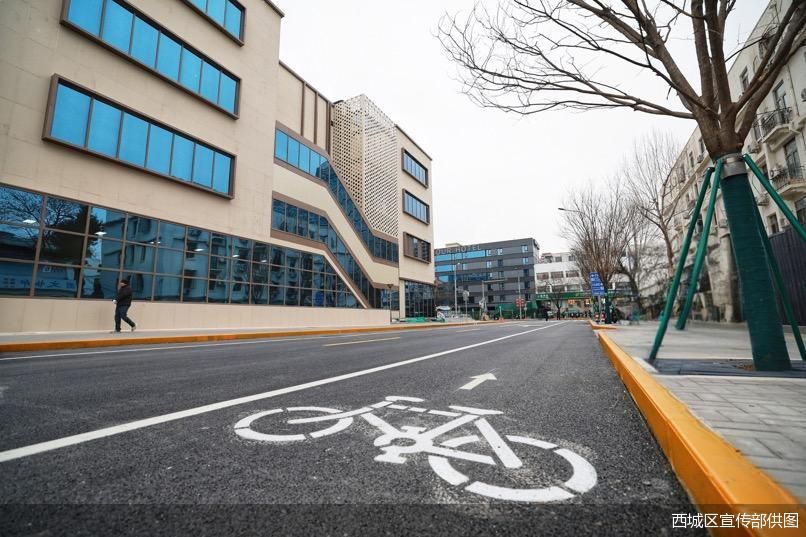
Core Insights - The successful completion of the East Side Road project of No. 44 Middle School in Xicheng District addresses traffic issues in the area, enhancing convenience, safety, and ecological aspects for local residents and students [1][3] - The project employs innovative technology, specifically a linear air membrane, to tackle construction challenges in the old city, marking it as the first of its kind in municipal road construction in the city [2] Group 1: Project Overview - The East Side Road project was initiated in September last year to improve traffic microcirculation and resolve transportation difficulties in the old city [2] - The linear air membrane covers an area of 3,505 square meters, with dimensions of 215 meters in length, 18 meters in width, and 9 meters in height, showcasing significant technological advancements [2] Group 2: Technical Innovations - The project features a "sandbox mold" foundation design that enhances wind resistance and stability, allowing for a 60% reduction in construction time compared to traditional methods [2] - A dual defense system combining human and technical measures has been implemented, achieving over 90% reduction in dust emissions and a 15-decibel decrease in noise levels [2] Group 3: Socioeconomic Impact - The road project not only improves transportation but also enhances municipal infrastructure, including water supply and drainage systems, thereby increasing the area's capacity to support urban facilities [3] - The completion of the project serves as a practical example for urban renewal and traffic improvement initiatives, responding to community aspirations for a better quality of life [3]
北京西城四十四中东侧路工程顺利通车
Bei Jing Shang Bao· 2026-01-17 12:59
Core Viewpoint - The successful completion of the East Side Road project of No. 44 Middle School in Xicheng District, Beijing, enhances traffic flow, alleviates congestion, and improves the walking environment for students and residents [2] Infrastructure Development - The road renovation has connected previously isolated routes, creating a circular road network with nearby streets, effectively distributing traffic from major secondary roads [2] - The project includes a 2.5-meter wide west sidewalk, a 2-meter wide east sidewalk, and a 1.5-meter wide tree planting area, optimizing pedestrian safety and efficiency [2] Social and Economic Impact - The project has improved municipal infrastructure by upgrading water supply, drainage, and recycled water systems, enhancing the area's capacity to manage urban facilities [2] - Enhanced connectivity and improved regional environment are expected to inject vitality into the Sanlihe area, promoting economic development [2] Collaborative Efforts - The successful execution of the project is attributed to the collaboration of multiple departments, process optimization, and technological innovation, leading to improved efficiency [2] - The project serves as a replicable model for urban renewal and traffic micro-circulation in core urban areas, addressing community aspirations for a better quality of life [2] Future Initiatives - Xicheng District plans to continue focusing on public transportation needs through various measures to enhance the sense of happiness, safety, and fulfillment among residents [2]

宛平城焕新开放
Ren Min Ri Bao· 2025-08-27 22:19
Core Perspective - The article highlights the revitalization and cultural significance of the Lugouqiao Wanfengcheng historical and cultural district in Beijing, emphasizing the integration of historical preservation with modern urban development [2][5][7]. Group 1: Historical and Cultural Significance - The Lugouqiao Wanfengcheng area is recognized as a historical cultural protection zone and a site for national anti-war memorial activities, embodying the spirit of the great anti-war struggle [2][3]. - The district features significant historical sites, including the 800-year-old Lugou Bridge and the China Anti-Japanese War Memorial Museum, which serve as reminders of the past and are integral to the city's cultural identity [2][8]. Group 2: Urban Renewal and Development - Recent renovations have improved the living environment while preserving historical elements, with a focus on integrating cultural heritage into modern life [2][5]. - The area is being transformed into a "museum city," with plans to introduce various museums and cultural facilities to enhance public cultural services [3][4]. Group 3: Community Engagement and Activities - The district hosts various exhibitions and events that reflect local history and culture, such as the "Fengtai Anti-War Special Exhibition," showcasing artifacts and photographs from the anti-Japanese war [4][11]. - The integration of modern technology in exhibitions, such as QR codes for detailed information, enhances visitor engagement and educational experiences [13][14]. Group 4: Visitor Experience and Tourism - Since the reopening of the China Anti-Japanese War Memorial Museum, daily visitor numbers have exceeded 20,000, indicating a growing interest in the area's historical significance [14]. - The district aims to attract international tourists by promoting peace and cultural exchange, showcasing China's commitment to preserving its history while looking towards the future [14].