
耕地保护红线

Search documents
“农民种地被抓”争议背后,一个大兴安岭旗县的林耕矛盾
Xin Jing Bao· 2025-12-28 23:25
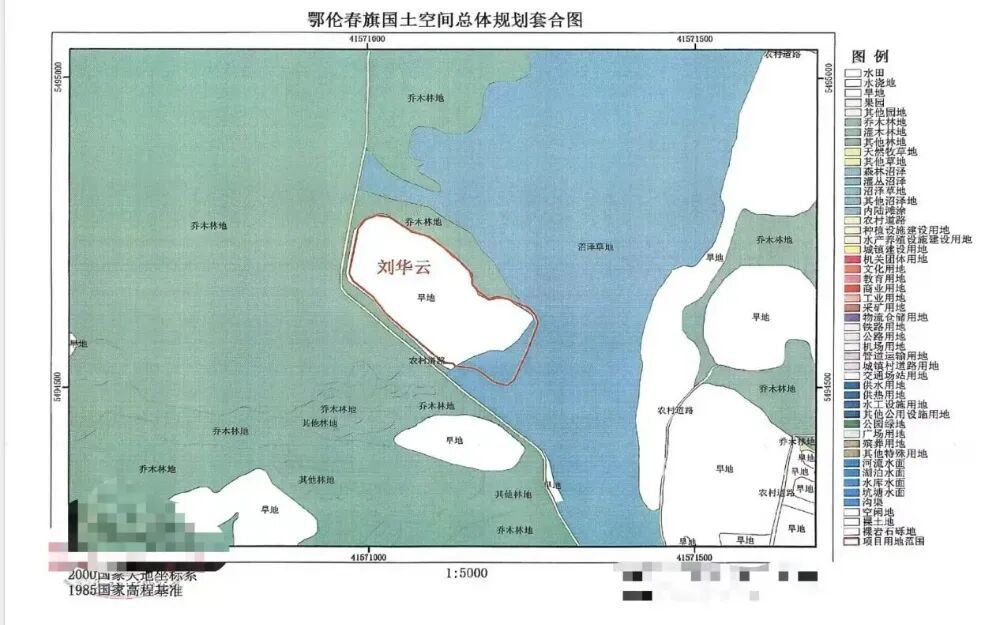
Core Viewpoint - The case of Liu Huayun highlights the conflict between agricultural practices and forestry regulations in Inner Mongolia, raising questions about land classification and usage rights [1][2][3] Group 1: Legal Context and Land Classification - Liu Huayun is accused of illegally occupying agricultural land, which is claimed to be within the forestry company's jurisdiction, thus classified as forest land [1][4] - The core dispute revolves around whether the land in question is classified as agricultural or forest land, influenced by the region's historical context of land reclamation [2][12] - The local government has issued directives to prevent abandonment of farmland within the designated agricultural protection line, prompting farmers to reclaim previously abandoned land [1][14] Group 2: Historical Background and Land Use - The region has a history of land reclamation dating back over 30 years, with much of the land being in a legal gray area regarding its classification [2][24] - The influx of agricultural populations since the 1990s has led to significant changes in land use, often resulting in illegal land occupation and deforestation [7][18] - The government has previously encouraged land reclamation, but this has shifted to stricter enforcement against illegal land use due to ecological concerns [23][24] Group 3: Economic Implications and Agricultural Policies - The economic value of land has significantly increased, with prices rising from tens of thousands to hundreds of thousands for plots, driving illegal land reclamation activities [26][34] - The local government faces pressure to maintain agricultural production, particularly for soybean cultivation, which is crucial for food security [30][31] - Farmers involved in illegal land reclamation often rely on the income generated from these lands, which complicates their legal standing and the government's enforcement actions [34][35] Group 4: Ongoing Legal Proceedings and Future Considerations - Liu Huayun and other farmers are currently awaiting legal judgments regarding their land use, with the outcomes potentially impacting future agricultural practices in the region [3][38] - The local government is exploring ways to resolve the land use conflicts, including potential auctions or management of disputed lands [37][38] - The lack of clear legal definitions and the ongoing disputes over land classification continue to create uncertainty for farmers and land management authorities [35][36]

【8点见】黄岩岛国家级自然保护区要来了
Yang Shi Wang· 2025-09-11 00:11
Group 1 - The State Council approved the establishment of the Huangyan Island National Nature Reserve, with the National Forestry and Grassland Administration announcing its area, scope, and functional zoning [2] - During the 14th Five-Year Plan period, China's manufacturing value-added is expected to increase by 8 trillion yuan, contributing over 30% to global manufacturing growth, maintaining a global share of approximately 30% for 15 consecutive years [2] - The fourth national cultural relics census discovered over 130,000 new cultural relics, with 35 batches of 537 pieces of lost cultural artifacts returning to the country during the 14th Five-Year Plan period [2] Group 2 - China has added four new World Irrigation Heritage sites, bringing the total to 42 [4][11] - The Ministry of Natural Resources stated that China has firmly maintained the red line for arable land protection [12] - China's forest coverage rate exceeds 25%, making it the fastest-growing country in terms of greening [12]

截至2024年底中国耕地面积达19.4亿亩
Zhong Guo Xin Wen Wang· 2025-09-10 08:58
Core Insights - As of the end of 2024, China's arable land area is projected to reach 1.94 billion acres, an increase of 28 million acres compared to 2020, while maintaining a protection line of 1.8 billion acres [1][2] Group 1: Agricultural Resources - The provinces of Heilongjiang, Inner Mongolia, Henan, Jilin, and Xinjiang each have arable land exceeding 10 million acres, indicating a comprehensive protection framework for quantity, quality, and ecology [1] - The total water resources in China are expected to reach 3.11 trillion cubic meters by the end of 2024, with groundwater resources accounting for 867.92 billion cubic meters [2] Group 2: Forestry and Environmental Protection - The forest coverage rate in China has reached 25.09%, an increase of approximately 2 percentage points since 2020, making China the fastest-growing country in terms of greening [2] - The total forest stock volume is projected to be 20.988 billion cubic meters, achieving the 2030 climate change target ahead of schedule [2] Group 3: Marine and Strategic Resources - The marine economy is expected to generate a total output value of 10.5 trillion yuan by 2024, an increase of 2.7 trillion yuan since 2020 [1] - Significant breakthroughs have been made in the exploration and development of strategic mineral resources, including oil, gas, copper, and lithium, with 534 new large and medium-sized oil and gas fields and mineral sites discovered by the end of last year [1]