
联合国宪章宗旨和原则

Search documents
王毅同伊朗外长阿拉格齐通电话
证券时报· 2026-03-02 13:23
Group 1 - Wang Yi communicated with Iranian Foreign Minister Amir-Abdollahian, emphasizing China's support for Iran's sovereignty and security amid escalating tensions due to U.S. military actions [1] - Wang Yi reiterated China's principled stance on the current situation in Iran, urging the U.S. and Israel to cease military operations to prevent further escalation in the Middle East [1] - The Iranian Foreign Minister expressed Iran's commitment to self-defense in light of U.S. actions that violate international law [1] Group 2 - Wang Yi spoke with French Foreign Minister Barrow, highlighting the need for a collective effort to de-escalate tensions in the Middle East and resolve issues through negotiation [2] - Barrow noted that military actions by the U.S. and Israel lacked UN Security Council authorization, stressing the importance of maintaining international peace and security [2] - Wang Yi called for a unified international response against violations of international law and emphasized the need for a political solution to the Iranian nuclear issue [2] Group 3 - Wang Yi had a conversation with Omani Foreign Minister Badr, acknowledging Oman's role in facilitating U.S.-Iran negotiations and expressing appreciation for their efforts [3] - The Omani Foreign Minister indicated that the ongoing conflict could lead to significant casualties and property damage, urging for immediate ceasefire efforts [3] - Wang Yi stressed the urgency of stopping military actions to prevent further escalation and expressed China's willingness to play a constructive role in promoting peace [3] Group 4 - China values the legitimate demands of Gulf countries and supports their efforts to maintain sovereignty and national security [4] - The potential for war to spill over is not in the fundamental and long-term interests of Gulf nations, highlighting the need for regional cooperation and independence [4]

傅聪:有关谬论背弃日本作为战败国必须履行的国际义务,违反战败国义务
Xin Lang Cai Jing· 2026-02-19 00:29
Core Viewpoint - The Chinese representative at the UN emphasizes the need for vigilance against Japan's claims regarding collective self-defense related to Taiwan, asserting that such actions would constitute aggression against China and would be met with a strong response [1][5]. Group 1: Support for Multilateralism and Global Governance - China supports the principles of multilateralism and the strengthening of the UN's role in global governance, advocating for a fair and just global governance system [2]. - The Chinese government expresses its commitment to the global governance initiative proposed by President Xi Jinping, which emphasizes sovereignty equality and adherence to international law [2]. Group 2: Opposition to Unilateral Sanctions - China reiterates that sanctions should serve political resolutions and minimize impacts on ordinary citizens and third countries, criticizing the imposition of unilateral sanctions by certain nations [3]. - The Chinese stance is that unilateral sanctions violate international law and the UN Charter, negatively affecting human rights and development [3]. Group 3: Peaceful Resolution of International Disputes - China advocates for the peaceful resolution of international disputes through dialogue and negotiation, highlighting the establishment of an International Mediation Center in Hong Kong as a significant step towards this goal [4]. - The center aims to fill a gap in international mediation mechanisms and contribute to global governance [4]. Group 4: Concerns Over Japan's Military Posture - The Chinese representative warns against Japan's recent rhetoric linking Taiwan to its national security, viewing it as a potential justification for military intervention [4]. - The assertion that Taiwan is an inseparable part of China is emphasized, with a clear stance that foreign interference in Taiwan's affairs is unacceptable [5].
美国将启动关键矿产储备计划,外交部回应
证券时报· 2026-02-03 08:47
Group 1 - The Chinese government maintains its position on stabilizing and securing the global supply chain of critical minerals, emphasizing that all parties have a responsibility to contribute constructively [2][3] - China supports Venezuela in maintaining its sovereignty, dignity, and legitimate rights, condemning recent U.S. military actions against Venezuela as violations of international law [6][7] - The Chinese government aligns with Russia on the issue of Japan's militarization, stating that Japan's acceleration of militarization poses a threat to regional peace and stability, and calls for cooperation with peace-loving nations to counter this trend [4][5]
中国代表:支持伊朗国家稳定 武力解决不了问题
Mei Ri Jing Ji Xin Wen· 2026-01-28 22:02
Core Viewpoint - The situation in Iran should be determined by the Iranian people, and military solutions are not viable, as they would lead the region into unpredictable chaos [1][1][1] Summary by Relevant Sections Current Situation in Iran - The Iranian situation has garnered widespread attention, with increasing tensions in the Middle East [1][1] - Iran is recognized as an independent sovereign nation, and its internal matters should be resolved by its own people [1][1] China's Position - China supports the stability of Iran and advocates for the maintenance of its sovereignty, security, and territorial integrity [1][1] - China calls for all parties to adhere to the principles of the UN Charter, opposing interference in other countries' internal affairs and the use or threat of military force in international relations [1][1] Recommendations for International Community - China urges relevant parties, particularly the United States, to acknowledge the calls from the international community and regional countries, and to engage in actions that promote peace and stability in the Middle East [1][1] - The emphasis is on avoiding actions that could exacerbate conflicts and tensions in the region [1][1]
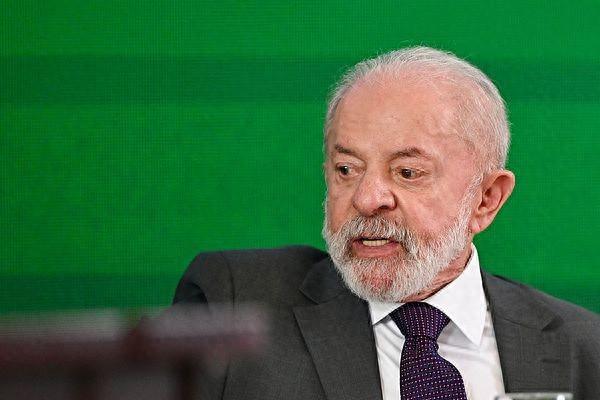
卢拉与马克龙通电话,共同谴责美国对委内瑞拉动武
Bei Jing Ri Bao Ke Hu Duan· 2026-01-28 00:04
Group 1 - The core viewpoint of the article highlights a discussion between Brazilian President Lula and French President Macron regarding international peace initiatives and the role of the United Nations [2] - Both leaders emphasized the importance of aligning any peace and security initiatives with the authorization of the UN Security Council and the principles of the UN Charter [2] - They condemned the use of force by the United States as a violation of international law and agreed on the significance of peace and stability in South America and globally [2] Group 2 - President Lula reiterated the benefits of the trade agreement between the Southern Common Market (Mercosur) and the European Union, viewing it as a crucial element in defending multilateralism and trade rules [2]
王毅同南非外长通电话:中方愿同全球南方国家一道,维护联合国宪章,反对丛林法则和霸权主义
Xin Lang Cai Jing· 2026-01-11 10:59
Group 1 - Wang Yi, a member of the Political Bureau of the CPC Central Committee and Foreign Minister, congratulated the African National Congress (ANC) on its 114th anniversary, emphasizing its rich political wisdom and resilience [1] - China expresses willingness to maintain high-level exchanges with South Africa, expand party-to-party communication, strengthen strategic mutual trust, and deepen practical cooperation, including the implementation of zero-tariff measures to support South Africa's economic development [1] - Wang Yi commended South Africa for successfully hosting the G20 Leaders' Summit amidst external pressures, reaffirming China's support for South Africa's enhanced role in international affairs [1] Group 2 - South African Foreign Minister Naledi Pandor welcomed Wang Yi's visit, expressing gratitude for China's support in hosting the G20 Summit and assistance in economic and social development [2] - Pandor reiterated South Africa's commitment to the One China principle and expressed a desire to strengthen political mutual trust, deepen practical cooperation, and enhance cultural exchanges with China [2] - Both parties exchanged views on international and regional issues of mutual concern, emphasizing the importance of multilateralism and the core role of the United Nations [2]

中方是否计划采取行动帮助确保马杜罗总统夫妇获释?外交部回应
Xin Lang Cai Jing· 2026-01-07 08:59
Core Viewpoint - The Chinese government opposes unilateral sanctions without international legal basis and unauthorized military actions against Venezuela, emphasizing the need for dialogue and negotiation to resolve issues [2][2][2] Group 1: China's Position on Sanctions - China consistently opposes unilateral sanctions that lack international legal justification and are not authorized by the United Nations Security Council [2] - The Chinese government condemns external forces interfering in Venezuela's internal affairs under any pretext [2] Group 2: Violation of International Law - The forced control of President Maduro and his wife by the U.S. is seen as a clear violation of international law and fundamental principles of international relations [2] - This action contradicts the purposes and principles outlined in the United Nations Charter [2] Group 3: Call for Dialogue - China calls for the immediate release of President Maduro and his wife, advocating for a resolution through dialogue and negotiation [2]
中方是否计划采取行动帮助马杜罗夫妇获释?外交部回应
中国能源报· 2026-01-07 07:54
Group 1 - The Chinese government opposes unilateral sanctions that lack international legal basis and are not authorized by the United Nations Security Council, emphasizing the importance of respecting international law and national sovereignty [1] - The Chinese government condemns the U.S. actions against Venezuelan President Maduro and his wife, stating that such actions violate international law and the basic principles of international relations [1] - The Chinese government calls for the immediate release of President Maduro and his wife, advocating for dialogue and negotiation to resolve the issues at hand [1]
外交部:呼吁美方立即释放马杜罗总统和夫人
Yang Shi Xin Wen· 2026-01-07 07:48
Group 1 - The Chinese government opposes unilateral sanctions that lack international legal basis and are not authorized by the UN Security Council, particularly regarding the situation in Venezuela [1] - The U.S. actions to forcibly control President Maduro and his wife are seen as a clear violation of international law and fundamental principles of international relations, as well as the purposes and principles of the UN Charter [1] - China calls for the immediate release of President Maduro and his wife, advocating for dialogue and negotiation to resolve the issues at hand [1]
外交部回应委内瑞拉形势突变
Yang Shi Xin Wen· 2026-01-05 08:21
Core Viewpoint - The Chinese government expresses serious concern over the U.S. actions to forcibly control Venezuelan President Maduro and his wife, emphasizing that such actions violate international law and the principles of international relations [1] Group 1: China's Position - China calls for the U.S. to ensure the personal safety of President Maduro and his wife, urging for their immediate release [1] - The Chinese government advocates for resolving issues through dialogue and negotiation rather than through attempts to overthrow the Venezuelan government [1] Group 2: International Law and Relations - The actions of the U.S. are described as a clear violation of the United Nations Charter's purposes and principles [1] - The Chinese stance highlights the importance of adhering to international law and the basic norms of international relations [1]