联结主义

Search documents
企业家精神是一团淋漓“元气”
3 6 Ke· 2026-01-06 06:11
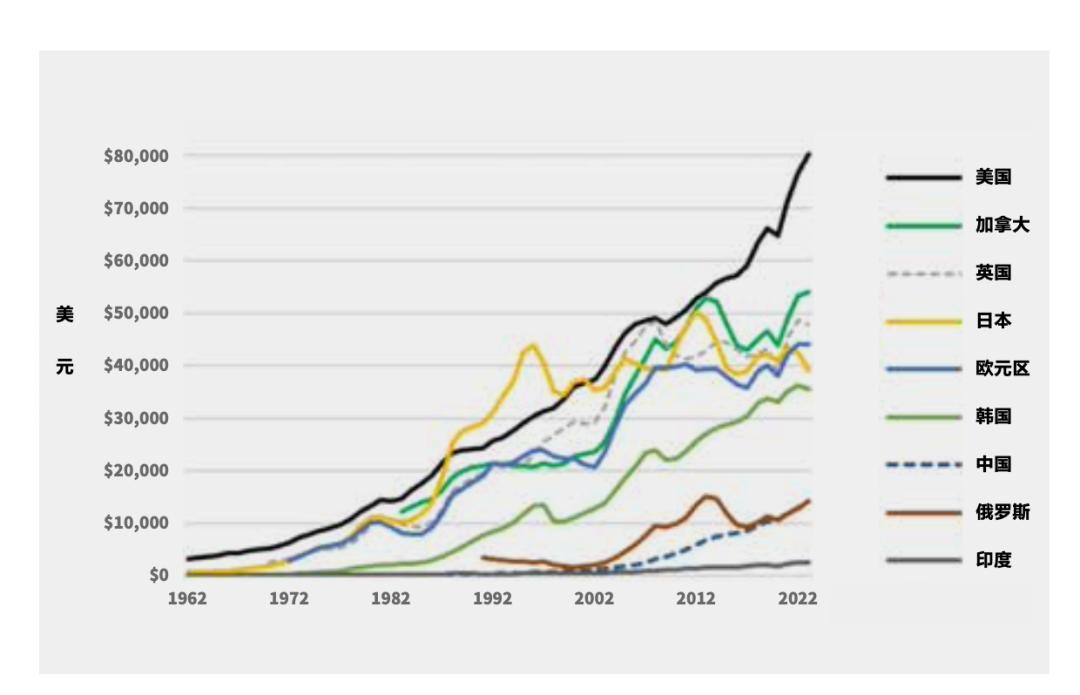
Core Insights - The essence of economic growth lies not in capital, algorithms, or government planning, but in the entrepreneurial spirit characterized by intuition, judgment, and imagination [1][2][5] Group 1: Entrepreneurial Spirit - Entrepreneurial spirit is described as a vital force that enables humans to navigate uncertainty, relying on soft knowledge rather than hard data [3][4] - Entrepreneurs make decisions based on intuition and personal experience, distinguishing them from managers and engineers who rely on quantifiable data [3][4] - The book emphasizes that true innovation is inherently uncertain and unpredictable, which is a fundamental aspect of entrepreneurship [3][4] Group 2: Critique of Neoclassical Economics - The book critiques neoclassical economics for its inability to adequately explain economic growth, particularly due to its reliance on stable and deterministic models [6][7] - It argues that the focus on predictable outcomes neglects the role of entrepreneurial spirit and the inherent uncertainties of innovation [6][7] - The author compares neoclassical economics to outdated theories, suggesting that it fails to account for the dynamic nature of economic growth driven by entrepreneurs [7] Group 3: Historical Context and Theoretical Framework - The book integrates Adam Smith's insights on division of labor and market expansion with Joseph Schumpeter's theories on entrepreneurship, establishing a comprehensive framework for understanding economic growth [10][11] - It highlights that markets are created by entrepreneurs who introduce new products and ideas, rather than merely responding to existing consumer demand [11] - Historical examples illustrate how entrepreneurs have driven significant economic advancements by creating new markets and demands [11] Group 4: Implications for Current Economic Landscape - The analysis suggests that the U.S. has maintained its economic vitality due to a continuous influx of new entrepreneurs, while Europe and Japan have struggled due to regulatory constraints and organizational rigidity [12][14] - The book warns that despite advancements in technology, the decline in new unicorn companies in China indicates a potential loss of entrepreneurial spirit, which is crucial for sustaining economic growth [14][15] - It posits that overcoming current economic challenges, such as "involution," requires a revival of entrepreneurial energy and innovation [15]

TML 成立7个月首发声:揪出大模型随机元凶,开源方案终结 LLM 推理乱象
3 6 Ke· 2025-09-11 09:59
Core Insights - The AI industry faces a long-standing technical challenge of output randomness, where the same input can yield different results [1][5] - Thinking Machines Lab (TML), founded by former OpenAI CTO Mira Murati, aims to address this issue and enhance AI reliability [1][3] Company Overview - TML was established in February 2025, four months after Murati left OpenAI, and has raised $2 billion in seed funding, achieving a valuation of $12 billion [3] - The company has not yet released any products but has attracted significant capital interest from major investors including a16z, NVIDIA, AMD, and Cisco [3] Team Composition - TML's team consists of 30 members, with two-thirds coming from OpenAI, including key developers of ChatGPT [4] - AI safety expert Andrew Tulloch joined TML after declining a $1.5 billion rehire offer from Meta [4] Research Focus - TML's mission is not to create stronger AI models but to bridge the gap between AI capabilities and human needs [5] - The core cause of AI output randomness has been identified as batch processing differences rather than "random seed" settings [6][7] Technical Innovations - TML introduced a "batch-invariant kernel" solution to ensure consistent results regardless of data size or grouping [10] - Initial tests showed that previous AI systems could produce up to 80 different answers for the same question, while TML's new approach ensures identical outputs for the same input [10] Performance and Industry Impact - Although the new solution initially slowed AI computation speed by nearly 50%, optimizations have made the performance loss acceptable [12] - This technology is particularly valuable in high-stakes industries like healthcare and finance, where inconsistent AI outputs can lead to critical errors [12] Industry Perspective - TML's approach contrasts with other companies focused on expanding model sizes, instead prioritizing stability and transparency in AI decision-making [15] - The research aims to demystify AI processes, making them more predictable and reliable for societal integration [15][16]

开学了:入门AI,可以从这第一课开始
机器之心· 2025-09-01 08:46
Core Viewpoint - The article emphasizes the importance of understanding AI and its underlying principles, suggesting that individuals should start their journey into AI by grasping fundamental concepts and practical skills. Group 1: Understanding AI - AI is defined through various learning methods, including supervised learning, unsupervised learning, and reinforcement learning, which allow machines to learn from data without rigid programming rules [9][11][12]. - The core idea of modern AI revolves around machine learning, particularly deep learning, which enables machines to learn from vast amounts of data and make predictions [12]. Group 2: Essential Skills for AI - Three essential skills for entering the AI field are mathematics, programming, and practical experience. Mathematics provides the foundational understanding, while programming, particularly in Python, is crucial for implementing AI concepts [13][19]. - Key mathematical areas include linear algebra, probability and statistics, and calculus, which are vital for understanding AI algorithms and models [13]. Group 3: Practical Application and Tools - Python is highlighted as the primary programming language for AI due to its simplicity and extensive ecosystem, including libraries like NumPy, Pandas, Scikit-learn, TensorFlow, and PyTorch [20][21]. - Engaging in hands-on projects, such as data analysis or machine learning tasks, is encouraged to solidify understanding and build a portfolio [27][46]. Group 4: Career Opportunities in AI - Various career paths in AI include machine learning engineers, data scientists, and algorithm researchers, each focusing on different aspects of AI development and application [38][40]. - The article suggests that AI skills can enhance various fields, creating opportunities for interdisciplinary applications, such as in finance, healthcare, and the arts [41][43]. Group 5: Challenges and Future Directions - The rapid evolution of AI technology presents challenges, including the need for continuous learning and adaptation to new developments [34][37]. - The article concludes by encouraging individuals to embrace uncertainty and find their passion within the AI landscape, highlighting the importance of human creativity and empathy in the technological realm [71][73].