肿瘤学

Search documents
勤浩医药递表港交所 华泰国际为保荐人
Zheng Quan Shi Bao Wang· 2026-01-19 01:00
Company Overview - Company has submitted a listing application to the Hong Kong Stock Exchange, sponsored by Huatai International [1] - Focuses on developing potential best-in-class targeted therapies in oncology, with core technology centered around the RAS signaling pathway and synthetic lethality mechanisms [1] Product Pipeline - As of the last feasible date, the company has seven self-developed drug candidates, including four in clinical stages, one approved by the National Medical Products Administration (NMPA) and the FDA for IND, and two in preclinical stages [1] - Core product GH21 is a potential best-in-class allosteric SHP2 inhibitor currently in Phase 2 clinical trials, with IND approval for monotherapy in advanced solid tumors obtained in November 2021 [1] - GH21's combination therapies with Gossamer and Osimertinib received IND approvals in June 2024 and November 2023, respectively, and are undergoing Phase 1b/2 and Phase 2 clinical trials in China [1] Additional Drug Candidates - The RAS signaling pathway pipeline includes GH55, a potential best-in-class dual mechanism ERK1/2 inhibitor for treating MAPK pathway-activated solid tumors, currently in Phase 1 clinical trials in China [2] - The synthetic lethality pipeline includes GH56 (MTA synergistic PRMT5 inhibitor), GH2616 (KIF18A inhibitor), and GH31 (MAT2A inhibitor), all of which have received IND approvals and are in various stages of clinical trials in China [2] Market Potential - The global oncology drug market is projected to grow from $262.1 billion in 2024 to $646.1 billion by 2033, while the Chinese market is expected to increase from $37.2 billion to $123.8 billion [2] - Sub-segments such as SHP2 inhibitors and synthetic lethality drugs are anticipated to experience rapid growth in the future [2]
Nature系列综述:AI智能体重塑癌症研究与治疗
生物世界· 2026-01-14 00:18
Core Insights - The article discusses the rapid advancement of AI agents, particularly in cancer research and oncology, highlighting their capabilities beyond traditional AI systems [3][4][6] - AI agents can autonomously optimize drug design, propose treatment strategies, and handle complex multi-step problems that previous AI systems could not address [3][4][27] Group 1: AI Agents Overview - AI agents differ from traditional AI systems by possessing "action capabilities," allowing them to perceive their environment, plan multi-step tasks, and execute complex workflows with minimal human intervention [8][14] - The integration of large language models (LLMs) with external tools enables AI agents to actively gather information, analyze data, and take actions rather than merely responding to commands [14] Group 2: Applications in Cancer Research - AI agents can autonomously generate research hypotheses, design experimental protocols, execute data analysis, and write academic papers, marking a significant shift towards fully automated research processes [17][15] - Multi-agent collaborative systems are emerging, where different AI agents simulate human research teams by taking on specific expert roles, enhancing problem-solving comprehensiveness and decision-making transparency [18] Group 3: Clinical Oncology Applications - In clinical settings, AI agents can integrate various medical data sources, support treatment decisions, and automate clinical trial matching, significantly improving efficiency and patient outcomes [22][20] - AI agents are capable of simulating human expert reasoning in image analysis, allowing for more complex clinical problem-solving [23] Group 4: Future Outlook and Challenges - The article outlines a three-phase process of "agentification" in cancer research and oncology, predicting a transition from current AI interfaces to fully integrated systems with autonomous capabilities [28][29] - Challenges include the need for new evaluation metrics for AI agents' performance, integration hurdles from research prototypes to clinical tools, and ethical considerations regarding the autonomy of AI systems [27][29]


正在改变老年健康管理路径,司美格鲁肽等GLP-1药物实现从控糖到体重管理
GLP1减重宝典· 2025-12-24 11:15
Core Viewpoint - The article discusses the increasing interest and cautious use of GLP-1 medications for weight management in the elderly population, highlighting both potential benefits and necessary precautions in their application [4][8][12]. Group 1: GLP-1 Medications in Elderly Care - GLP-1 medications have gained popularity among patients aged 65 and older, with many seeking these treatments for obesity management [4]. - The CDC reports that nearly 40% of individuals aged 60 and above are classified as obese, which significantly impacts their health and quality of life [5]. - Experts emphasize the need for careful evaluation of elderly patients before prescribing GLP-1 medications, particularly for those with frailty or cognitive impairments [8][12]. Group 2: Broader Implications of GLP-1 Medications - Recent studies suggest that GLP-1 medications may have effects beyond glucose control and weight loss, potentially influencing cardiovascular health, addiction behaviors, certain cancers, and cognitive function [6][11]. - In the context of neurodegenerative diseases, GLP-1 medications may help slow cognitive decline due to their anti-inflammatory properties and ability to improve insulin signaling [11]. - Research indicates that patients using GLP-1 receptor agonists have lower all-cause mortality rates compared to those on other diabetes treatments, although the relationship with different cancer types remains unclear [11]. Group 3: Clinical Considerations and Future Research - The complexity of medication decisions for elderly patients necessitates a comprehensive assessment of their overall health, including potential side effects and interactions with other medications [12]. - Experts advocate for a gradual approach to GLP-1 treatment, focusing on maintaining strength, independence, and quality of life rather than solely on weight loss [12]. - There is a recognized need for more representative clinical trial data for older populations, as current studies show that older patients may experience higher rates of discontinuation due to gastrointestinal side effects [12].

暴跌95%!裁员10%!这家mRNA巨头的断臂、贷款与豪赌
Xin Lang Cai Jing· 2025-11-28 04:37
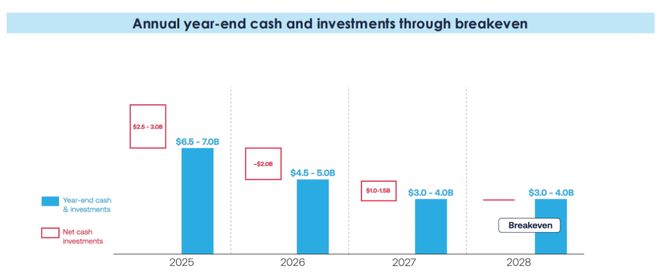
Core Insights - Moderna has announced a three-year strategic plan aiming for cash flow balance by 2028, focusing on oncology for new growth opportunities [1][5]. Financial Performance - In Q3 2024, Moderna reported revenue of $1 billion, a 45% decline compared to the same period in 2023, with a net loss of $200 million [3]. - The revenue from COVID-19 vaccines accounted for $971 million, while the recently approved RSV vaccine contributed only $2 million [3]. - The company has revised its 2025 revenue guidance down to $1.6 billion to $2 billion, reducing the upper limit by $200 million [3]. Stock Performance - Moderna's stock has plummeted over 95% from its peak of $484.47 in 2021, with a market cap dropping to approximately $9 billion by November 2025 [4]. Cost Management and Restructuring - To address losses, Moderna has reduced cash cost expectations for 2026 and 2027 to approximately $4.2 billion and $3.5 billion to $3.9 billion, respectively [5]. - The company has implemented a 10% workforce reduction and terminated four projects to streamline operations [5]. Vaccine Development Focus - Moderna plans to continue expanding its vaccine portfolio over the next three years, introducing three new seasonal vaccines: flu, COVID/flu combination, and norovirus vaccines [5]. - The company aims to leverage its experience from COVID-19 vaccine sales to promote other seasonal vaccines [9]. Oncology Pipeline - Long-term, Moderna is shifting its R&D focus towards oncology, with plans to invest more in this area post-2028 [10]. - The oncology pipeline includes personalized cancer vaccines, cancer antigen therapies, TCE therapies, and cell therapies [11]. Key Oncology Projects - mRNA-4157, a personalized mRNA cancer vaccine, has shown promising results in clinical trials, reducing the risk of recurrence and death in melanoma patients by 49% when combined with pembrolizumab [13]. - Moderna is preparing for the commercial production of mRNA-4157 at a dedicated facility in Massachusetts [13]. Conclusion - Moderna is navigating a challenging transition period, focusing on cost management and strategic realignment towards oncology to achieve cash flow balance and long-term growth [14].
IDEAYA Biosciences (NasdaqGS:IDYA) 2025 Conference Transcript
2025-11-18 14:02
Summary of IDEAYA Biosciences Conference Call Company Overview - **Company**: IDEAYA Biosciences (NasdaqGS:IDYA) - **Industry**: Precision medicine oncology - **Lead Program**: Darovasertib, currently in a registrational trial for frontline metastatic uveal melanoma, with an expected median progression-free survival (PFS) readout by year-end 2025 to Q1 2026 [2][4] Key Clinical Programs - **Pipeline**: IDEAYA has a deep pipeline with eight clinical stage programs, targeting nine by year-end 2025 [2] - **MTAP Deletion Focus**: - ID397 (Phase 2 MAT2A inhibitor) - ID892 (Phase 1 MTAP-cooperative PRMT5 inhibitor) [3] - **Antibody-Drug Conjugates (ADC)**: - DLL3 topo ADC with recent presentations at major conferences - Bispecific B7H3 PTK7 ADC (Phase 1) - ID161 (PARG inhibitor) [3] Upcoming Data and Expectations - **PFS Events**: Approximately 130 PFS events are needed for top-line results, with expectations for results in early 2026 [4] - **Control Arm Expectations**: Anticipated PFS in the control arm is 2-3 months, while treatment arm results have shown consistent 7-month PFS [5][6] - **Overall Survival (OS) Data**: OS data from the Society of Melanoma Research (SMR) indicated potential for median OS to increase to 22 months, pending further patient follow-up [13] Regulatory and Market Considerations - **NDA Submission**: Plans for a pre-NDA meeting with the FDA are anticipated as PFS results are finalized [12] - **Pricing Strategy**: Expected pricing in the low $50,000s per month, with considerations for the robustness of the dataset and unmet medical needs in the market [14] - **Compendia Strategy**: Plans to submit HLA-A*02 positive data for potential inclusion in the label, which would enhance promotional capabilities [18][20] Neoadjuvant and Adjuvant Studies - **Neoadjuvant Study**: Enrollment is expected to accelerate with increased site activation, aiming for completion in approximately five quarters [21] - **Adjuvant Program**: Planning to start a phase three adjuvant study in collaboration with Servier, targeting 400-450 patients [26] ADC Programs and Future Directions - **DLL3 ADC**: Positive data supports a potential path for accelerated approval in small cell lung cancer and neuroendocrine tumors [28] - **Combination Studies**: Plans to explore combinations with standard care agents to enhance treatment durability [34] Additional Pipeline Developments - **MAT2A Program**: Updates on Trodalvy combo data in urothelial carcinoma expected in the first half of 2026 [39] - **CAT67 Program**: IND filing planned by year-end 2025, focusing on dual inhibition of CAT6 and CAT7 [45] Conclusion - **Key Catalysts**: Investors should focus on upcoming PFS results, NDA submission timelines, and ongoing clinical trials across various programs through 2026 [48]

Exelixis (NasdaqGS:EXEL) FY Conference Transcript
2025-09-24 13:52
Summary of Exelixis Conference Call Company Overview - Exelixis is a commercial-stage biotech company focused on oncology, particularly in renal cell carcinoma (RCC) with its flagship drug, cabozantinib (Cabo) [8][9] - The company has evolved significantly, now having seven different indications for Cabo and being the leading tyrosine kinase inhibitor in kidney cancer [9][10] Key Products and Pipeline - Cabo has a patent expiry in 2031, and the company is working on Zanzalintinib, which is in phase three trials, as a follow-up innovation [12] - The pipeline includes a variety of assets across different modalities and mechanisms of action, with a focus on building multiple franchises [11][12] Strategic Focus - The primary goal is to improve the standard of care for cancer patients, which is essential for gaining traction with prescribers and payers [13][14] - The company aims to manage the transition from Cabo to Zanzalintinib without cannibalizing Cabo's market share [15][16] Financial Discipline - Exelixis maintains a disciplined approach to R&D spending, committing to approximately $1 billion annually while ensuring free cash flow for other investments [16][22] - The company emphasizes the importance of capital allocation and avoiding high-risk, low-reward mergers and acquisitions [22][24] Market Dynamics - The oncology market is evolving, with the potential for the kidney cancer market to grow from $3-4 billion to over $10 billion due to improved patient outcomes [18][19] - The launch of Cabo in neuroendocrine tumors (NETs) is progressing well, with expectations for market share growth similar to that seen in renal cancer [26][30] Competitive Landscape - Exelixis competes with major pharmaceutical companies like Bristol Myers Squibb, Merck, and Pfizer in the oncology space [31] - The company leverages a nimble and intense sales and marketing organization to effectively compete against larger players [33][34] Clinical Collaborations - Exelixis has established clinical collaborations, such as with Merck for Zanzalintinib, to enhance trial success without sharing commercial rights [51][52] - The company has a history of successful collaborations that have significantly contributed to its growth [52] Future Directions - The company is focused on expanding its pipeline and exploring new indications, including colorectal cancer and meningioma, based on early data from Cabo [41][42] - Exelixis aims to maintain its momentum and adapt to the evolving landscape of oncology while ensuring that patient outcomes remain the priority [66][70] Conclusion - Success for Exelixis is defined by its ability to improve patient outcomes, expand its market presence, and maintain a balance between being a small, agile company and scaling its operations effectively [69][70]

Exelixis, Inc. (EXEL) Presents At 2025 Wells Fargo Healthcare Conference (Transcript)
Seeking Alpha· 2025-09-03 19:43
Company Overview - Exelixis is a commercial stage biotech company focused exclusively on oncology [3] - The main value driver for the company is cabozantinib, marketed as COMETRIQ, which is the leading drug for renal cell carcinoma (RCC) [3] - The company has demonstrated strong commercial performance over the past several years in the kidney cancer space [3]

ArriVent BioPharma (AVBP) Earnings Call Presentation
2025-06-23 13:43
Firmonertinib Clinical Development - Firmonertinib has Breakthrough Therapy Designation in 1L EGFR Exon 20 insertion mutant NSCLC[6] - Topline results in registrational 1L EGFR Exon 20 insertion mutant NSCLC study are expected in 2025[6] - A pivotal trial for 1L EGFR PACC mutant NSCLC is reinforced by positive clinical data[6] - The company is initiating a global pivotal Phase 3 study in 1L NSCLC PACC mutations[12] - In the FURTHER study, the confirmed Overall Response Rate (ORR) for 1L PACC patients was 68.2% at 240 mg QD and 56% at 160 mg QD[38] - Median Progression-Free Survival (mPFS) was 16 months with 240 mg QD and 11.1 months with 160 mg QD in 1L EGFR PACC mutant NSCLC[43] - The CNS Overall Response Rate (ORR) was 53% and the CNS Complete Response (CR) rate was 41% in CNS evaluable patients from the PACC cohort[46] Pipeline Expansion - The company is advancing a next-generation ADC portfolio, with an IND filed this year and others expected starting in 2026[6] - An IND for ARR-002 (tetravalent dual-target ADC) is planned for 2026[68] - A Phase 1 study for ARR-217 (MRG007) in GI Tumors is expected to enroll its first patient in 2H 2025[69] Market Opportunity - Estimated global patients (excluding China) with metastatic uncommon EGFR mutations is approximately 51,000[63]