
能量景观

Search documents
Nature头条:蛋白质折叠到底有多快?答案揭晓
生物世界· 2026-03-11 08:30
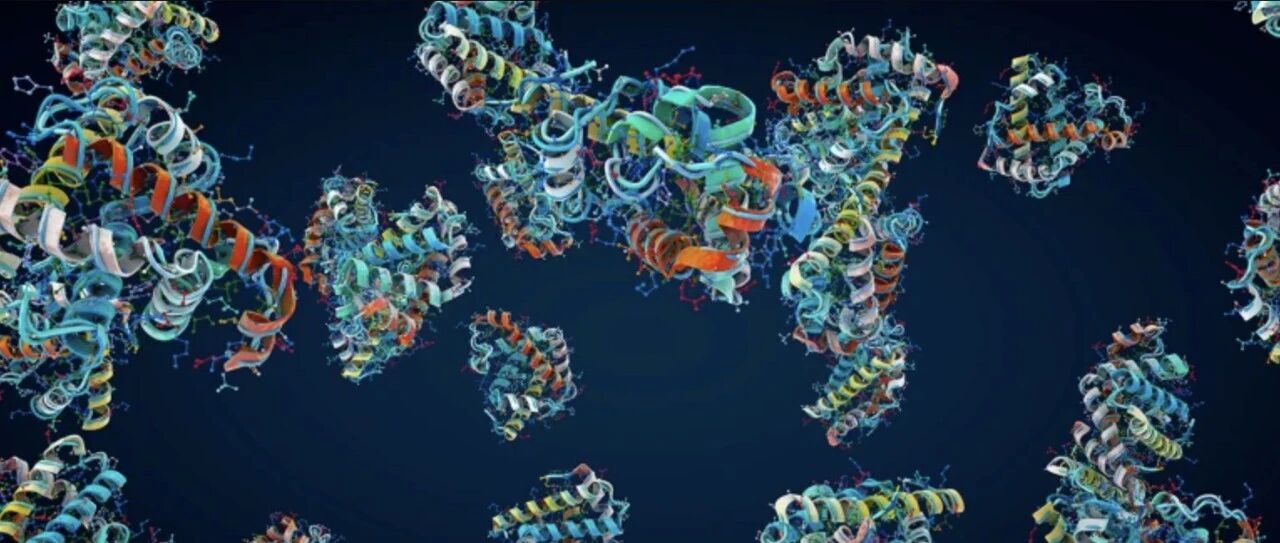
Core Viewpoint - The recent study published in Physical Review Letters reveals the transition-path time for protein folding, which is measured to be between 0.7 to 4 microseconds, indicating that the core process of proteins transitioning from an unfolded to a folded state occurs almost instantaneously [5][11]. Group 1: Protein Folding Mechanism - The study highlights that the time required for protein folding is independent of the protein's sequence or size, suggesting that more complex proteins can fold more efficiently than simpler biological macromolecules like DNA [5][11]. - The research utilized advanced nanophotonics-enhanced single-molecule fluorescence spectroscopy to capture the rapid transition period of protein folding, which was previously difficult to measure due to limitations in time resolution [6][7]. Group 2: Findings on Protein Characteristics - The findings indicate that longer protein sequences exhibit a greater diffusion coefficient during folding, which facilitates a smoother transition over energy barriers, contrary to expectations that larger proteins would fold more slowly [10]. - The study introduces the concept of "energy landscape," explaining that proteins with more internal interactions among amino acids tend to fold more efficiently, as these interactions create a smoother energy landscape [10][11]. Group 3: Comparative Analysis with Other Biomolecules - The folding time of natural proteins is significantly faster than that of other biomolecules, such as DNA, which takes approximately 20-30 microseconds to fold into a hairpin structure, and designed proteins that may take tens of microseconds to milliseconds [11]. - The research suggests that natural selection has optimized the energy landscape of proteins, minimizing roughness and avoiding non-natural interactions, leading to more efficient folding processes [11].

美媒:泡沫藏着打通三个学科的密码
Xin Lang Cai Jing· 2026-01-22 05:49
Core Insights - The article discusses a recent study revealing that the behavior of bubbles in foam is more dynamic than previously thought, moving and reorganizing in ways that may share underlying principles with artificial intelligence, physics, and biology [1][2]. Group 1: Research Findings - Traditional theories suggested that bubbles in foam would roll along specific paths and then remain stable, akin to a boulder resting in a valley [2] - New research from the University of Pennsylvania indicates that bubbles are constantly moving across an energy landscape, rather than settling down, which contradicts earlier predictions [2] - The movement of bubbles resembles the gradient descent method used in AI, where systems explore various solutions rather than simply seeking minimal error [2] Group 2: Implications for Other Fields - This discovery could lead to the design of adaptive materials in physics, such as curtains that adjust light transmission or clothing that regulates thermal properties based on environmental conditions [3] - The findings may also provide insights into biological processes, such as protein folding and immune cell movement, suggesting that these processes might follow similar energy landscape-driven logic [3] - The research indicates a potential convergence of physics, biology, and computer science, breaking down disciplinary barriers and suggesting a unified approach to understanding complex scientific phenomena [3]
美媒:泡沫藏着打通AI、物理学、生物学的密码
Huan Qiu Shi Bao· 2026-01-21 22:37
Core Insights - A recent study published in the Proceedings of the National Academy of Sciences reveals that the behavior of bubbles in foam is dynamic and follows principles similar to those in artificial intelligence, physics, and biology [1][2][3] Group 1: Bubble Behavior - Early theories suggested that bubbles in foam would roll along specific trajectories and then remain stationary, leading to a perception of stability [2] - However, new findings indicate that bubbles continuously move and reorganize within an energy landscape, contrary to previous predictions [2] - The movement of bubbles resembles the gradient descent method used in AI, where systems explore various solutions rather than simply seeking minimal error [2] Group 2: Implications for Science - This discovery opens new avenues for physicists to design adaptive materials, potentially leading to innovations such as self-adjusting curtains and temperature-regulating clothing [3] - The findings may also provide insights for biologists studying life processes, suggesting that phenomena like protein folding and immune cell movement could follow similar energy landscape-driven logic [3] - The research indicates a convergence of physics, biology, and computer science, suggesting that their underlying principles may be governed by the same formulas [3]