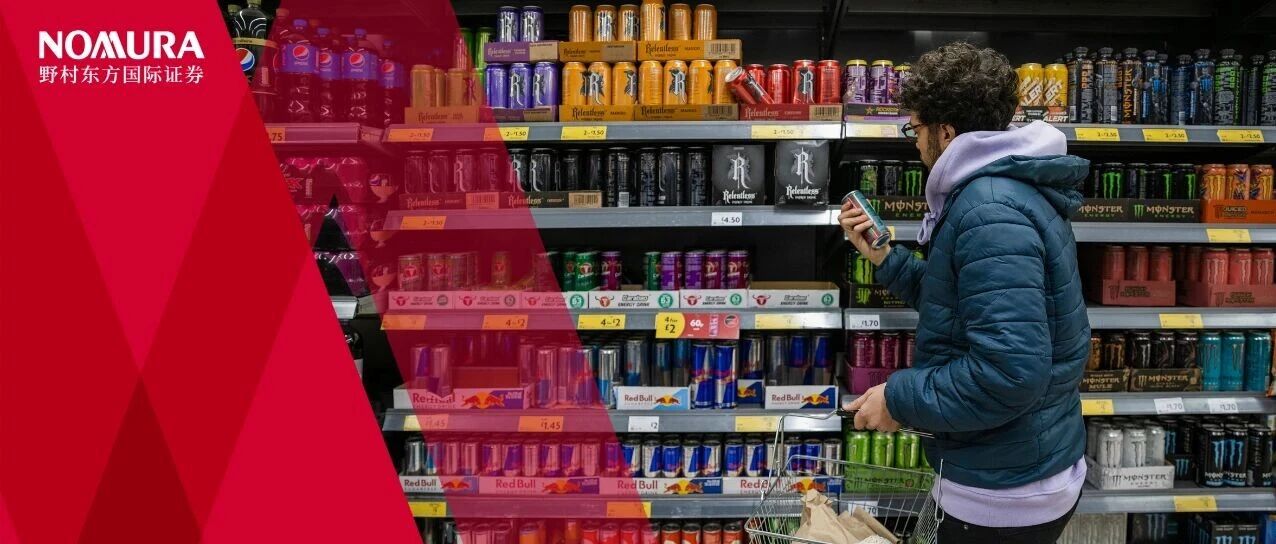
能量饮料出海

Search documents
全球能量饮料启示录-复盘魔爪与燃力士
2026-03-18 02:31
Summary of Key Points from the Conference Call Industry Overview - The Southeast Asian energy drink market is experiencing significant growth potential, driven by a hot climate and the necessity for functional beverages. However, competition is intense, with Red Bull holding a dominant market share of over 50% in several countries like Singapore, Malaysia, and Vietnam [10][11]. Company Insights: Monster Beverage Corporation (魔爪) - **Global Expansion Strategy**: Monster has leveraged a strategic partnership with Coca-Cola, which began in 2014, allowing it to utilize Coca-Cola's extensive bottling and distribution network. This partnership has led to a significant increase in overseas sales, with net sales outside the U.S. reaching $2.5 billion in the first three quarters of 2025, growing at 12.6% year-over-year [3][4]. - **Sales and Pricing Strategy**: Monster adopted a price-volume strategy, reducing the price per case from $10.3 to $8.4, which has driven sales volume to 850 million cases in 2024, reflecting a compound annual growth rate (CAGR) of 12.4%, outperforming the industry average of 10.8% [4][5]. - **Product Focus and Market Positioning**: The company maintains a strong focus on energy drinks, with over 90% of its net sales coming from this segment since 2016. In 2024, net sales approached $7 billion [5]. Monster's product strategy includes rapid innovation, with new products accounting for about 20% of total sales in mature markets like the U.S. [6]. - **Market Penetration**: By the end of 2025, Monster's products are expected to be available in 158 countries, with strategic brands in 57 countries and value brands in 36 countries [3]. Company Insights: Celsius Holdings, Inc. (燃力士) - **Differentiated Product Positioning**: Celsius has positioned itself as a health-oriented energy drink, using natural ingredients and promoting a "healthy lifestyle" rather than just energy-boosting effects. This shift has broadened its target audience from weight-conscious individuals to fitness enthusiasts and mainstream consumers [7]. - **Distribution Strategy**: Celsius has partnered with PepsiCo for distribution in North America, which has significantly boosted its revenue, reaching $620 million in 2022, a 130% increase year-over-year [8]. However, reliance on a single distributor poses risks, as seen when inventory reduction strategies by distributors negatively impacted Celsius's performance [9]. - **Market Challenges**: The company faces challenges from over-reliance on major distributors, which can lead to volatility in revenue and stock price due to changes in distributor strategies [9]. Strategic Recommendations for Chinese Companies - **Market Entry and Brand Positioning**: Chinese energy drink companies should focus on brand differentiation and positioning in Southeast Asia, moving from low-cost strategies to creating unique brand narratives that resonate with local consumers [10][11]. - **Channel Strategy**: Companies should consider partnerships with international beverage giants for rapid market entry while also developing their distribution channels to mitigate risks associated with over-reliance on single distributors [11]. For instance, Dongpeng Beverage is establishing subsidiaries in Southeast Asia to build local supply chains and enhance market control [11]. Conclusion - The Southeast Asian energy drink market presents both opportunities and challenges for Chinese companies. Successful market entry will require a balance of strategic partnerships, innovative product offerings, and robust distribution networks to navigate the competitive landscape effectively.
全球能量饮料启示录|中国能量饮料如何布局东南亚工业化红利期
野村东方国际证券· 2026-03-13 09:04
Core Insights - The Southeast Asian energy drink market is experiencing both scale growth and structural upgrade potential due to the region's accelerating industrialization and increasing labor intensity [2][5]. Economic Growth - The GDP growth rate for the ASEAN five countries is projected to recover to 5.6% by 2025 [5]. - Industrial production indices in Singapore, Malaysia, and Indonesia are showing a year-on-year upward trend, with cumulative growth rates of 59.7%, 31.3%, and 25.5% respectively from 2015 to 2024 [8]. Labor Market Dynamics - Most Southeast Asian countries have average weekly working hours exceeding the global average of 38.7 hours, indicating a high labor intensity [9]. - The demand for basic energy drinks as a "fuel" for labor is significant and likely to grow with increasing efficiency requirements [2]. Market Structure - Red Bull currently dominates the basic energy drink market in Southeast Asia, with market shares of 67.2%, 66.2%, and 43.0% in Singapore, Malaysia, and Vietnam respectively by 2024 [14]. - In the Philippines and Thailand, local brands with high cost-performance ratios lead the energy drink market, where Red Bull has a lower market share [2]. Consumer Behavior - Southeast Asia has a relatively low per capita income, which may allow for initial market penetration through low-price strategies [11]. - Consumer willingness to upgrade is high, as evidenced by the fact that high-end beverage products accounted for only 3% of the market in 2016, yet experienced a growth rate of 10% from 2014 to 2015 [12][13]. Strategic Considerations - Chinese energy drink brands face the challenge of breaking Red Bull's monopoly and establishing brand recognition in Southeast Asia [2]. - A single low-price strategy may lead to a low-quality trap in mature overseas markets, necessitating a brand upgrade strategy [14]. - Collaborating with international beverage companies on distribution or production could accelerate globalization, while maintaining autonomous production capabilities in core markets is essential [14].