脑脊接口

Search documents
创新主体密集发力 上海构建脑机接口产业竞争新优势
Zhong Guo Xin Wen Wang· 2025-12-04 13:34
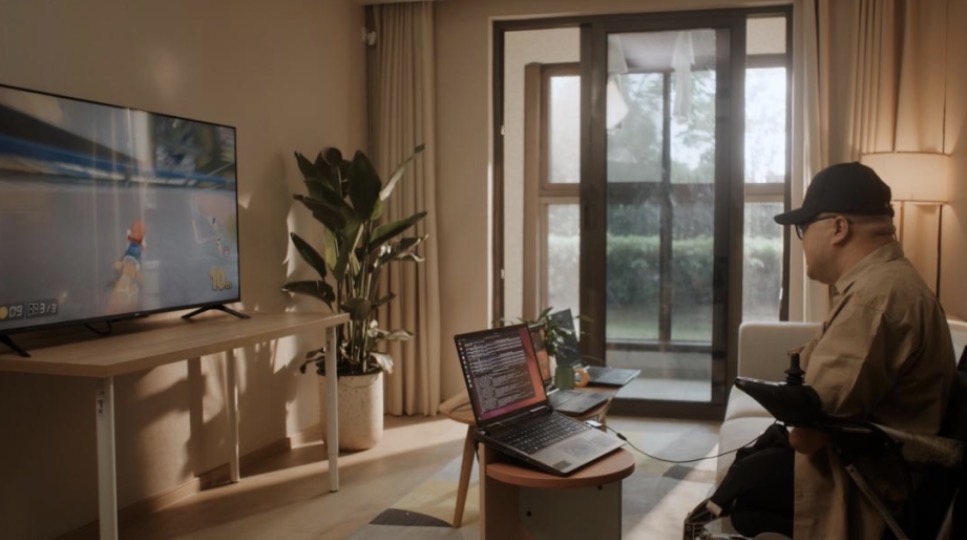
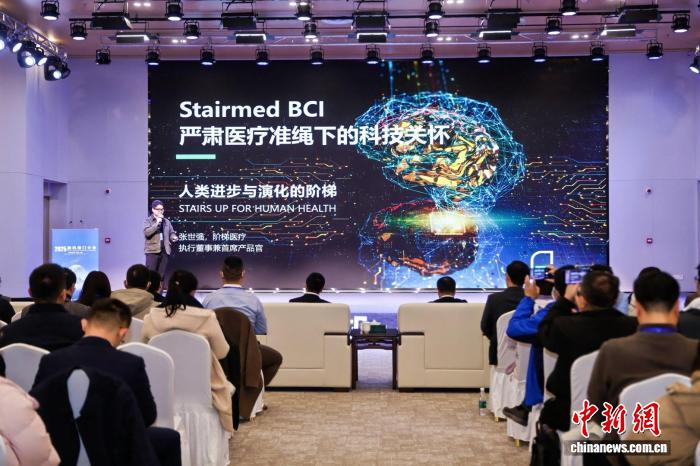
Core Insights - Shanghai has made significant breakthroughs in brain-computer interface (BCI) technology, with several innovative products entering clinical trials, indicating a shift from basic research to clinical application [1][2] Group 1: Industry Developments - The BCI sector in Shanghai is characterized by its complexity, integrating micro-nano manufacturing, integrated circuits, wireless transmission, and intelligent algorithms, surpassing traditional medical devices [1] - Shanghai has achieved multiple global or national firsts in the invasive and semi-invasive BCI fields, with three invasive products currently undergoing special review by national authorities [1][2] Group 2: Innovations and Technologies - The second-generation 256-channel wireless implanted BCI system, developed by Shanghai Ladder Medical Technology Co., significantly enhances neural signal acquisition precision and device compatibility, providing reliable "brain control" solutions for patients with motor function disorders [2] - The "brain-spinal interface" concept introduced by Shenfu Rehabilitation (Shanghai) Medical Device Co. aims to create a "neural bridge" between the brain and spinal cord, enabling paralyzed patients to control their lower limbs autonomously [2] Group 3: Industry Leadership - Shanghai's key players in the BCI sector have increased their influence, setting records for the highest single financing in invasive BCI in China, initiating the world's first clinical cohort study for BCIs, and leading the development of the first domestic medical device standards for BCIs [2]

脑机接口技术进入“元年”,投资人直呼“估值太高”
Di Yi Cai Jing· 2025-06-25 06:45
Group 1 - The core viewpoint is that brain-computer interface (BCI) technology is primarily focused on clinical applications, with significant breakthroughs in consumer-level applications unlikely in the near term [1] - 2025 is anticipated to be the "year of BCI" in China, with multiple research teams announcing clinical trials and achieving "world's first" clinical treatments to help patients regain motor functions [1][3] - Investment in BCI technology is gaining momentum, with notable funding rounds such as Neuralink's $650 million financing, valuing the company at $9 billion, and a domestic company raising 350 million RMB [1][5] Group 2 - The first successful clinical trial of an interventional BCI was completed by a team from Nankai University, helping a 67-year-old male patient regain motor function after a stroke [3] - The interventional BCI technique minimizes surgical risks by placing electrodes via blood vessels, offering advantages like reduced trauma and shorter recovery times [3] - A prospective clinical trial for an invasive BCI system was successfully conducted, allowing participants to perform tasks similar to controlling a computer touchpad within 2-3 weeks of training [3][4] Group 3 - Semi-invasive BCI technology is also entering clinical stages, with the "Beijing Brain No. 1" system completing its first human implants and set to undergo clinical validation [4] - Investors express concerns about high valuations of leading BCI companies, with some stating that the first-tier companies are too expensive while second-tier companies lack sufficient technological value [5][6] - The highest valuations for leading BCI companies in China have reached several billion RMB, with many investors hesitant to invest at current price levels due to unclear commercialization prospects [6] Group 4 - The industry is still in its early development stage, with a focus on clinical problem-solving rather than consumer applications, which are expected to take much longer to mature [6][7] - A new wave of financing is anticipated as BCI companies enter clinical phases, with clinical trial sample sizes typically ranging from dozens of patients [7] - Investors are particularly interested in technologies like "brain-spinal interfaces," which are seen as more likely to achieve commercialization compared to entirely new BCI technologies [7]