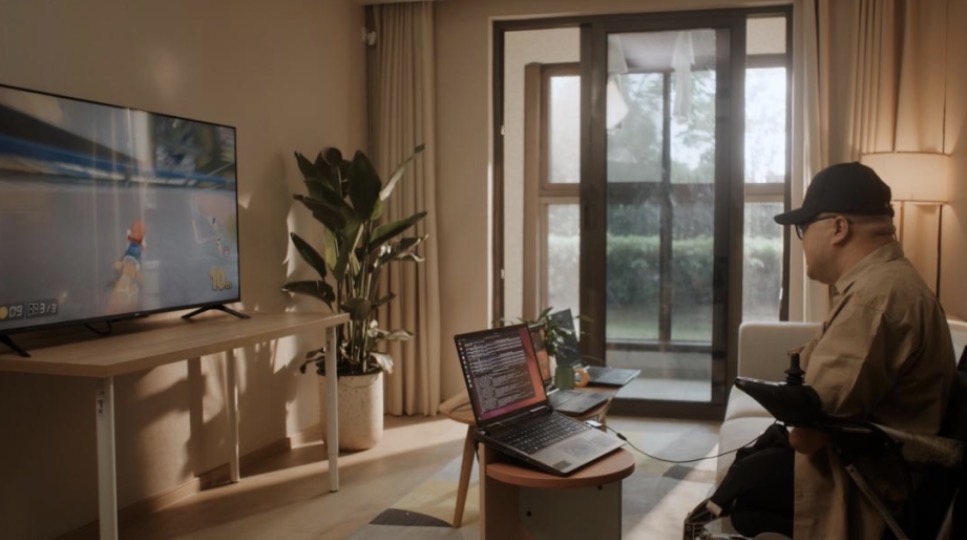
半侵入式脑机接口

Search documents
重磅大会密集召开 脑机接口从“单点突破”转向“全链条攻坚”
Bei Jing Shang Bao· 2025-12-03 12:57
Core Insights - The brain-computer interface (BCI) industry in China has entered a critical phase of "clinical value verification and early industrialization" with significant policy support and upcoming major conferences [2][3][4] - The industry is characterized by three parallel paths: "invasive" breakthroughs, "non-invasive" popularization, and "semi-invasive" exploration, with a focus on integrating AI with non-invasive technologies [7][8] - The market for brain-computer interfaces is expected to reach 5.58 billion yuan by 2027, with a growth rate of 20% as applications expand beyond healthcare into various sectors [7] Industry Developments - The "2025 Brain-Computer Interface Conference" will take place in Shanghai on December 4-5, featuring competitions that demonstrate the transition of BCI technology from laboratory to application [3] - Following this, additional conferences in Hangzhou and Shenzhen will further explore BCI applications and innovations [3] - The industry is transitioning from a focus on technical novelty to meeting specific clinical needs and establishing quantifiable clinical endpoints [4] Technological Landscape - BCI technology is categorized into three types: invasive, non-invasive, and semi-invasive, with non-invasive methods being the mainstream due to their safety and ease of use [5][6] - Invasive methods are seen as the future competitive edge due to their ability to capture higher quality neural signals, essential for functional restoration [6][7] - AI is opening new commercial opportunities for non-invasive BCIs, particularly in diagnosing and monitoring brain diseases [6][7] Challenges and Solutions - The BCI industry faces a "technology-cost-ethics" triangle dilemma, requiring solutions that address technical challenges, cost reduction, and ethical concerns regarding data privacy [8][9] - Proposed solutions include developing a data governance framework, promoting open-source communities for algorithm development, and creating collaborative networks among government, industry, academia, and medical sectors [9]


脑机接口技术进入“元年”,投资人直呼“估值太高”
Di Yi Cai Jing· 2025-06-25 06:45
Group 1 - The core viewpoint is that brain-computer interface (BCI) technology is primarily focused on clinical applications, with significant breakthroughs in consumer-level applications unlikely in the near term [1] - 2025 is anticipated to be the "year of BCI" in China, with multiple research teams announcing clinical trials and achieving "world's first" clinical treatments to help patients regain motor functions [1][3] - Investment in BCI technology is gaining momentum, with notable funding rounds such as Neuralink's $650 million financing, valuing the company at $9 billion, and a domestic company raising 350 million RMB [1][5] Group 2 - The first successful clinical trial of an interventional BCI was completed by a team from Nankai University, helping a 67-year-old male patient regain motor function after a stroke [3] - The interventional BCI technique minimizes surgical risks by placing electrodes via blood vessels, offering advantages like reduced trauma and shorter recovery times [3] - A prospective clinical trial for an invasive BCI system was successfully conducted, allowing participants to perform tasks similar to controlling a computer touchpad within 2-3 weeks of training [3][4] Group 3 - Semi-invasive BCI technology is also entering clinical stages, with the "Beijing Brain No. 1" system completing its first human implants and set to undergo clinical validation [4] - Investors express concerns about high valuations of leading BCI companies, with some stating that the first-tier companies are too expensive while second-tier companies lack sufficient technological value [5][6] - The highest valuations for leading BCI companies in China have reached several billion RMB, with many investors hesitant to invest at current price levels due to unclear commercialization prospects [6] Group 4 - The industry is still in its early development stage, with a focus on clinical problem-solving rather than consumer applications, which are expected to take much longer to mature [6][7] - A new wave of financing is anticipated as BCI companies enter clinical phases, with clinical trial sample sizes typically ranging from dozens of patients [7] - Investors are particularly interested in technologies like "brain-spinal interfaces," which are seen as more likely to achieve commercialization compared to entirely new BCI technologies [7]