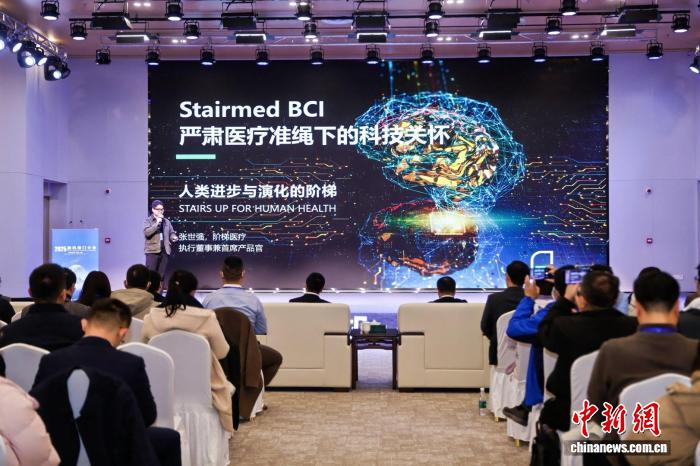
第二代256通道无线植入式脑机接口系统

Search documents
顶层战略加码,医保政策护航,脑机接口:热度持续高涨,谁是核心概念股?
市值风云· 2026-03-20 10:16
Core Viewpoint - The article emphasizes the rising importance of brain-computer interfaces (BCI) in the investment landscape, driven by policy support and technological advancements, marking it as a key area for investors in the upcoming years [3][4]. Policy and Market Dynamics - The Chinese government has included BCI in its "14th Five-Year Plan" as one of the six key future industries, indicating strong policy backing [3]. - The National Healthcare Security Administration has integrated BCI into the medical insurance system, establishing a preliminary commercial closed loop [5]. Technological Advancements - Significant breakthroughs in invasive and semi-invasive BCI technologies have been achieved, with domestic teams making progress that rivals international leaders [6][7]. - A notable development includes the creation of high-throughput, stretchable flexible electrodes, which address issues faced by traditional electrodes during dynamic brain movements [8]. Clinical Applications and Trials - Clinical trials have shown promising results, with a semi-invasive BCI system improving hand function in patients with spinal cord injuries [9]. - Neuralink has made strides in its invasive BCI technology, achieving FDA breakthrough device designation for its brain chip implants [10]. Non-Invasive Applications - Non-invasive BCIs are gaining traction in rehabilitation and consumer electronics, with a focus on their ease of use and portability [11]. - Domestic research teams have developed non-invasive solutions that are cost-effective and show high product viability [11]. Capital Market Trends - The investment landscape for BCI is heating up, with nearly 30 financing rounds completed in the sector this year, totaling over 5 billion yuan [16]. - Companies like BrainCo have raised significant funds and are preparing for IPOs, indicating strong market interest [16][17].


连续涨停!多家上市公司紧急回应 多数强调业务尚处早期
Shang Hai Zheng Quan Bao· 2026-01-07 00:44
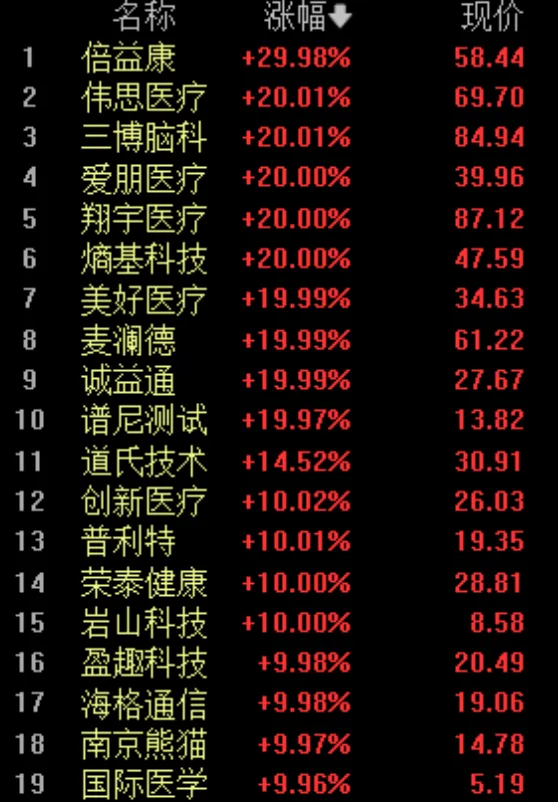
Core Viewpoint - The brain-computer interface (BCI) sector is experiencing a surge in investor interest, driven by technological breakthroughs and product approvals in China, alongside Elon Musk's announcement of mass production of BCI products by Neuralink within the year [1][3]. Industry Developments - The BCI industry is in a high-growth phase, supported by technological advancements, policy backing, and collaborative expectations within the robotics ecosystem, with projections indicating the global BCI medical application market could reach $40 billion by 2030 and $145 billion by 2040 [3]. - Recent breakthroughs include the first clinical trial of a fully implanted, wireless BCI product by Brain Tiger Technology, which offers hope for patients with severe paralysis [3][4]. Company Responses - Multiple A-share listed companies have responded to the heightened interest in the BCI sector, with announcements detailing their business progress in this area [1][6]. - Xiangyu Medical reported a 44% cumulative increase in stock price, emphasizing its focus on non-invasive BCI technology, while acknowledging that its products have not yet achieved significant sales [6][9]. - Weisi Medical also clarified that its BCI products are in the early market cultivation stage and primarily focus on non-invasive technologies, with limited revenue contribution [9][10]. Strategic Collaborations - Companies are actively forming partnerships to enhance their BCI capabilities. Baiyang Pharmaceutical announced a collaboration with Capital Medical University to establish a joint laboratory focused on neuroscience and BCI research [11]. - Kefu Medical disclosed investments in non-invasive BCI robotics and implantable BCI companies, aiming for business synergy [11]. Technological Innovations - Companies like Sanbo Brain Science are making progress with their BCI technologies, including the development of a flexible microelectrode system for brain signal acquisition [12]. - In the semiconductor sector, companies are producing specialized chips for high-precision measurement of biological signals, which are essential for BCI applications [13]. Market Recognition - Domestic BCI products are gaining international recognition, with Shenzhou Rehabilitation's spinal interface product receiving breakthrough therapy designation from the FDA, marking a significant achievement for Chinese companies in the BCI field [4].
脑机接口发展进入快车道
Jing Ji Ri Bao· 2025-12-22 01:07
Group 1 - The core viewpoint of the articles highlights the rapid advancement and application of brain-computer interface (BCI) technology across various sectors, driven by government policies and initiatives aimed at fostering innovation and industrial development by 2030 [1][2][7] - The Ministry of Industry and Information Technology and other departments have issued guidelines to establish a competitive BCI industry ecosystem by 2030, promoting technology from laboratory settings to large-scale applications [1] - Multiple regions, including Beijing and Guangdong, are actively developing BCI industries through policy support, standardization efforts, and collaborative platforms to overcome initial industry challenges [2][3][7] Group 2 - Beijing's action plan emphasizes the importance of standardization in BCI technology, drawing on experiences from the 5G sector to accelerate the development of common technical standards [2] - Guangdong has seen BCI technology applied in healthcare, consumer electronics, and educational training, with local governments enhancing policy guidance and building collaborative platforms to support industry growth [3][4] - The establishment of clinical bases and innovation centers in Guangdong aims to facilitate the clinical application of BCI technology, integrating various medical disciplines to enhance the technology's implementation [7][8] Group 3 - The BCI industry is witnessing significant breakthroughs, with companies like Beijing Zhiran Medical Technology successfully completing clinical implants of advanced BCI systems, showcasing the potential for mass production and clinical applications [6] - The recent BCI product launch event in Shanghai featured multiple new products, indicating a shift from basic research to clinical application in the BCI field [4][5] - The establishment of the "Brain Intelligence World" industrial cluster in Shanghai aims to create a collaborative innovation ecosystem, attracting top enterprises and supporting the growth of the BCI industry [7][8]
多地前瞻布局,产业加速融合——脑机接口发展进入快车道
Jing Ji Ri Bao· 2025-12-22 00:07
Core Insights - Brain-computer interface (BCI) technology is rapidly penetrating various fields, with applications expanding continuously. The Ministry of Industry and Information Technology and six other departments issued a document in July, aiming to build a competitive industrial ecosystem by 2030 [1] Group 1: Policy and Standardization - Beijing's market supervision authority and other departments released an action plan for 2025-2027, focusing on standardization in strategic emerging fields like BCI, drawing from experiences in the 5G sector [2] - Shanghai has introduced a future industry cultivation action plan for 2025-2030, emphasizing project management, task lists, and funding to strengthen the BCI industry chain and innovation [2] - Shanghai is also constructing a medical device standard system for BCI under the guidance of the National Medical Products Administration, aiming to streamline testing and registration processes [2] Group 2: Application and Development - In Guangdong, BCI technology is being applied in healthcare, consumer electronics, and educational training, with products like AI wheelchairs and nursing beds undergoing clinical trials [3] - The province's 14th Five-Year Plan highlights the need to explore diverse technological routes and business models for BCI, positioning it as a new economic growth point [3] - Key research institutions in Guangdong are leading BCI applications across various fields, including elderly care and public safety, with products already in clinical trials [4] Group 3: Technological Advancements - A second-generation 256-channel wireless implanted BCI system was recently unveiled, enhancing signal collection precision for patients with motor function disorders [5] - Beijing Zhiran Medical Technology Co., established in 2022, successfully completed the first domestic clinical implantation of a high-channel invasive flexible BCI, showcasing advancements in core components and mass production capabilities [6] Group 4: Ecosystem Construction - The "Brain Intelligence World" BCI cluster in Shanghai is developing rapidly, supported by clinical resources from Fudan University and aiming to create a collaborative innovation ecosystem [7] - Guangdong's population and healthcare market are central to BCI development, with a new clinical transformation base established to facilitate smoother integration of BCI technology into medical practice [7][8] - Beijing is enhancing the integration of AI and BCI data, fostering a complete industrial chain from research to application, and launching a data platform to support innovation [9]
多地前瞻布局、产业加速融合 脑机接口发展进入快车道
Jing Ji Ri Bao· 2025-12-21 23:23
Core Insights - Brain-computer interface (BCI) technology is rapidly penetrating various fields, with applications expanding continuously. The Ministry of Industry and Information Technology and six other departments issued an implementation opinion in July, aiming to build a competitive industrial ecosystem by 2030 [1] Group 1: Policy and Standardization - Beijing's market supervision bureau and other departments released an action plan for 2025-2027, focusing on standardization in strategic emerging fields like BCI, drawing on experiences from the 5G sector [2] - Shanghai's action plan for BCI development emphasizes a comprehensive approach, including project management, task lists, and funding to create a globally influential BCI innovation hub [2] - Shanghai is also constructing a medical device standard system for BCI under the guidance of the National Medical Products Administration, aiming to streamline testing and registration processes [2] Group 2: Application and Market Development - In Guangdong, BCI technology is being applied in healthcare, consumer electronics, and educational training, with products like AI wheelchairs and nursing beds undergoing clinical trials [3] - The province's 14th Five-Year Plan highlights BCI as a future industry, exploring diverse technology routes and business models to drive economic growth [3] - Guangzhou and Shenzhen are enhancing policy guidance and collaboration platforms to address initial industry challenges, with initiatives like the construction of a BCI industrial park [3] Group 3: Technological Advancements and Clinical Applications - Various regions are accelerating the transition from technological breakthroughs to industrial applications in BCI, with Guangdong's key research institutions leading the way [4] - A recent BCI product launch event in Shanghai showcased advancements in both invasive and non-invasive technologies, indicating significant progress from basic research to clinical applications [4][5] - Beijing's Zhiran Medical Technology successfully completed the first domestic clinical implantation of a high-channel invasive BCI, marking a milestone in the field [6] Group 4: Ecosystem Development - The "Brain Intelligence World" BCI cluster in Shanghai is being developed to foster collaboration among leading and startup companies, supported by tailored policies and financial incentives [7] - Guangdong's medical market is becoming a core area for BCI, with a new clinical transformation base established to facilitate smoother integration of BCI technology into healthcare [7][8] - Beijing is enhancing the integration of AI and BCI data, aiming to create a high-level innovation and industrial hub for BCI technology [9]
多地前瞻布局,产业加速融合—— 脑机接口发展进入快车道
Jing Ji Ri Bao· 2025-12-21 21:56
Core Insights - Brain-computer interface (BCI) technology is rapidly penetrating various fields, with applications expanding continuously. The Ministry of Industry and Information Technology and six other departments issued an implementation opinion in July, aiming to build a competitive industrial ecosystem by 2030 [1] Group 1: Policy and Standardization - Beijing's market supervision bureau and other departments released an action plan for 2025-2027, focusing on standardization in strategic emerging fields like BCI, drawing on experiences from the 5G sector [2] - Shanghai's action plan for 2025-2030 emphasizes a comprehensive mechanism for BCI industry cultivation, aiming to create a globally influential innovation hub [2] - Shanghai is actively constructing a medical device standard system for BCI under the guidance of the National Medical Products Administration, with the first industry standard already published [2] Group 2: Application and Development - In Guangdong, BCI technology is being applied in healthcare, consumer electronics, and educational training, with products like AI wheelchairs and nursing beds undergoing clinical trials [3] - The Guangdong provincial plan highlights BCI as a future industry, exploring diverse technology routes and business models to drive economic growth [3] - The Guangdong Provincial Laboratory has made significant breakthroughs in BCI applications, including a mindfulness meditation system that is popular in the U.S. [4] Group 3: Industry Ecosystem and Collaboration - The "Brain Intelligence World" BCI cluster in Shanghai is being developed, leveraging clinical resources from Fudan University to create a collaborative innovation ecosystem [7] - Guangdong's clinical transformation base for BCI integrates multiple disciplines to facilitate smoother technology application in healthcare [7][8] - Beijing's "AI + BCI" industry innovation meeting introduced several initiatives to boost the development of the BCI sector, emphasizing the integration of AI and BCI data [9]
创新主体密集发力 上海构建脑机接口产业竞争新优势
Zhong Guo Xin Wen Wang· 2025-12-04 13:34
Core Insights - Shanghai has made significant breakthroughs in brain-computer interface (BCI) technology, with several innovative products entering clinical trials, indicating a shift from basic research to clinical application [1][2] Group 1: Industry Developments - The BCI sector in Shanghai is characterized by its complexity, integrating micro-nano manufacturing, integrated circuits, wireless transmission, and intelligent algorithms, surpassing traditional medical devices [1] - Shanghai has achieved multiple global or national firsts in the invasive and semi-invasive BCI fields, with three invasive products currently undergoing special review by national authorities [1][2] Group 2: Innovations and Technologies - The second-generation 256-channel wireless implanted BCI system, developed by Shanghai Ladder Medical Technology Co., significantly enhances neural signal acquisition precision and device compatibility, providing reliable "brain control" solutions for patients with motor function disorders [2] - The "brain-spinal interface" concept introduced by Shenfu Rehabilitation (Shanghai) Medical Device Co. aims to create a "neural bridge" between the brain and spinal cord, enabling paralyzed patients to control their lower limbs autonomously [2] Group 3: Industry Leadership - Shanghai's key players in the BCI sector have increased their influence, setting records for the highest single financing in invasive BCI in China, initiating the world's first clinical cohort study for BCIs, and leading the development of the first domestic medical device standards for BCIs [2]