
自发热

Search documents
冬季保暖“三件套”这样选(服务窗)
Ren Min Ri Bao· 2026-01-19 07:49
Core Viewpoint - The article discusses the increasing sales of down jackets as the "Great Cold" solar term approaches, highlighting consumer concerns over the quality and specifications of these products, particularly regarding down content and misleading marketing practices [2][3]. Group 1: Down Jackets - Consumers are advised to pay attention to the down content and avoid misleading claims by manufacturers [3]. - A qualified down jacket should meet the new national standard GB/T 14272—2021, which specifies that only four types of natural down are allowed as filling materials [4]. - The down content must be at least 50% to be classified as a down jacket, with a recommendation to choose products with a down content of 80% or higher [4]. - The total weight of the down filling should be selected based on the jacket's style, size, and intended use, with short jackets recommended to have 120-300 grams of filling and long jackets 200-420 grams [4]. - The article provides practical tips for consumers to assess the quality of down jackets, including checking for rebound speed, fluffiness, and the presence of down or dust [6]. Group 2: Thermal Underwear - The article clarifies that the concept of "self-heating" thermal underwear is misleading, as clothing cannot generate heat on its own [7]. - There are three main principles of thermal insulation in thermal underwear: static temperature retention, dynamic heat generation, and reflective heat retention [8]. - Consumers are advised to check the composition labels of thermal underwear, prioritizing materials that provide good warmth and moisture absorption [9]. - The article recommends selecting thermal underwear that meets national safety standards, with specific standards for different types of products [10]. Group 3: Insulated Cups - The article emphasizes the importance of choosing insulated cups made from food-grade materials, particularly stainless steel types [11]. - Different grades of stainless steel (201, 304, 316, 316L) have varying levels of corrosion resistance, with 201 being less suitable for food contact [11]. - Consumers are encouraged to select insulated cups that comply with national standards and to check for smooth, scratch-free inner linings to ensure safety and longevity [12].

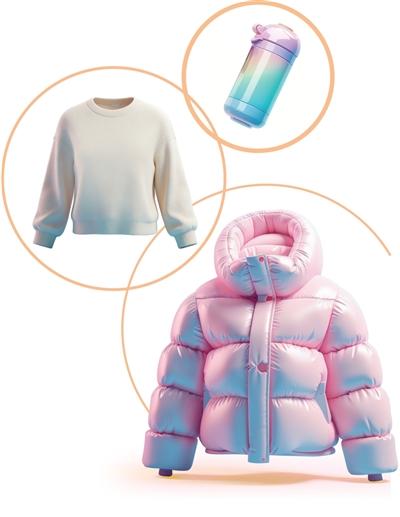
市场监管部门发布消费提示,冬季保暖“三件套”这样选
Ren Min Ri Bao· 2026-01-19 01:26
Core Viewpoint - The article discusses the importance of selecting winter warming essentials, specifically down jackets, thermal underwear, and thermos cups, emphasizing consumer awareness and product standards to avoid misleading claims and ensure quality. Group 1: Down Jackets - Consumers should focus on the down content and be cautious of misleading marketing practices that may confuse the type of filling or mislabel down content [2] - A qualified down jacket must meet specific standards, including the use of only four types of natural down and a down content of at least 50%, with recommendations for 80% or higher for better insulation [2] - The total down weight should be chosen based on style and size, with short jackets recommended to have 120-300 grams and long jackets 200-420 grams, with adjustments for extreme cold [2][3] Group 2: Thermal Underwear - The concept of "self-heating" thermal underwear is misleading; clothing cannot generate heat but can only retain it [5] - There are three main principles of thermal insulation: static temperature retention, dynamic heat storage, and reflective heat retention, each utilizing different materials and designs to minimize heat loss [6] - Consumers should check the composition of thermal underwear, prioritizing materials like cashmere and wool for warmth, and ensure compliance with safety standards [7][8] Group 3: Thermos Cups - Thermos cups should be made from food-grade materials, with stainless steel types categorized into 201, 304, 316, and 316L, each with varying levels of corrosion resistance [9] - 201 stainless steel is not recommended for food contact due to its lower corrosion resistance, while 304 is commonly used but can leach metals when in contact with acidic substances [9] - Consumers are advised to select thermos cups that meet national standards and to check for smooth, scratch-free interiors to maintain safety and longevity [10]
冬季保暖“三件套”这样选
Ren Min Ri Bao· 2026-01-18 22:52
Group 1: Down Jacket Market Insights - The upcoming "Great Cold" solar term has led to a surge in down jacket sales, with consumer concerns raised over a brand's jacket priced over 2000 yuan containing only 86 grams of down filling [1] - Experts emphasize the importance of checking down content and avoiding misleading marketing practices by manufacturers [2][4] Group 2: Down Jacket Quality Standards - The new national standard GB/T 14272—2021 specifies that only four types of natural down are allowed as filling: white goose down, gray goose down, white duck down, and gray duck down [2] - A qualified down jacket must have a down content of at least 50%, with recommendations to choose jackets with a down content of 80% or higher for better insulation [2] - Recommended filling weights vary: short jackets should have 120-300 grams, long jackets 200-420 grams, with an additional 20%-30% for extremely cold regions [2] Group 3: Down Jacket Selection Tips - Consumers can verify down jacket quality through tactile tests: pressing for rebound speed, checking for down leakage, and feeling for softness of the down [4] - Important to check the care label for compliance with GB/T 14272—2021 and ensure clear labeling of filling type and content [4] Group 4: Thermal Underwear Insights - The concept of "self-heating" thermal underwear is debunked; actual warmth comes from materials that retain heat [6] - Three main principles of thermal underwear include static insulation, dynamic heat retention, and reflective insulation [6] Group 5: Thermal Underwear Material Considerations - Consumers should prioritize materials like cashmere, wool, and acrylic for warmth, while also considering moisture-wicking properties [7] - Recommended standards for thermal underwear include GB 18401—2010 for safety and FZ/T 73022—2019 for thermal efficiency [7] Group 6: Insulated Cup Material Standards - Insulated cups are primarily made from various grades of stainless steel, with 304 being the most common food-grade material [9] - 201 stainless steel is less suitable for food contact due to higher manganese content, posing health risks [9] - Higher grades like 316 and 316L offer better corrosion resistance but at a higher cost [9] Group 7: Insulated Cup Selection Guidelines - Consumers should choose insulated cups that meet GB 4806.9—2023 standards and check for smooth, scratch-free interiors to ensure safety and longevity [10] - Recommendations include avoiding prolonged storage of acidic beverages in stainless steel cups and using gentle cleaning methods [10]