航空产业供应链韧性

Search documents
“心脏”梗阻!飞机交付缺口超5300架!全球航空产业链修复路漫漫|人民智行
Zheng Quan Shi Bao Wang· 2025-12-17 04:48
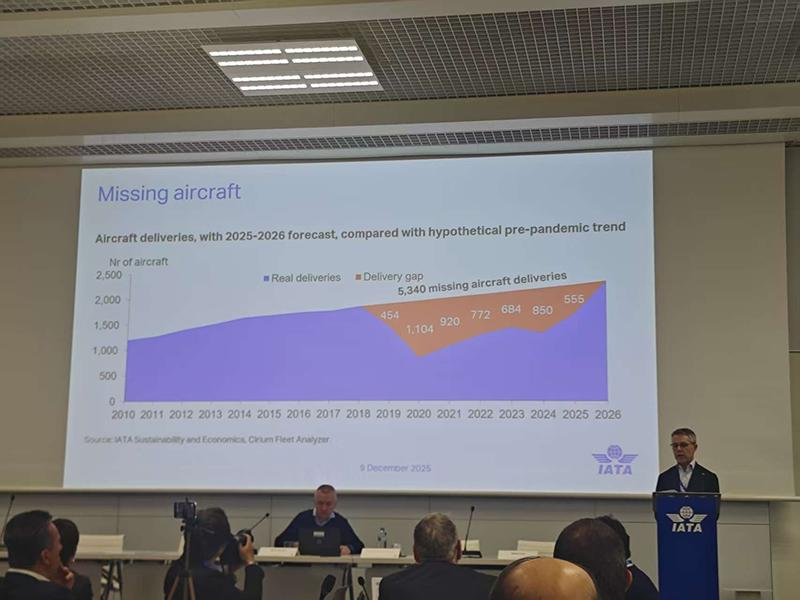
Core Insights - The global aviation industry is facing a significant supply-demand imbalance, with over 5,300 aircraft delivery gaps and 17,000 backlogged orders, leading to a prolonged struggle within the industry [1][5][6] - The International Air Transport Association (IATA) warns of a heated competition affecting the entire supply chain, which could hinder revenue growth, green transformation, and passenger travel costs for airlines [1][5] - The shortage of engines, technical faults, slow production ramp-up, and geopolitical risks are major factors contributing to the supply chain bottlenecks [1][9] Industry Overview - The number of grounded aircraft remains historically high, exceeding 5,000, as evidenced by recent actions from various airlines and industry players [3][4] - Engine issues are a primary cause of aircraft grounding, with airlines like JetBlue and Cathay Pacific experiencing significant operational disruptions due to engine faults [3][4] - The aviation industry's supply-demand conflict has reached a critical stage, with expectations of rising engine and material prices due to shortages [5][6] Market Dynamics - IATA projects that global passenger traffic will reach 4.98 billion by 2025 and 5.2 billion by 2026, marking a 4.4% increase from 2025, despite the backlog of orders expected to exceed 17,000 aircraft by the end of 2025 [5][7] - The backlog represents 60% of the current fleet, a significant increase from the historical range of 30%-40% [5][6] - The delivery gap is projected to widen, with airlines still pursuing fleet expansion despite delivery challenges [6][7] Supply Chain Challenges - The supply chain bottlenecks are attributed to multiple factors, including engine supply shortages, certification issues, and trade barriers, which collectively hinder industry capacity [8][9] - Engine production has slowed due to quality optimization efforts, leading to a mismatch between aircraft production rates and engine availability [9][10] - Tariff pressures have increased manufacturing costs, further straining the supply chain and impacting profitability for airlines and manufacturers [11] Operational Impacts - The aging fleet is leading to higher maintenance costs and reduced fuel efficiency, with the average age of the global airline fleet reaching historical highs [12] - The reliance on suboptimal aircraft models limits airlines' ability to optimize capacity based on route demand, potentially missing revenue opportunities [13] - The aviation industry is facing additional costs exceeding $11 billion by 2025 due to supply chain bottlenecks, which could affect passenger fares and service quality [14] Strategic Recommendations - Policy support is crucial for addressing the supply-demand imbalance, including international cooperation to reduce trade barriers and enhance supply chain resilience [15] - Airlines are encouraged to optimize fleet management and improve operational efficiency to mitigate short-term pressures [15][16] - The Chinese aviation sector is seen as a potential game-changer, with advancements in domestic aircraft and engine technology that could reshape the global aviation landscape [15][19]