航空发动机热端部件材料

Search documents
陶瓷基复合材料:热端构件理想材料,产业拐点渐行渐近
Changjiang Securities· 2025-09-14 12:06
Investment Rating - The report maintains a "Positive" investment rating for the aerospace and defense industry [11]. Core Insights - The next generation of aerospace engines is reaching the thermal limits of metal materials, while ceramic matrix composites (CMCs) offer excellent high-temperature performance and lightweight advantages, indicating significant application potential [2][5]. - The market for CMCs in China's military and civilian aerospace engines is projected to exceed 10 billion yuan annually over the next decade, driven by deep integration of production and research [2][7]. - The global CMC market is expected to maintain a compound annual growth rate (CAGR) of 10% over the next ten years, with the aerospace and defense sector accounting for approximately 39.6% of the market [7][28]. Summary by Sections CMC Overview - CMCs are identified as a new structural material for advanced aerospace engine hot-end components, with a working temperature of up to 1650°C, significantly higher than that of metal alloys [5][28]. - The main types of CMCs currently applied in aerospace engines include silicon carbide fiber-reinforced silicon carbide composites (SiC/SiC) and oxide fiber-reinforced oxide composites (Ox/Ox) [36][41]. International Landscape - The CMC industry in Europe and the U.S. is well-established, with significant investments and advancements in production capabilities, including the successful application of CMCs in various engine components [6][59]. - Companies like GE and Pratt & Whitney have made substantial progress in integrating CMCs into their engine designs, enhancing performance metrics such as thrust-to-weight ratio and fuel efficiency [6][59]. Domestic Development - China's CMC industry is in its early stages, with a focus on integrating research and production, exemplified by partnerships between companies like Huayin Technology and research institutions [8][21]. - Key domestic players include Huayin Technology, Torch Electronics, and AVIC High-Tech, which are actively developing CMC technologies and applications [12][21]. Market Potential - The report estimates that the CMC market in China could exceed 10 billion yuan annually, with significant demand driven by military and civilian aerospace applications [7][28]. - The demand for CMCs is expected to be further propelled by advancements in gas turbine technology, with projected cumulative demand exceeding 68 billion yuan from 2024 to 2027 [7][28].


我国航空发动机热端部件材料研究取得重大突破
Huan Qiu Wang Zi Xun· 2025-08-01 05:01
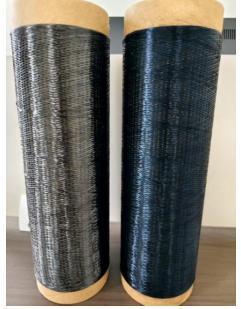
Core Insights - The research project on "in-situ modified continuous silicon carbide fiber high-temperature performance" led by Hunan Boxiang New Materials Co., Ltd. has successfully passed expert group acceptance, marking a significant breakthrough in China's aerospace new materials sector [1][5] - The newly developed Zelramic-iBN silicon carbide fiber meets the extreme performance requirements for aerospace engine composite materials, indicating a milestone in the application of new aerospace engine materials under extreme service conditions [1][5] Company Overview - Hunan Boxiang New Materials Co., Ltd. was established in November 2010, with its R&D headquarters located in Changsha National High-tech Zone, focusing on the research, production, and sales of silicon carbide fibers, PMI foams, absorbing materials, and various composite materials [5] - The subsidiary, Hunan Zerui New Materials Co., Ltd., is the only high-tech enterprise in China that has achieved the industrialization of silicon carbide fibers through a doping route [5] Material Performance - The Zelramic-iBN fiber shows significant improvements in high-temperature resistance and creep resistance compared to the previous generation Zelramic fiber, pushing the long-term service temperature under extreme conditions to new heights [1][5] - The in-situ generated BN coating on the surface of Zelramic-iBN fibers, measuring 50–80 nm, significantly enhances environmental erosion resistance and high-temperature creep resistance, opening new possibilities for improving the temperature rating of silicon carbide fiber-reinforced ceramic matrix composites [5] Application Potential - Zelramic-iBN fibers can be applied not only in civil aircraft engine high-temperature components but also in aerospace, gas turbines, hypersonic vehicle thermal protection systems, and photovoltaic thermal field materials, indicating substantial promotional value [1][5]