船舶节能减排

Search documents
船舶应用余热回收发电系统(WHG)指南
中国船级社· 2026-01-20 01:50
Investment Rating - The report does not explicitly provide an investment rating for the industry Core Insights - The shipping industry's energy conservation and emission reduction have become critical issues due to new greenhouse gas emission regulations from the International Maritime Organization (IMO) [7] - Waste Heat Recovery Power Generation Systems (WHG) are identified as effective technologies to reduce fuel consumption, enhance energy efficiency, and lower emissions [7] - The report emphasizes the importance of safety in the operation and maintenance of WHG systems to prevent unacceptable hazards to the environment, vessels, and personnel [8] Summary by Sections General Provisions - The guidelines apply to WHG systems installed on ships that utilize Organic Rankine Cycle, steam turbine, and/or exhaust gas turbine technologies for power generation [13] - The guidelines aim to minimize hazards associated with the installation and operation of WHG systems [14] System Design and Layout - WHG systems must be designed to ensure stable operation under various working conditions and include redundant safety measures [27] - The layout of WHG equipment should facilitate installation, operation, and maintenance [28] Organic Rankine Cycle Power System - The chapter outlines specific requirements for the design and operation of WHG systems utilizing Organic Rankine Cycle technology [37] Steam Turbine Power System - This section details the design, manufacturing, installation, and testing requirements for steam turbine systems used in WHG [46] Exhaust Gas Turbine Power System - The report specifies the requirements for the design and testing of exhaust gas turbine components within WHG systems [53] Mechanical Equipment - Guidelines for the design, manufacturing, installation, and testing of boilers and pressure vessels are provided [58]
视频丨减排又省油!多项国产尖端船用设备亮相中国国际海事会展
Yang Shi Xin Wen Ke Hu Duan· 2025-12-03 06:23
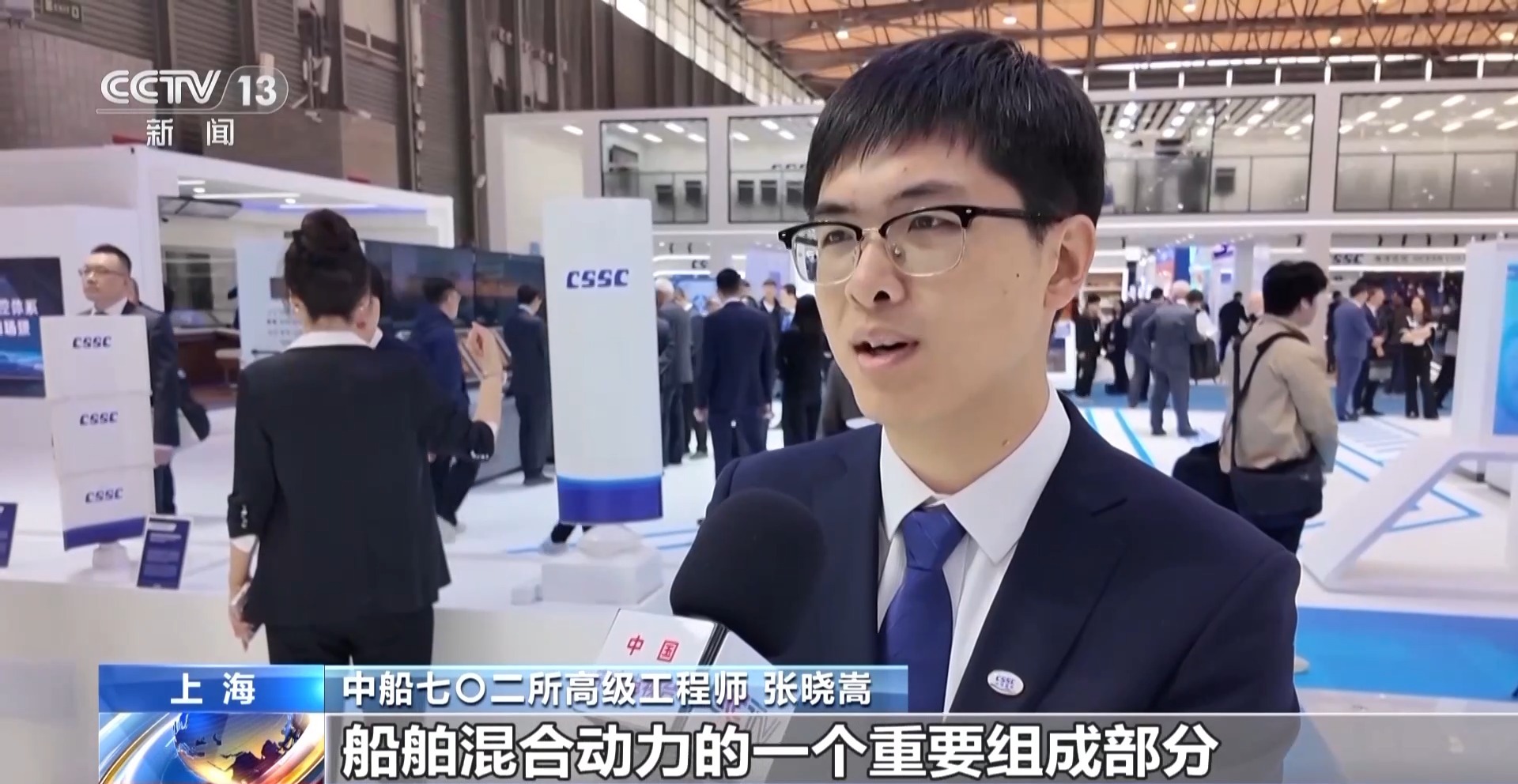
Core Viewpoint - The 2025 China International Maritime Exhibition in Shanghai has reached a new scale, attracting over 2,200 exhibitors from more than 40 countries and regions, showcasing new technologies and products in the shipbuilding sector [1][2]. Group 1: Innovations in Maritime Technology - A new generation of shipborne rotor sails, developed in China, converts wind energy into propulsion for vessels, marking a significant innovation in maritime technology [4]. - The rotor sail technology is expected to contribute to hybrid power systems for ships, providing clean energy without carbon emissions [6]. - Ships equipped with rotor sails can achieve energy savings of over 20% under ideal conditions, leading to an annual reduction of over 1,500 tons of carbon emissions on global shipping routes [8]. Group 2: Future of Ship Design - The "Future" vessel, China's first deep-sea green intelligent technology test ship, was showcased at the exhibition, highlighting advancements in domestic ship design [11]. - This vessel features all-electric propulsion and integrates advanced intelligent systems for collision avoidance and data fusion, positioning it as a leader in international maritime technology [15]. - The "Future" ship serves as a mobile laboratory for testing and verifying core technologies in ship equipment and systems, demonstrating China's capabilities in maritime innovation [17].