
草原生态研究

Search documents
十连、十二连“没了”,草原站的人还在
Xin Lang Cai Jing· 2026-01-08 04:35
Group 1 - The core viewpoint of the article highlights the challenges and dedication of researchers at the Inner Mongolia Xilin Gol Grassland Ecosystem National Field Scientific Observation and Research Station, emphasizing the harsh living conditions and the commitment of scientists to ecological research [2][3][4][5]. Group 2 - The article describes the significant decline in the population of the nearby administrative villages, Shilian and Shierlian, which were once home to hundreds of households but now have very few residents, particularly in winter [2]. - The station's establishment faced numerous challenges, including a lack of infrastructure and the need for researchers to travel long distances for basic supplies, illustrating the historical difficulties faced by the station [4][6]. - The article recounts personal experiences of researchers, such as the emotional impact of long separations from family due to the demanding nature of fieldwork, highlighting the personal sacrifices made for scientific advancement [5][7]. Group 3 - The article emphasizes the camaraderie and shared experiences among researchers at the station, who find joy in their work despite the physical demands and isolation of the grassland environment [8]. - It notes the unique ecological aspects of the grassland, including diverse flora and fauna, which contribute to the researchers' passion for their work [8].
在大草原深处,他们坚持开一家“百年老店”
Xin Lang Cai Jing· 2026-01-08 04:35
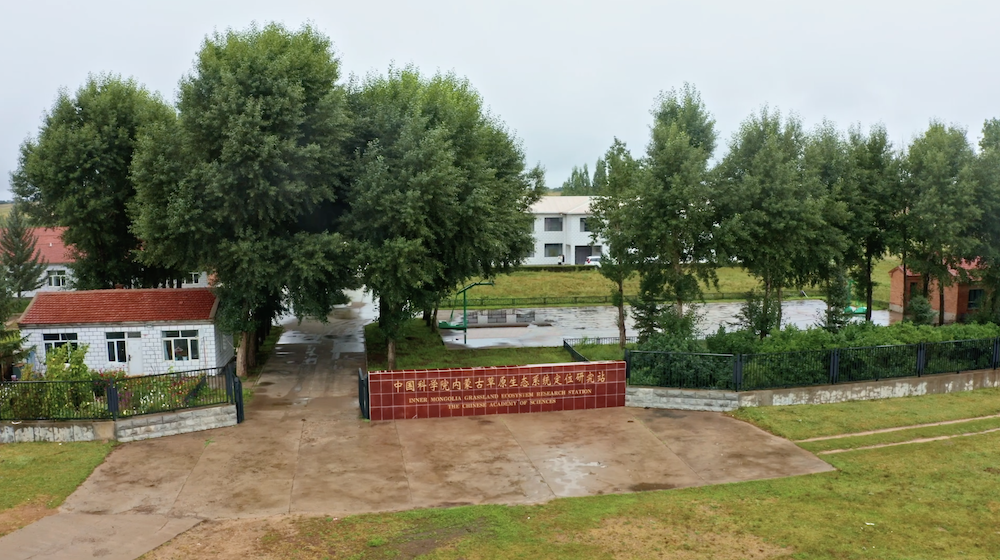
Core Viewpoint - The establishment of the Inner Mongolia Xilin Gol Grassland Ecosystem National Field Scientific Observation and Research Station represents a significant advancement in long-term ecological research, focusing on the preservation and study of grassland ecosystems in China [1][5][8]. Group 1: Research Significance - The grassland station is crucial for observing and collecting data during the peak growing season from June to September, which is essential for understanding grassland ecology [3][4]. - The station has maintained a 52-hectare monitoring plot since 1979, which has not been disturbed for 46 years, allowing for significant insights into carbon storage and biodiversity [5][6]. - The long-term monitoring has revealed that undisturbed grasslands have higher plant diversity and better soil health compared to overgrazed areas, highlighting the importance of conservation [6][7]. Group 2: Ecological Insights - The station's research has shown that typical grasslands can sequester 30 to 50 grams of carbon per square meter annually, contributing to carbon storage [5][6]. - The biodiversity within the undisturbed plot has remained stable over decades, with 168 plant species still present, contrasting sharply with the 50 species found in grazed areas [5][6]. - The research indicates that long-term ecological studies are vital for understanding the dynamics of grassland ecosystems and for informing restoration efforts [7][9]. Group 3: Future Goals and Challenges - The grassland station aims to become a "century-old establishment," emphasizing the need for sustained research over generations to address ecological challenges [8][11]. - Current research focuses on the phenomenon of shrub encroachment in grasslands, which poses questions about ecosystem structure and function [12][13]. - The station is developing restoration techniques for shrub-encroached areas, with promising results from experiments conducted over seven years [13][14]. Group 4: Educational Impact - The station serves as a training ground for graduate students, fostering a new generation of researchers dedicated to long-term ecological studies [15][17]. - Each research project requires extensive validation through numerous experiments, reflecting the commitment to rigorous scientific inquiry [17][18]. - The collaborative nature of the research ensures that knowledge and techniques are passed down through generations, reinforcing the station's role in ecological education [17][18].

“国际草原与草业大会2025”举行 呼伦贝尔成为草原生态研究天然试验场
Nei Meng Gu Ri Bao· 2025-07-14 01:43
Group 1 - The "International Conference on Grassland and Grass Industry 2025" was held in Hohhot from July 10 to 13, focusing on the theme "Three Lives Integration, Technology Empowerment" [1] - Over 400 experts and scholars from institutions such as the Chinese Academy of Sciences and various international countries participated, aiming to explore trends in grass science and provide strategic consulting for government and industry development [1] - The conference included an inspection of the collaborative project between Hohhot Agricultural Group and the Chinese Academy of Sciences, which has achieved innovative technological results in grass and livestock industries [1] Group 2 - Inner Mongolia has 1.32 billion acres of natural grassland, accounting for 22% of China's total grassland area, and is a crucial part of the Eurasian grassland [2] - The region has implemented strict ecological protection measures and policies, leading to a stable vegetation coverage of around 45% and improved ecological conditions [2] - Hohhot is recognized as an important ecological barrier for Northeast and North China, with diverse grassland vegetation and unique culture providing a natural experimental field for ecological research and grass industry development [2]