血管发育

Search documents
中国博后一作Nature论文:揭示细胞表面的糖基化RNA调控血管发育的全新作用
生物世界· 2026-02-01 04:06
Core Viewpoint - The discovery of glycoRNA, a type of RNA that can be glycosylated, opens new avenues for understanding diseases and developing therapies, particularly in the context of immune recognition and cell communication [2][4]. Group 1: Research Findings - GlycoRNA is enriched on the cell surface and plays a crucial role in immune recognition and cell communication, potentially leading to new therapeutic directions [4]. - A recent study published in Nature reveals that glycoRNA complexes with heparan sulfate regulate VEGF-A signaling, highlighting a new role for glycoRNA in vascular development [5][10]. - The research team found that the biosynthesis of heparan sulfate, especially its 6-O-sulfation modification, is essential for the formation of clustered structures involving glycoRNA and cell surface RNA-binding proteins [12]. Group 2: Mechanisms and Implications - The study demonstrates that the clustered structure formed by glycoRNA and cell surface RNA-binding proteins can antagonize the activation of the ERK signaling pathway mediated by heparan sulfate [12]. - It was shown that the heparan sulfate binding domain of VEGF-A is responsible for RNA binding, and disrupting this interaction enhances ERK signaling, impairing vascular development in both in vitro and in vivo experiments [12]. - These findings suggest that the heparan binding region in protein structures can also serve as a key site for RNA binding, providing new insights into the identification of non-classical RNA-binding proteins [13].


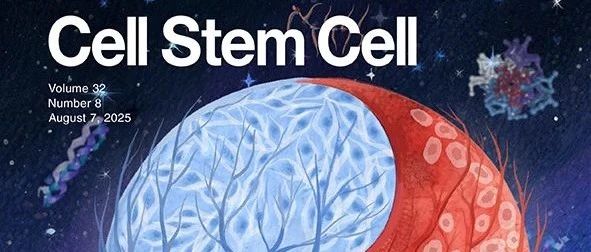
太极阴阳:北京大学王凯团队血管类器官研究登上Cell Stem Cell封面
生物世界· 2025-08-09 01:00
Core Viewpoint - The research presents a novel method for rapidly generating functional vascular organoids from induced pluripotent stem cells (iPSCs) through the orthogonal activation of transcription factors ETV2 and NKX3.1, demonstrating significant potential for applications in ischemia treatment and transplantation [3][11]. Group 1: Research Methodology - The study developed a simplified method to generate vascular organoids (VO) by using doxycycline-inducible or modRNA regulatory systems to activate transcription factors ETV2 and NKX3.1 [8]. - This method allows for the efficient co-differentiation of induced endothelial cells (iEC) and induced mural cells (iMC), producing functional 3D vascular organoids within 5 days without the need for extracellular matrix (ECM) embedding [8]. - Single-cell RNA sequencing revealed vascular heterogeneity, indicating that the timing of transcription factor activation influences the identity and heterogeneity of vascular cells [8]. Group 2: Research Findings - The vascular organoids formed perfusable blood vessels when implanted in immunodeficient mice, promoting vascular regeneration in models of hindlimb ischemia and islet transplantation [10][11]. - The research established a rapid and versatile vascular organoid platform with broad potential for vascular modeling, disease research, and regenerative cell therapy [13]. Group 3: Visual Representation - The cover image of the study illustrates the dual differentiation of human pluripotent stem cells into two vascular lineages—endothelial cells and mural cells—symbolizing a balanced and dynamic system inspired by the concept of yin and yang [7].