
行万里路

Search documents
丈夫当朝碧海而暮苍梧
Xin Lang Cai Jing· 2026-01-04 21:06
Core Viewpoint - The article highlights the life and explorations of Xu Xiake, emphasizing his contributions to geography and natural sciences through his extensive travels and detailed observations of China's landscapes and geological features [7][8][9]. Group 1: Early Life and Influences - Xu Xiake was born in Jiangyin County, where his family had a history of avoiding government service during the Yuan dynasty, leading to a focus on nature and exploration [3]. - Influenced by contemporary thinkers like Wang Yangming and Dong Qichang, Xu developed a passion for travel and exploration from a young age, setting a personal goal to explore the natural world [4]. Group 2: Major Travels and Discoveries - At the age of 21, Xu began his travels, initially focusing on nearby regions due to his responsibilities towards his mother, who later encouraged him to explore further [4][5]. - After his mother's death, Xu embarked on extensive journeys across southern and southwestern China, documenting his findings in detail [5][6]. - His travels included significant explorations in Guangxi, where he conducted detailed studies of karst topography, surpassing the knowledge of his European contemporaries [7][8]. Group 3: Scientific Contributions - Xu's major scientific achievements include identifying the true source of the Xijiang River, distinguishing between the Lancang and Nujiang rivers, and clarifying the relationship between the Jinsha River and the Yangtze River [8]. - His meticulous documentation and observations laid the groundwork for modern geography in China, earning him recognition as a pioneer in the field [8][9]. Group 4: Legacy and Cultural Impact - Xu Xiake's travel writings, particularly the "Xu Xiake Travel Notes," have had a lasting impact on Chinese literature and geography, influencing future generations [8][9]. - The establishment of May 19 as China's Tourism Day in 2011 commemorates Xu's spirit of exploration and the philosophy of "reading thousands of books and traveling thousands of miles" [9].

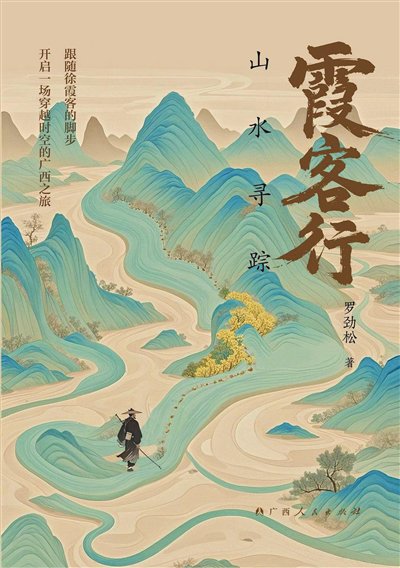
一本书 一段路 一次精神成长(读书有味)
Ren Min Ri Bao· 2025-06-04 05:39
Core Insights - The article emphasizes the deep connection between reading and traveling, illustrating how both activities enrich human experience and understanding of the world [1][4]. Group 1: Historical Context - Ancient literati emphasized "recording scenery through literature," where they documented their travels and experiences, creating a tradition of intertwining reading and travel [1]. - The work of Yuan dynasty geographer Zhou Daguan, who documented the culture and history of the Khmer Empire, exemplifies the concept of "seeking scenery through books," leading to significant discoveries centuries later [2]. Group 2: Personal Experience - Modern travelers often carry books related to their destinations, enhancing their experiences by connecting historical narratives with personal journeys [3]. - The act of bringing a book on a trip serves to deepen the travel experience, allowing for a more profound understanding of both the scenery and one's inner self [3]. Group 3: Cultural Phenomenon - The trend of "bringing a book while traveling" has evolved into a popular cultural phenomenon, significantly influencing the tourism economy, particularly highlighted by the success of adaptations like "My Alashan" [4]. - This cultural shift transforms travel from merely observing landscapes to a more immersive experience of "reading landscapes," fostering a deeper understanding of both the world and oneself [4].