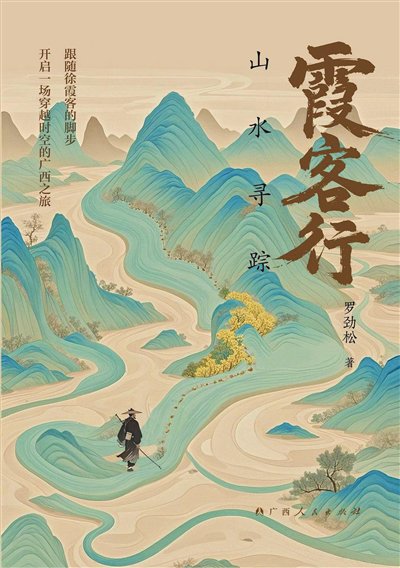
霞客精神

Search documents
丈夫当朝碧海而暮苍梧
Xin Lang Cai Jing· 2026-01-04 21:06
Core Viewpoint - The article highlights the life and explorations of Xu Xiake, emphasizing his contributions to geography and natural sciences through his extensive travels and detailed observations of China's landscapes and geological features [7][8][9]. Group 1: Early Life and Influences - Xu Xiake was born in Jiangyin County, where his family had a history of avoiding government service during the Yuan dynasty, leading to a focus on nature and exploration [3]. - Influenced by contemporary thinkers like Wang Yangming and Dong Qichang, Xu developed a passion for travel and exploration from a young age, setting a personal goal to explore the natural world [4]. Group 2: Major Travels and Discoveries - At the age of 21, Xu began his travels, initially focusing on nearby regions due to his responsibilities towards his mother, who later encouraged him to explore further [4][5]. - After his mother's death, Xu embarked on extensive journeys across southern and southwestern China, documenting his findings in detail [5][6]. - His travels included significant explorations in Guangxi, where he conducted detailed studies of karst topography, surpassing the knowledge of his European contemporaries [7][8]. Group 3: Scientific Contributions - Xu's major scientific achievements include identifying the true source of the Xijiang River, distinguishing between the Lancang and Nujiang rivers, and clarifying the relationship between the Jinsha River and the Yangtze River [8]. - His meticulous documentation and observations laid the groundwork for modern geography in China, earning him recognition as a pioneer in the field [8][9]. Group 4: Legacy and Cultural Impact - Xu Xiake's travel writings, particularly the "Xu Xiake Travel Notes," have had a lasting impact on Chinese literature and geography, influencing future generations [8][9]. - The establishment of May 19 as China's Tourism Day in 2011 commemorates Xu's spirit of exploration and the philosophy of "reading thousands of books and traveling thousands of miles" [9].

感受今日“霞客精神”(边城见闻)
Ren Min Ri Bao· 2025-05-18 22:02
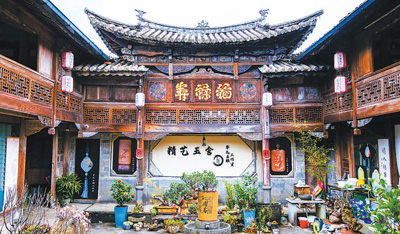
Core Viewpoint - The article highlights the historical and cultural significance of Tengchong, Yunnan, particularly through the lens of Xu Xiake's travels and the contemporary development of jade and jadeite industries in the region, showcasing the blend of local and foreign influences in the local economy and culture [11][12][16]. Group 1: Historical Context - Xu Xiake, a notable Ming dynasty geographer and traveler, spent 39 days in Tengchong, documenting its natural beauty and cultural richness in his work "Xu Xiake's Travel Notes," which has become a significant cultural reference for the area [12][18]. - The Li Family Courtyard, where Xu Xiake stayed, has historical importance and has been preserved as a cultural site, reflecting the architectural style of the region and its connection to Xu's legacy [13][14]. Group 2: Jade and Jadeite Industry - Tengchong is recognized for its jade and jadeite, with the phrase "Jade comes from Tengyue" symbolizing the region's reputation in the jade market [11][12]. - The local jade industry has seen a resurgence, with artisans like Li Kong continuing the tradition of jade carving, blending historical techniques with modern practices [14][16]. Group 3: Cultural Exchange and Economic Development - The influx of foreign visitors and entrepreneurs, particularly from Myanmar, has contributed to the local economy, with individuals like Yu Hongxian establishing successful jade businesses in Tengchong [16][17]. - The article emphasizes the importance of cultural exchange between China and Myanmar, as local artisans and foreign entrepreneurs collaborate and share knowledge, enhancing the region's economic landscape [16][17].