行政权力边界

Search documents
硬扛了3天后,美国终于认命,这场全球大战,结局真被中国说准了
Sou Hu Cai Jing· 2026-02-25 07:54
Core Viewpoint - The U.S. Supreme Court's ruling against the president's unilateral imposition of tariffs under the International Emergency Economic Powers Act has led to a significant shift in trade policy, moving from emergency tariffs to temporary measures with limitations [3][5][25]. Group 1: Legal and Policy Changes - The Supreme Court ruled 6-3 that the president cannot impose tariffs without Congressional approval, emphasizing that tax authority belongs to Congress [3][5]. - The previous approach of using emergency powers to impose tariffs has been halted, leading to confusion within the White House and the Customs system [7][19]. - The administration has shifted to using the Trade Act of 1974, which allows temporary trade measures but imposes strict limitations on duration and rates [9][19]. Group 2: Impact on Tariff Rates - The new tariffs introduced under the Trade Act are capped at 15%, significantly lower than previous rates that could exceed 30% for certain countries [11][13]. - The average tariff rate on imports from China has decreased from approximately 32% to a lower range due to the new legal framework [13][15]. - The uniform 15% tariff has resulted in some countries, previously enjoying lower rates, facing increased tariffs, thus altering competitive dynamics [15][19]. Group 3: Market and Political Implications - The temporary nature of the new tariffs, limited to 150 days without Congressional support for extension, creates uncertainty in trade negotiations [19][21]. - The shift from a permanent to a temporary tariff framework reduces the leverage of the U.S. in trade discussions, as negotiating partners can now factor in the limited duration of tariffs [21][28]. - The ruling highlights the boundaries of executive power, indicating that unilateral trade measures without legislative backing may face legal challenges [25][28].

(国际观察)五座华盛顿建筑里的美国2025
Xin Lang Cai Jing· 2025-12-31 20:02
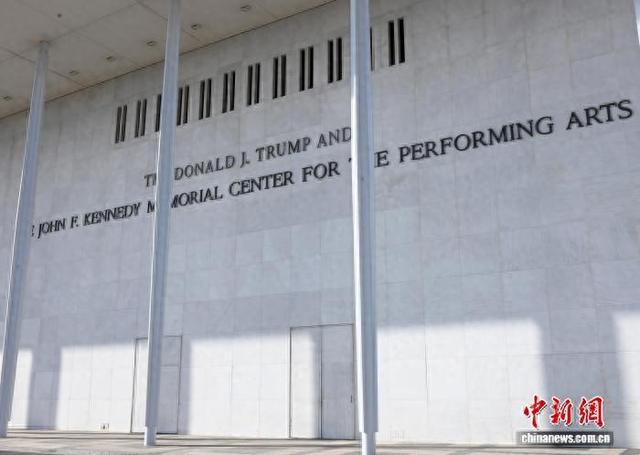
Core Viewpoint - The article reflects on the significant changes in the United States in 2025 under Trump's second term, highlighting the controversies surrounding various institutions and policies in Washington D.C. Group 1: Cultural and Artistic Changes - The Kennedy Center for the Performing Arts has faced backlash from artists, leading to the cancellation of its annual jazz concert, in protest against its renaming to "Trump-Kennedy Center" [1][2] - The decision to rename the Kennedy Center has resulted in a growing list of artists and performance groups canceling their upcoming shows [2] Group 2: Economic Policies and Federal Actions - Trump has leveraged Republican control of Congress to push through tax cuts and reduce federal programs, while also imposing significant tariffs to reshape international trade relations [5] - The legality of Trump's large-scale tariff imposition is currently under judicial review, awaiting a decision from the U.S. Supreme Court [5] Group 3: Infrastructure and Government Operations - The Federal Reserve building is undergoing major renovations, with Trump publicly criticizing Fed Chair Powell for delayed interest rate cuts, raising concerns about the independence of the Federal Reserve [2][5] - The White House is also undergoing significant construction, with the East Wing being demolished to make way for a new "State Dining Room," which has drawn public criticism for disregarding historical preservation [5][8] Group 4: Political Climate and Governance - Trump's second term has seen a more aggressive approach, with a record number of executive orders signed, totaling 225 by December 20, surpassing his first term [8] - The U.S. government experienced a historic 43-day shutdown due to partisan disagreements, with ongoing tensions suggesting potential future shutdowns [8]