
行星形成理论

Search documents
与太阳系反着来!这一发现给科学家整不会了
Guan Cha Zhe Wang· 2026-02-13 05:52
Core Viewpoint - A newly discovered planetary system around the red dwarf star LHS 1903 challenges existing theories of planet formation, as its arrangement contradicts the typical "inner rocky, outer gas" model observed in our solar system [1][2][4] Group 1: Discovery and Characteristics - The planetary system consists of four planets, with the innermost being rocky, followed by two gas giants, and the outermost also being rocky, which is contrary to the common patterns seen in the Milky Way and our solar system [2][4] - The outer rocky planet, named LHS 1903 e, has a radius approximately 1.7 times that of Earth and is classified as a "super-Earth" [5] Group 2: Formation Theories - Traditional theories suggest that rocky planets form close to a star due to high temperatures, while gas giants form further out where conditions allow for gas accumulation [4][6] - The researchers propose a "gas-poor" hypothesis, suggesting that the outer rocky planet formed later in a depleted environment, contrary to the standard formation sequence [6][7] Group 3: Implications and Future Research - The discovery may necessitate a revision of the understanding of planet formation around different types of stars, as indicated by experts in the field [7][8] - Future observations, particularly with the James Webb Space Telescope, could provide insights into the atmospheric characteristics of LHS 1903 e and enhance understanding of small planet formation [7][8]

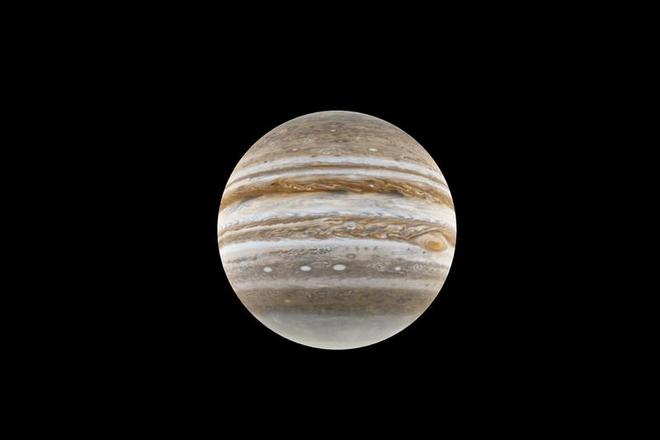
柠檬形状系外行星大气中富含碳分子
Ke Ji Ri Bao· 2025-12-23 01:13
Core Findings - A unique exoplanet named PSR J2322-2650b has been discovered by scientists at the University of Chicago using the James Webb Space Telescope, characterized by its lemon-like shape and high carbon content in its atmosphere [1][2] - This exoplanet is located approximately 4000 light-years from Earth and orbits a rapidly rotating pulsar, which is a rare occurrence in the known universe [1] - The atmosphere of PSR J2322-2650b contains significant amounts of carbon molecules (C3, C2) and exhibits extreme conditions that challenge existing theories of planetary formation [1] Atmospheric and Physical Characteristics - The planet's proximity to its host star and the massive size of the pulsar have resulted in its lemon-shaped, oblate form, with a "year" lasting about 7.8 hours and surface temperatures reaching up to 650°C [2] - Unlike most gas giants, the atmospheric wind direction on PSR J2322-2650b is opposite to the planet's rotation [2] - The planet appears deep red with clouds of graphite floating in its atmosphere, earning it the description of "an evil lemon" and marking it as one of the most peculiar exoplanets known to date [2]