
解散众议院

Search documents
高市早苗内阁支持率开始下跌,民调最低到57%,解散众议院是拖累?
Sou Hu Cai Jing· 2026-01-26 08:01
Core Viewpoint - The political landscape in Japan is experiencing turbulence as Prime Minister Kishi's cabinet faces declining support rates ahead of the upcoming elections, raising concerns about its stability and effectiveness [1][3]. Group 1: Support Rate Trends - Kishi's cabinet support rate has dropped from 67% in December to 57% in January, marking a significant decline as it falls below 60% for the first time [1]. - The disapproval rate has risen sharply from 22% to 29%, reaching a historical high, indicating growing dissatisfaction among the public [1]. - Other surveys corroborate this trend, with support rates reported at 63.1% by Kyodo News, reflecting widespread public discontent with the cabinet's policies [3]. Group 2: Factors Influencing Support Rate Decline - The decision to dissolve the House of Representatives has faced substantial public opposition, with 41% of respondents disapproving of the move, and only 27% in support [3]. - Economic issues, particularly rising prices and living costs, are of paramount concern for voters, overshadowing political maneuvers like the dissolution of the House [6]. - Historical patterns indicate that new cabinets typically experience a decline in support over time, with Kishi's cabinet now stabilizing between 55-70% after an initial high of 65-80% [4]. Group 3: Economic Concerns and Public Sentiment - A significant 59.3% of the public prioritize government measures to combat rising prices when casting their votes, highlighting the importance of economic policy [6]. - Kishi's economic policies have not effectively addressed inflation and cost-of-living issues, leading to public disappointment and a decline in support [6]. - The cabinet's future success hinges on its ability to adapt its strategies to address public concerns and improve policy execution ahead of the elections [8].

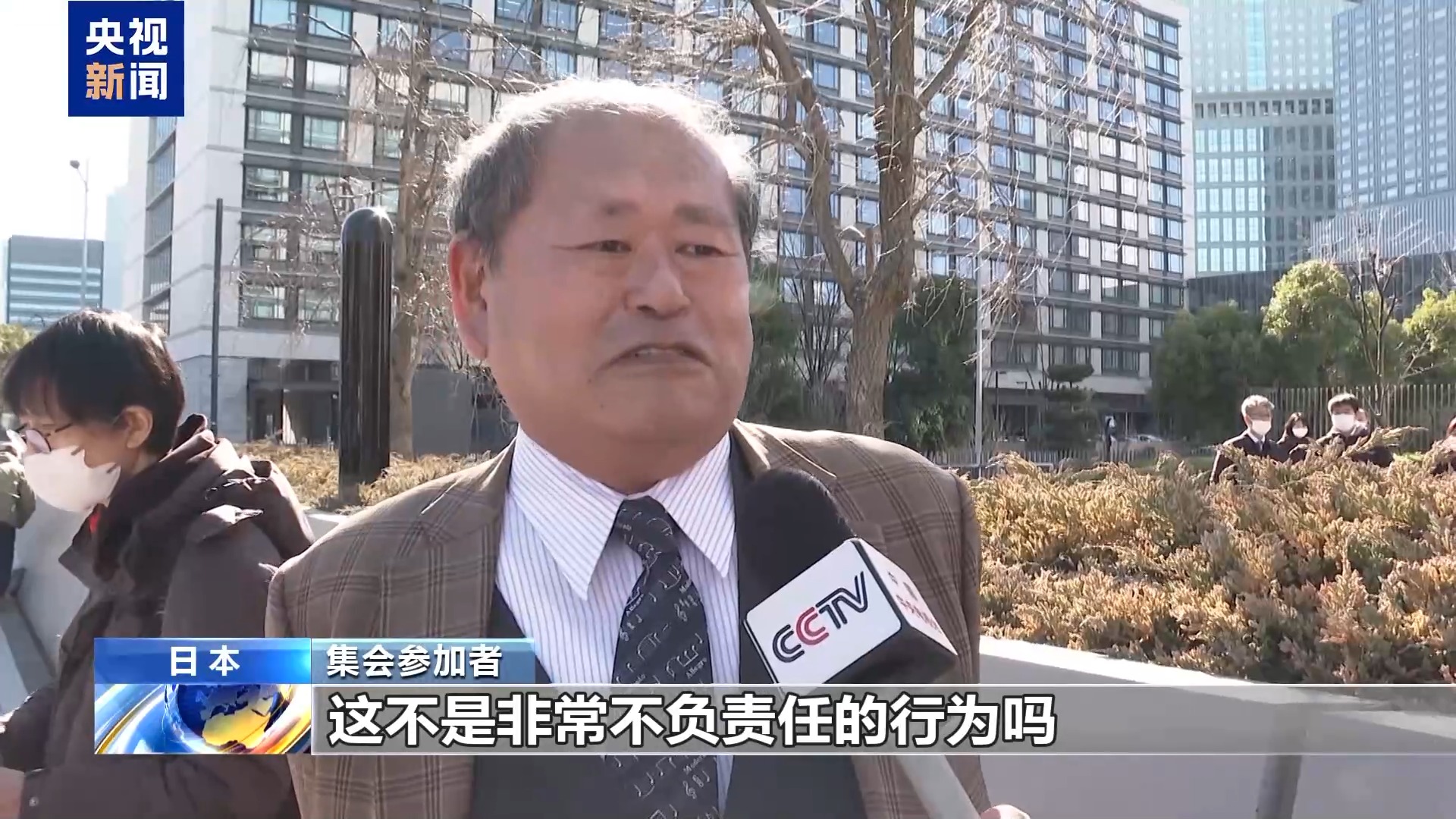
视频丨高市早苗解散众议院引发日本民众批评和质疑
Yang Shi Xin Wen Ke Hu Duan· 2026-01-24 07:52
Core Viewpoint - A significant portion of the Japanese public is protesting against Prime Minister Kishi's decision to dissolve the House of Representatives and call for early elections, arguing that it neglects economic issues and public welfare [1][3]. Group 1: Public Sentiment - Citizens gathered in front of the National Diet on the 23rd to express their opposition to the early election called by Kishi [1]. - Many believe that Kishi's reasoning for dissolving the House, which centers around seeking public trust, is fundamentally self-serving and irresponsible [5]. - There is a strong sentiment among the public regarding rising prices, with calls for the government to implement effective measures to address this issue [6]. Group 2: Political Response - Members of the new political party "Center Reform Union" criticized Kishi's actions as disregarding the economic welfare of citizens, labeling it as highly irresponsible [1]. - Kawauchi Hiroshi, a member of the "Center Reform Union," emphasized that the decision to dissolve the House is illogical, especially as it sidelines the budget proposal [3]. - The opposition has expressed a clear lack of confidence in Kishi's cabinet, advocating for its removal and prioritizing the support of citizens' livelihoods [3].
高市连续两日闭门不出
Xin Lang Cai Jing· 2026-01-12 03:41
Group 1 - The core viewpoint of the article indicates that Japanese Prime Minister Sanna Takashi is considering the dissolution of the House of Representatives ahead of the regular parliamentary session scheduled for January 23 [1][2] - Takashi has not made any public appearances or meetings on January 11, similar to January 10, and has remained at the Prime Minister's official residence [1][2] - The article mentions that Takashi is expected to hold a meeting with South Korean President Yoon Suk-yeol in her hometown of Nara Prefecture on January 13, followed by a visit from Italian Prime Minister Giorgia Meloni from January 15 to 17, indicating a busy diplomatic schedule ahead [1][2]
石破茂辞职,专家:新任自民党总裁参选者或将变少
Xin Lang Cai Jing· 2025-09-08 00:16
Core Viewpoint - Japanese Prime Minister Shigeru Ishiba announced his resignation as the president of the Liberal Democratic Party (LDP), which may lead to a reduced number of candidates in the upcoming presidential election due to the current political landscape [1][2]. Group 1: Political Context - Ishiba stated he will not participate in the next presidential election, indicating a significant shift in leadership within the LDP [1]. - Political expert Hiroshi Shiratori noted that the LDP and its coalition partner Komeito have not secured a majority in both the House of Representatives and the House of Councillors, suggesting fewer candidates compared to the last election where there were nine participants [1]. Group 2: Election Implications - There is a possibility that a House of Representatives election may occur after the new Prime Minister is elected, indicating potential changes in the political landscape [2]. - Komeito leader Tetsuo Saito expressed that Komeito cannot accept the dissolution of the House of Representatives, highlighting tensions within the ruling coalition [1].