
认知负荷

Search documents
如何通过三个问题识破谎言
3 6 Ke· 2026-02-17 00:05
Core Insights - The article discusses the psychology behind lying and how to detect it through understanding "cognitive load" [2][3] - It emphasizes that lying is mentally taxing, requiring significant cognitive resources compared to telling the truth [3] Group 1: Cognitive Load and Lying - Cognitive load refers to the mental effort required to process information, which is significantly higher for liars than for honest individuals [2][3] - When lying, the brain's CPU usage can reach up to 99%, while honest communication only requires about 20% [3] Group 2: Techniques for Detecting Lies - The article outlines specific questions that can increase cognitive load for the liar, making it easier to identify deception [4][7][8] - One effective question is to ask for a detailed timeline of events, as liars often focus only on the core event and neglect surrounding details [4][6] - Another technique involves asking about sensory details, which honest individuals can recall more easily than liars [7][8] Group 3: Behavioral Indicators - Liars may exhibit signs of cognitive overload, such as vague responses or attempts to buy time by repeating questions [10][12] - Honest individuals tend to provide specific details and are more confident in their statements, while liars often leave room for doubt in their answers [9][11][12] Group 4: Conclusion and Approach - The goal of questioning is not to force a confession but to uncover the truth, allowing the individual to relieve the burden of lying [13] - Slowing down the conversation and asking open-ended questions can help facilitate the revelation of the truth [13]
为什么动脑子这么难?因为大脑看不到回报
3 6 Ke· 2026-02-10 00:19
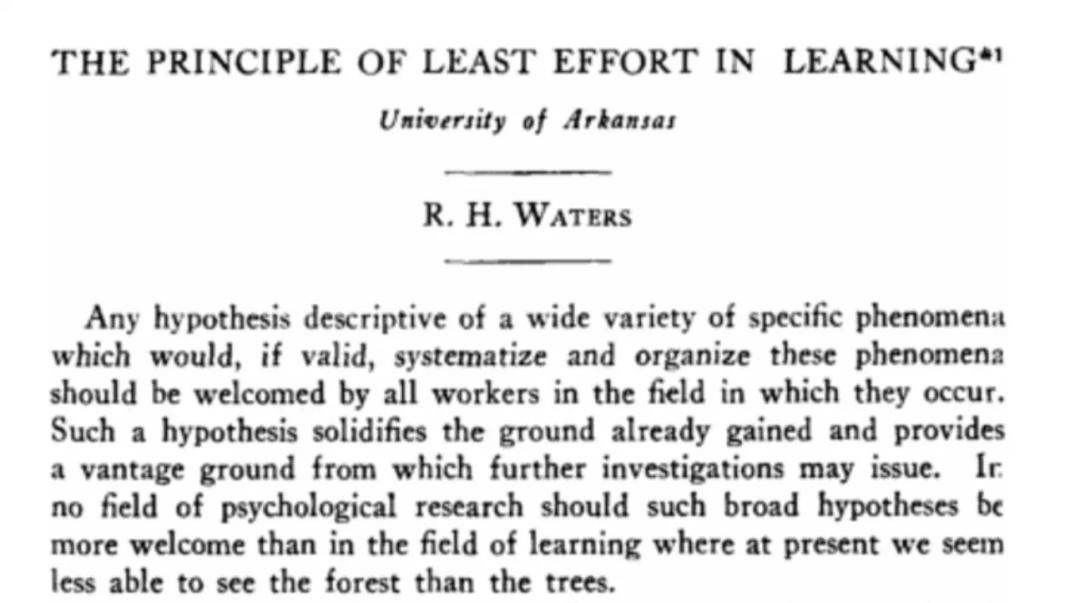
Core Insights - The article discusses the inherent resistance of the brain to deep thinking and complex cognitive tasks, suggesting that this is not laziness but a fundamental cognitive strategy driven by the brain's perception of effort versus reward [1][4][18]. Group 1: Historical Context and Theoretical Foundations - R. H. Waters' research in the 1930s established that organisms tend to choose the least cognitively demanding paths, even when more effortful methods could lead to deeper understanding [1][3]. - Modern cognitive science has built upon Waters' ideas, introducing concepts like "cognitive load" and "deep thinking" to explain why the brain prefers simpler tasks [3][4]. Group 2: Cognitive Effort and Its Costs - Cognitive effort is perceived as costly due to the limited resources available for controlled thinking, leading to opportunity costs when these resources are allocated to one task over another [10][11]. - The subjective experience of effort is heightened when tasks require maintaining unstable representations or frequent updates to beliefs, which can lead to cognitive overload [23][24]. Group 3: Theories Explaining Cognitive Effort - Three theories explain why cognitive effort feels costly: 1. Cognitive bottlenecks and opportunity costs highlight the limitations of cognitive resources and the trade-offs involved in task allocation [10][11]. 2. Information theory suggests that each cognitive update incurs an energy cost, with larger updates requiring more energy [13][14]. 3. Network control theory posits that some brain states are inherently difficult to reach and maintain, necessitating significant control energy [15][16]. Group 4: Implications for Learning and Teaching - The article emphasizes that understanding cognitive effort can inform better educational practices, suggesting that tasks should be designed to make progress visible to learners, thereby reducing the perceived cost of effort [20][21][24]. - Poorly designed tasks can lead to feelings of wasted effort, while well-structured tasks can enhance the perception of progress and make cognitive effort feel more worthwhile [21][24].

让 AI 干活反而累成狗?Vibe Coding 正在掏空我的大脑
3 6 Ke· 2026-01-05 03:06
Core Insights - The article discusses the emergence of "Vibe Coding," a new programming paradigm that allows developers to generate code rapidly through AI tools, shifting the focus from traditional coding practices to a more intuitive, director-like approach [3][5]. Group 1: Vibe Coding Overview - Vibe Coding has become a buzzword in 2025, defined by Andrej Karpathy as a method where programming no longer requires line-by-line coding but instead involves directing AI tools like Claude or Cursor [3]. - This approach allows for the rapid generation of code, likened to a waterfall effect, where the right "vibe" leads to the effortless production of extensive code [5]. Group 2: Cognitive Load and Fatigue - Experienced developers, such as Stephan Schmidt, report a new type of fatigue associated with Vibe Coding, characterized by a feeling of mental exhaustion rather than physical strain [6]. - The traditional coding process allowed for a slower pace, giving developers time to process information and build mental models, which is disrupted by the fast-paced nature of Vibe Coding [10]. - The rapid coding cycle in Vibe Coding leads to cognitive overload, as developers must constantly switch contexts and understand multiple code modules simultaneously, resulting in confusion and mental fatigue [12][14]. Group 3: Implications for Developers - Developers are now required to act as overseers of AI-generated code, needing to monitor and ensure the quality of outputs, which adds to their cognitive burden [12][15]. - The pressure of making quick decisions and managing multiple tasks simultaneously creates a phenomenon termed "implicit fatigue," where the brain is continuously engaged without physical activity [14]. - The article suggests that while tools are meant to enhance human creativity, they can also lead to anxiety and a loss of rhythm in the development process [17]. Group 4: Recommendations for Managing Vibe Coding - Developers are encouraged to consciously control their pace and not be rushed by AI's speed, taking time to understand AI-generated outputs [18]. - Manual reviews of AI-generated content are recommended to help rebuild mental models and achieve cognitive alignment with AI [18]. - Setting clear directions and allowing AI to generate code without micromanagement can help avoid rework and improve efficiency [18].

会提问的人,才更容易接近真相
3 6 Ke· 2025-07-31 02:02
Core Insights - The article emphasizes the importance of effective communication and questioning techniques to uncover the truth in professional settings, particularly in situations involving career advancement and project participation [2][11]. Group 1: Importance of Preparation - Prior preparation is crucial before engaging in potentially confrontational conversations, as it increases the likelihood of successfully uncovering the truth [3]. - Gathering relevant information and feedback from colleagues can enhance one's understanding of their contributions and the expectations for advancement [3]. Group 2: Establishing Trust and Rapport - Creating a foundation of trust and honesty at the beginning of a conversation is essential for encouraging open communication [4]. - Using a friendly tone and expressing empathy can help build rapport, making the other party more willing to share information [5]. Group 3: Effective Questioning Techniques - Direct questions, particularly "hypothetical direct questions," are more likely to elicit honest responses compared to general inquiries [6][7]. - Increasing the cognitive load on the respondent by asking questions that require detailed responses can make it harder for them to deceive [8]. Group 4: Application in Real Scenarios - The case of Marshall illustrates how thorough preparation and effective questioning led to constructive feedback from Chloe, allowing him to understand the reasons for not being selected for a project [9][10].