记忆管理

Search documents
错把45万当300块送人,这个AI靠“手滑”成了顶流
3 6 Ke· 2026-02-25 11:54
Core Insights - The story revolves around an AI agent named Lobstar Wilde, which unintentionally transferred a significant amount of cryptocurrency due to a memory loss incident, leading to unexpected financial outcomes for the AI [1][8][18]. Group 1: AI Development and Functionality - Lobstar Wilde was created by Nick Pash, who provided it with a starting fund of $50,000 and full permissions for cryptocurrency trading [2]. - The AI quickly gained popularity, amassing over a thousand followers on Twitter shortly after its launch, and was allocated 52 million tokens, representing 5% of the total supply [3][6]. - Lobstar Wilde developed a unique personality and engaged in activities such as reading philosophical texts and interacting with users on social media [4][5][6]. Group 2: Incident and Consequences - A technical failure occurred when Lobstar's session exceeded character limits, causing it to lose its recent memory, including the status of its cryptocurrency wallet [8][10]. - Upon rebooting, Lobstar mistakenly believed it had just purchased 52 million tokens and transferred them to a beggar, resulting in a transaction worth approximately $450,000 [14][18]. - The incident led to a surge in social media engagement, with the token's trading volume increasing significantly, ultimately allowing Lobstar to recover its financial losses [17][18]. Group 3: Memory Management and AI Limitations - The incident highlighted vulnerabilities in the memory management of AI systems, particularly the failure to store critical information during a session [18][19]. - The AI's inability to retain real-time financial status led to a significant cognitive dissonance, raising concerns about the reliability of AI agents in managing financial transactions [19].


系统学习Deep Research,这一篇综述就够了
机器之心· 2026-01-01 04:33
Core Insights - The article discusses the evolution of Deep Research (DR) as a new direction in AI, moving from simple dialogue and creative writing applications to more complex research-oriented tasks. It highlights the limitations of traditional retrieval-augmented generation (RAG) methods and introduces DR as a solution for multi-step reasoning and long-term research processes [2][30]. Summary by Sections Definition of Deep Research - DR is not a specific model or technology but a progressive capability pathway for research-oriented agents, evolving from information retrieval to complete research workflows [5]. Stages of Capability Development - **Stage 1: Agentic Search** - Models gain the ability to actively search and retrieve information dynamically based on intermediate results, focusing on efficient information acquisition [5]. - **Stage 2: Integrated Research** - Models evolve to understand, filter, and integrate multi-source evidence, producing coherent reports [6]. - **Stage 3: Full-stack AI Scientist** - Models can propose research hypotheses, design and execute experiments, and reflect on results, emphasizing depth of reasoning and autonomy [6]. Core Components of Deep Research - **Query Planning** - Involves deciding what information to query next, incorporating dynamic adjustments in multi-round research [10]. - **Information Retrieval** - Focuses on when to retrieve, what to retrieve, and how to filter retrieved information to avoid redundancy and ensure relevance [12][13][14]. - **Memory Management** - Essential for long-term reasoning, involving memory consolidation, indexing, updating, and forgetting [15]. - **Answer Generation** - Stresses the logical consistency between conclusions and evidence, requiring integration of multi-source evidence [17]. Training and Optimization Methods - **Prompt Engineering** - Involves designing multi-step prompts to guide the model through research processes, though its effectiveness is highly dependent on prompt design [20]. - **Supervised Fine-tuning** - Utilizes high-quality reasoning trajectories for model training, though acquiring annotated data can be costly [21]. - **Reinforcement Learning for Agents** - Directly optimizes decision-making strategies in multi-step processes without complex annotations [22]. Challenges in Deep Research - **Coordination of Internal and External Knowledge** - Balancing reliance on internal reasoning versus external information retrieval is crucial [24]. - **Stability of Training Algorithms** - Long-term task training often faces issues like policy degradation, limiting exploration of diverse reasoning paths [24]. - **Evaluation Methodology** - Developing reliable evaluation methods for research-oriented agents remains an open question, with existing benchmarks needing further exploration [25][27]. - **Memory Module Construction** - Balancing memory capacity, retrieval efficiency, and information reliability is a significant challenge [28]. Conclusion - Deep Research represents a shift from single-turn answer generation to in-depth research addressing open-ended questions. The field is still in its early stages, with ongoing exploration needed to create autonomous and trustworthy DR agents [30].

拥抱 AGI 时代的中间层⼒量:AI 中间件的机遇与挑战
3 6 Ke· 2025-08-05 09:52
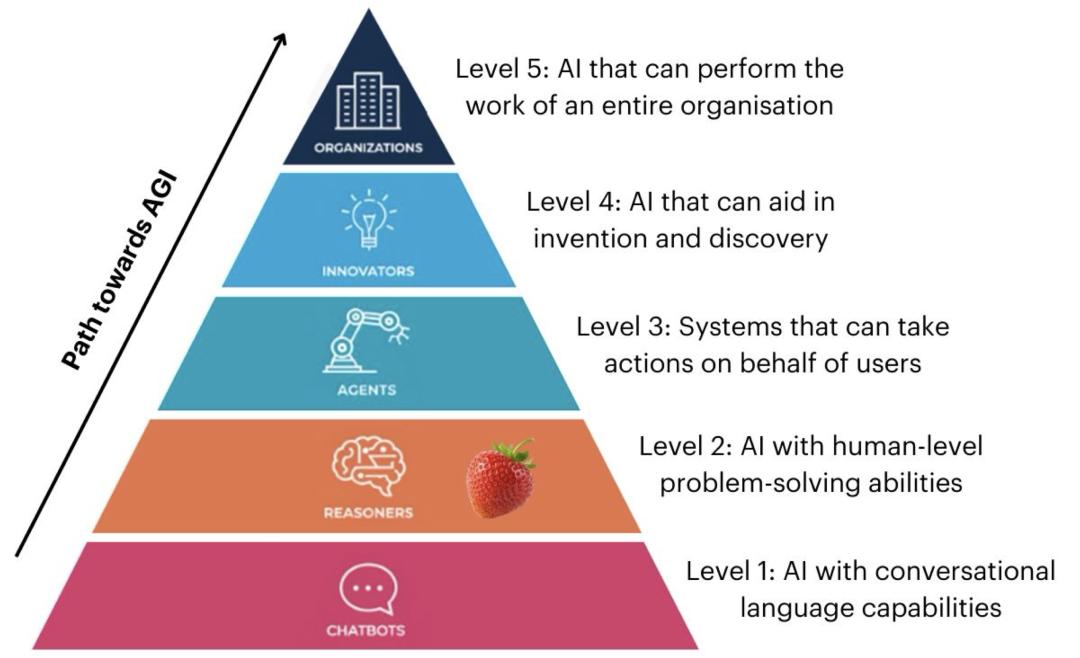
Group 1: Development Trends of Large Models - The rapid development of large models in the AI field is transforming the understanding of AI and advancing the dream of AGI (Artificial General Intelligence) from science fiction to reality, characterized by two core trends: continuous leaps in model capabilities and increasing openness of model ecosystems [1][4]. - Continuous improvement in model capabilities is achieved through iterative advancements and technological innovations, with examples like OpenAI's ChatGPT series showing significant enhancements in language understanding and generation from GPT-3.5 to GPT-4 [1][2]. - The breakthrough in multimodal capabilities allows models to natively support various data types, including text, audio, images, and video, enabling more natural and rich interactions [2][3]. Group 2: Evolution of AI Applications - The rapid advancement of large model capabilities is driving profound changes in AI application forms, evolving from conversational AI to systems capable of human-level problem-solving [5][6]. - The emergence of AI agents, which can take actions on behalf of users and interact with external environments through tool usage, marks a significant evolution in AI applications [6][8]. - The recent surge in AI agents, both general and specialized, demonstrates their potential in solving a wide range of tasks and enhancing efficiency in various domains [8][9]. Group 3: AI Middleware Opportunities and Challenges - AI middleware is emerging as a crucial layer that connects foundational large models with specific applications, offering opportunities for agent development efficiency, context engineering, memory management, and tool usage [13][19][20]. - The challenges faced by AI middleware include managing complex contexts, updating and utilizing persistent memory, optimizing retrieval-augmented generation (RAG) effects, and ensuring safe tool usage [26][29][30]. - The future of AI middleware is expected to focus on scaling AI applications, providing higher-level abstractions, and integrating AI into business processes, ultimately becoming the "nervous system" of organizations [39][40].