财务舞弊

Search documents
宜通世纪(300310)被判决赔偿投资者272万,目前还可起诉
Xin Lang Cai Jing· 2026-01-04 05:17
Core Viewpoint - The article discusses the ongoing legal actions and compensation claims against Yitong Century (宜通世纪) due to false statements that have led to investor losses, highlighting the potential for further claims by affected investors [1][3][4]. Group 1: Legal Proceedings - Yitong Century has been ordered by the Guangzhou Intermediate People's Court to compensate 109 investors a total of 2,729,003.27 yuan for investment losses, with a deadline of fifteen days from the judgment date for payment [4]. - The law firm Shanghai Jiucheng, represented by lawyer Xu Feng, is actively pursuing compensation claims for investors who purchased Yitong Century shares between April 3, 2018, and November 4, 2022, and either sold or continued to hold the shares after November 4, 2022 [3][5]. Group 2: Regulatory Actions - On June 21, 2023, Yitong Century received an administrative penalty decision from the China Securities Regulatory Commission (CSRC) due to violations related to financial misstatements during a major asset restructuring in October 2016 [2][4]. - The restructuring involved the acquisition of 100% of Shenzhen Beitai Health Measurement Analysis Technology Co., Ltd. for a total consideration of 1 billion yuan, which included issuing 21.7899 million shares and cash payment of 440 million yuan [2][4]. Group 3: Financial Misconduct - From May 1 to December 31, 2017, Beitai Health engaged in financial fraud, inflating revenue by 97.3439 million yuan, costs by 52.6099 million yuan, and total profit by 40.8386 million yuan, which represented 3.7%, 9.75%, and 15.67% of Yitong Century's reported figures, respectively [5].

跨境审计难题:高成本低收费之下舞弊风险如何防控?
Zheng Quan Shi Bao· 2025-12-29 19:16
Core Viewpoint - The increasing complexity and risk of cross-border operations in Chinese companies necessitate enhanced scrutiny and resources for auditing, as many firms face significant challenges in managing overseas revenue and compliance with regulations [1][2][3]. Group 1: Cross-Border Business Growth - In 2024, the total overseas revenue of A-share listed companies is projected to reach 10.52 trillion yuan, accounting for 17% of total revenue, with a 61% increase compared to 2020 [2]. - Over 1,100 companies have more than 30% of their revenue from overseas operations, indicating a significant shift towards international business [1][2]. Group 2: Audit Challenges - Cross-border auditing is complicated by factors such as the difficulty in obtaining evidence, compliance with varying international accounting standards, and the lack of transparency in overseas subsidiaries [4][5]. - The cost of cross-border audits is significantly higher than domestic audits, with additional expenses for travel, local legal and accounting services, and compliance with different regulatory frameworks [6][7]. Group 3: Audit Fee Discrepancies - Many companies with substantial overseas revenue pay insufficient audit fees, with 195 out of 810 companies spending less than 1 million yuan on annual audits, raising concerns about audit quality [7][8]. - The disparity between the complexity of cross-border audits and the fees paid can lead to inadequate resource allocation and increased audit risks [8][9]. Group 4: Recommendations for Improvement - Companies should recognize the importance of adequate audit funding as a necessary investment for risk management and financial reporting accuracy, rather than merely a cost [10][11]. - Audit firms need to enhance their professional capabilities and refuse to take on projects that are priced below cost, while also investing in technology and international talent [11][12]. - Regulatory bodies should improve cross-border regulatory collaboration, establish differentiated oversight mechanisms, and enhance transparency in overseas business operations to mitigate audit challenges [12].
美利信12亿元定增:高管前脚减持公司后脚增发 IPO前盈利暴增上市后迅速亏损疑点重重
Xin Lang Cai Jing· 2025-12-17 07:18
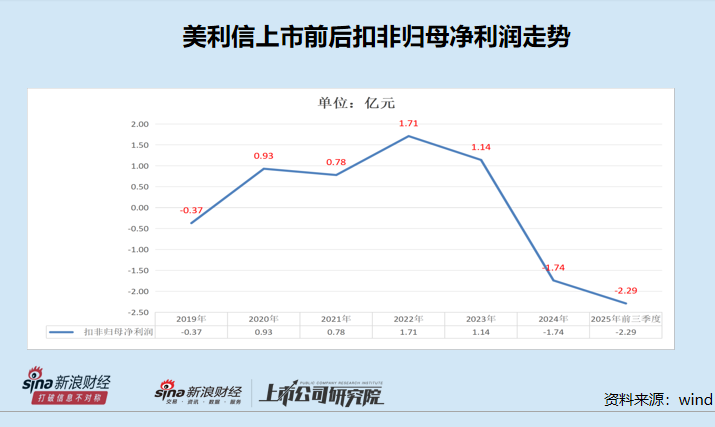
Core Viewpoint - Meilixin plans to raise up to 1.2 billion yuan through a private placement to invest in semiconductor equipment and new energy vehicle components, despite facing significant losses and high debt levels since its IPO [1][15][16]. Financial Performance - Meilixin's performance has deteriorated sharply since its IPO in April 2023, with a net profit of 1.14 billion yuan in 2023, down 33.65% year-on-year, followed by losses of 1.74 billion yuan in 2024 and 2.15 billion yuan in the first three quarters of 2025 [2][17][19]. - The company reported a significant drop in gross margin from 17.28% in 2022 to 4.98% in the first three quarters of 2025, indicating severe profitability issues [20][22]. Capital Utilization - The 1.71 billion yuan raised during the IPO was not utilized effectively, leading to questions about the allocation of funds and potential financial misconduct [5][9][24]. - Of the net proceeds from the IPO, 368 million yuan was allocated to replenish working capital and repay bank loans, while the remaining funds were directed towards three projects that were completed quickly but did not alleviate the company's financial burdens [9][24][25]. Management Actions - Prior to the announcement of the private placement, four executives disclosed plans to reduce their holdings, raising concerns about the timing and intentions behind the financing strategy [14][31][32]. - The collective selling of shares by executives before the financing announcement has led to market skepticism regarding the company's governance and the necessity of the fundraising [14][31][32]. Asset Management - Meilixin's fixed assets have increased dramatically, with a 150% rise from 20.38 billion yuan in 2020 to 51.34 billion yuan in 2025, yet the fixed asset turnover ratio has declined significantly, suggesting underutilization [22][26]. - The rapid conversion of construction projects into fixed assets, alongside the substantial increase in fixed assets, raises red flags about the company's financial practices and the potential for asset misrepresentation [23][30].