财政不可持续

Search documents
IMF原副总裁朱民:美国处于财政不可持续的危机之中
Sou Hu Cai Jing· 2025-12-13 08:27
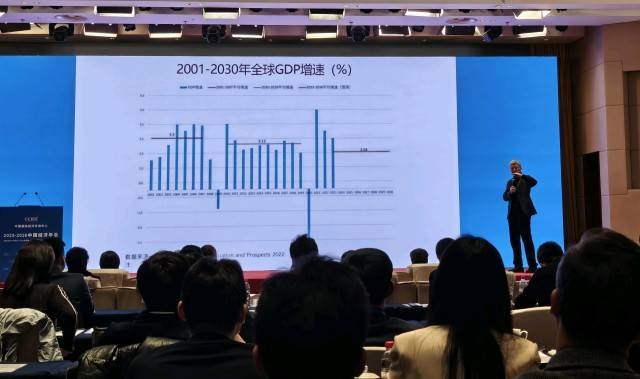
Core Viewpoint - The global economic and financial outlook for 2026 is characterized by "fragile growth," as articulated by Zhu Min, former Deputy Governor of the People's Bank of China and former Vice President of the International Monetary Fund [1][3]. Group 1: Economic Growth - Global economic growth continues to slow down, indicating a persistent trend of fragility in the economic landscape [1]. - The changing dynamics of global trade are contributing to this fragile growth environment [1]. Group 2: Fiscal and Financial Risks - There is an increasing risk of unsustainable government finances, which is a fundamental source of financial risk [1]. - The U.S. government debt has surpassed 100% of its GDP, with the growth rate of debt outpacing GDP growth, highlighting significant fiscal pressure [1]. - Zhu Min emphasizes that fiscal risks lead to rising interest costs, which further exacerbate financial instability [1]. Group 3: Inflation and Monetary Policy - U.S. inflation has not returned to the Federal Reserve's target of 2%, posing a significant risk for future interest rate cuts by the Fed [3]. - This inflation uncertainty represents another major challenge for global economic and financial development in 2026 [3].

特朗普将签署“大而美”法案 实施后影响几何
Xin Hua Wang· 2025-07-04 03:02
Core Points - The U.S. House of Representatives passed the "Big and Beautiful" tax and spending bill, pushed by President Trump, with a vote of 218 in favor and 214 against [1] - The bill focuses on extending tax cuts for corporations and individuals, including exemptions for tips and overtime pay, with a core provision to lower corporate taxes [4] - The Senate version of the bill aims to make tax cuts permanent, while the House version extends them until 2029 [4] Financial Implications - The Congressional Budget Office estimates that the extended tax cuts will cost over $4.5 trillion over the next decade, increasing the U.S. deficit by nearly $3.3 trillion and raising the debt ceiling by $5 trillion [4] - Critics argue that the bill disproportionately benefits the wealthy, with the lowest-income Americans potentially seeing a 2.3% decrease in after-tax income over ten years, while the highest-income earners may see a 2.3% increase [5] Societal Impact - The bill is expected to exacerbate income inequality, with significant cuts to federal assistance and healthcare for low-income individuals, potentially leaving 11.8 million Americans uninsured by 2034 [6] - Public sentiment is increasingly negative regarding the Trump administration's handling of tariffs, inflation, and government spending, with a higher proportion of respondents believing the economy will worsen compared to any time in 2023 [6]