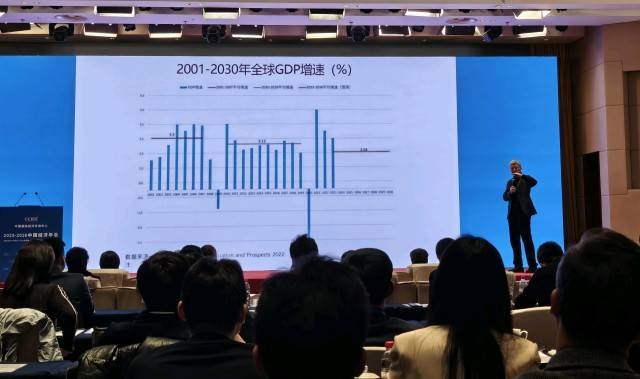
脆弱的增长

Search documents
当债券规模站上196万亿元新高,一线大咖热议如何在不确定中寻找机会
券商中国· 2026-01-19 12:36
Core Viewpoint - The forum highlighted the evolving landscape of China's bond market, emphasizing the need for resilience and innovation amidst internal and external challenges, including an "asset shortage" and global economic uncertainties [1][2]. Group 1: Market Environment and Trends - China's bond market has surpassed 196 trillion yuan in scale, facing new norms such as "asset shortage" and wide fluctuations [1]. - The bond market is expected to continue expanding, focusing on serving the real economy and major national strategies, with a notable increase in foreign investment [4]. - The central economic work conference has proposed a more proactive fiscal policy and moderately loose monetary policy, prioritizing domestic demand as a key strategy for 2026 [4]. Group 2: Economic Growth and Financial Development - In 2025, China's economy is projected to grow by approximately 5%, with significant developments in the financial market, including a record daily trading volume in the stock market [5]. - The financial system is undergoing structural changes, with a shift from indirect financing to a more balanced mix of financial tools and institutions [6]. Group 3: Debt Risks and Policy Recommendations - Experts discussed the rising external vulnerabilities and the need to address internal debt issues, emphasizing the importance of understanding the macroeconomic context [7]. - Recommendations for managing debt risks include creating a favorable macro environment, aligning credit with efficiency, and exploring national macro asset-liability management [8]. Group 4: Institutional Strategy Adjustments - Financial institutions are adapting their strategies in response to market changes, focusing on asset allocation and investment logic [10]. - The shift towards "solid income+" products is evident, with a significant year-on-year growth of 39.5% in such funds by the end of Q3 [12]. - Institutions are encouraged to adopt a dynamic approach to asset management, balancing short-term liquidity with long-term investments [13].


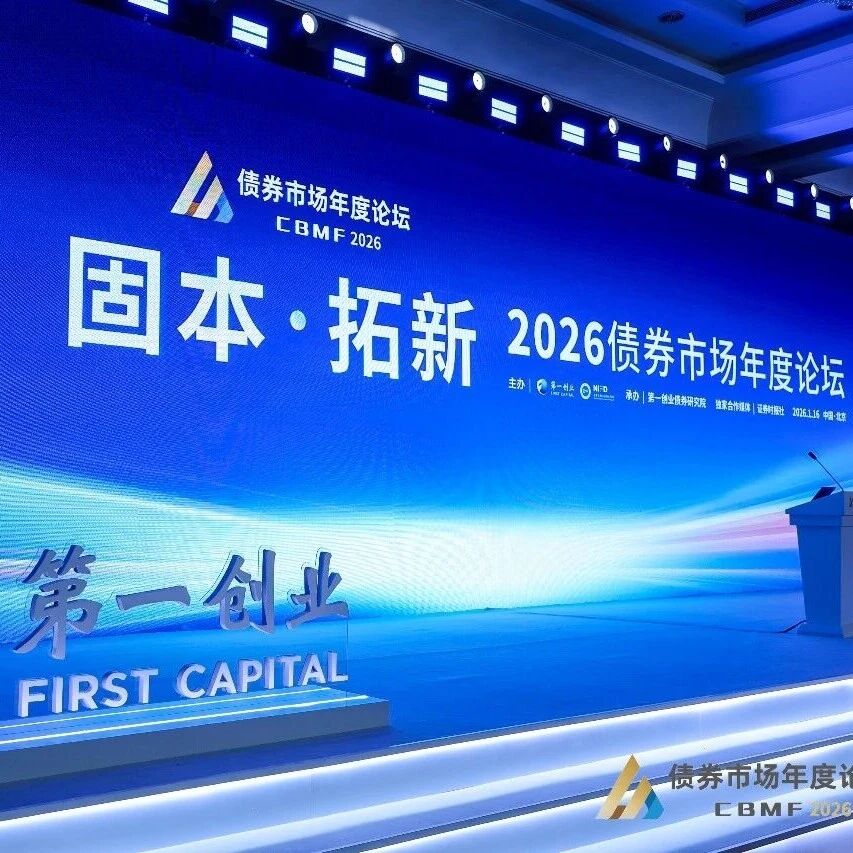
债市何以固本拓新,2026路径全景浮现
2 1 Shi Ji Jing Ji Bao Dao· 2026-01-17 14:21
Core Viewpoint - The Chinese bond market is navigating a complex environment in 2026, characterized by "fragile growth" globally, with significant external pressures from changing trade patterns, rising financial risks, and evolving monetary systems [2][5]. Group 1: Economic Environment - The global economy is entering a phase of "fragile growth," with slowing growth rates and significant changes in global trade dynamics, particularly influenced by past trade policies [5]. - High global government debt and interest payment pressures pose challenges to fiscal sustainability, especially when interest rates exceed economic growth rates [5]. Group 2: Domestic Bond Market Dynamics - The Chinese bond market is expected to play a crucial role in providing financial support for economic resilience through mature coordination of fiscal and monetary policies, deep structural changes in financing, and adaptation to the "investing in people" strategy [2][5]. - The proportion of indirect financing, primarily through bank loans, has decreased from 85% a decade ago to around 60%, facilitating the development of direct financing markets [5]. Group 3: Investment Strategies - Market participants are shifting from a "hold to maturity" approach to a "trading-driven" strategy, exploring diversified strategies like "fixed income plus" to navigate the current market volatility [3][6]. - The bond market is expected to continue serving the real economy and risk prevention, with a focus on multi-asset allocation and refined liquidity management in the low-interest-rate environment [7][8]. Group 4: Institutional Perspectives - Institutional investors are advised to adopt a dynamic approach to asset allocation, moving from a singular focus to a more flexible strategy that tracks funding flows [9]. - The growth of "fixed income plus" funds, which saw a 40% year-on-year increase, indicates a shift in client demand and asset allocation logic, contrasting with the decline in pure bond fund sizes [8]. Group 5: External Influences - External factors such as technological advancements, abundant liquidity, and improved risk appetite are driving the market's positive outlook, with a particular emphasis on the role of technology in shaping market trends [10].

IMF原副总裁朱民:美国处于财政不可持续的危机之中
Sou Hu Cai Jing· 2025-12-13 08:27
Core Viewpoint - The global economic and financial outlook for 2026 is characterized by "fragile growth," as articulated by Zhu Min, former Deputy Governor of the People's Bank of China and former Vice President of the International Monetary Fund [1][3]. Group 1: Economic Growth - Global economic growth continues to slow down, indicating a persistent trend of fragility in the economic landscape [1]. - The changing dynamics of global trade are contributing to this fragile growth environment [1]. Group 2: Fiscal and Financial Risks - There is an increasing risk of unsustainable government finances, which is a fundamental source of financial risk [1]. - The U.S. government debt has surpassed 100% of its GDP, with the growth rate of debt outpacing GDP growth, highlighting significant fiscal pressure [1]. - Zhu Min emphasizes that fiscal risks lead to rising interest costs, which further exacerbate financial instability [1]. Group 3: Inflation and Monetary Policy - U.S. inflation has not returned to the Federal Reserve's target of 2%, posing a significant risk for future interest rate cuts by the Fed [3]. - This inflation uncertainty represents another major challenge for global economic and financial development in 2026 [3].