质子治疗技术

Search documents
浙江首个质子治疗中心在杭开工
Hang Zhou Ri Bao· 2026-01-28 02:33
Group 1 - The proton therapy center at Zhejiang University School of Medicine Affiliated Shao Yifu Hospital has officially commenced construction, marking a significant step in proton therapy in Zhejiang Province. The project is expected to be completed and operational by October 2028 [1] - Proton therapy is recognized as a cutting-edge radiation treatment technology that can precisely target malignant tumors while effectively protecting surrounding healthy tissues, making it particularly suitable for tumors located near critical areas such as the brainstem, spinal cord, optic nerves, heart, or in children [1] - With approximately one million new cancer patients requiring radiation therapy annually in China, there is an increasing demand for diverse and high-quality medical technologies. The country is intensifying its investment in this field to benefit more patients [1] Group 2 - The proton therapy center will feature an internationally advanced 360° rotating proton therapy system and related medical functional areas, including a direct treatment area equipped with advanced positioning devices such as linear accelerators, CT, MR, and PET, as well as a day chemotherapy center and outpatient facilities [2] - The proton therapy system will adopt a split layout separating the accelerator from the treatment room, which offers advantages such as reduced radiation impact and higher beam quality compared to integrated systems [2] - The accompanying research and transformation building will establish a platform for innovation and clinical transformation in tumor prevention and treatment, providing systematic teaching courses and practical training to foster professional talent in the field of proton therapy [2]
全省首个质子治疗中心 在浙大邵逸夫医院钱塘院区开工
Mei Ri Shang Bao· 2026-01-27 23:21
Core Insights - The opening ceremony of the proton therapy center and research transformation building at Zhejiang University School of Medicine Affiliated Shao Yifu Hospital marks a significant step in proton therapy in Zhejiang Province [1][2] - Proton therapy is recognized as a cutting-edge radiation treatment technology that precisely targets malignant tumors while protecting surrounding healthy tissues, making it particularly suitable for tumors near critical areas such as the brainstem and spinal cord [1] Group 1 - The proton therapy center will feature an advanced 360° rotating proton therapy system and related medical functional areas, including a linear accelerator, CT, MR, and PET for precise positioning [2] - The center aims to provide a comprehensive, convenient, and precise "one-stop" diagnosis and treatment service centered on proton therapy, optimizing processes to reduce hospitalization time and enhance patient experience [2] - The research transformation building will establish a platform for innovation and clinical transformation in tumor prevention and treatment, along with systematic training courses to cultivate professionals in the field of proton therapy [2] Group 2 - The project is expected to be completed and put into use by October 2028, addressing the significant demand for high-quality medical technology among the large number of cancer patients in China [1][2] - The establishment of the proton therapy center fills a gap in Zhejiang Province and is considered a major public welfare project responding to the needs of patients both within and outside the province [2]
合肥离子医学中心二层质子放疗病区启用
Xin Lang Cai Jing· 2026-01-08 16:56
Core Insights - The Hefei Ion Medical Center has seen a continuous increase in proton therapy patients since its opening, with the second proton therapy ward officially launched on January 8, significantly enhancing inpatient treatment capacity [1] - Proton therapy is recognized as an advanced international cancer radiation treatment technology that targets tumors with higher precision, reducing damage to surrounding healthy tissues [1] - The center has treated over 600 cancer patients with proton therapy since its inception, and the new ward will double the number of inpatient beds from 44 to 94, alleviating treatment wait times [1] Group 1 - The second proton therapy ward will greatly relieve treatment waiting pressure and provide high-standard precision radiotherapy services to more cancer patients [1] - Proton therapy is particularly suitable for lung cancer, liver cancer, pancreatic cancer, and is especially beneficial for pediatric tumors, offering better organ protection and higher patient satisfaction [1] - The center aims for significant breakthroughs by 2026, with plans to enhance its comprehensive cancer treatment capabilities [1] Group 2 - The imported proton therapy system at the Hefei Ion Medical Center is operating well, and a domestically developed proton therapy system is set to enter clinical trials soon [2] - The team is developing new proton therapy technologies, including spatially fractionated radiotherapy and the Bruce method, with plans for ultra-short treatment courses [2] - The center aims to become a leading regional medical center for proton therapy technology in China, with a focus on making high-precision proton therapy more accessible and affordable for patients [2]
实现对癌细胞“定点爆破” 深圳质子治疗中心正式启用
Shen Zhen Shang Bao· 2025-08-11 22:46
Core Viewpoint - The Shenzhen Proton Therapy Center has officially opened, marking the first integrated medical, research, and teaching facility for proton therapy in South China, providing advanced cancer treatment services [1][2]. Group 1: Facility Overview - The center covers a total area of 35,000 square meters and is equipped with 5 treatment rooms and 300 beds, utilizing the IBA Proteus PLUS proton therapy system [1]. - Over 70% of cancer patients require radiotherapy, which traditionally damages surrounding healthy tissues; proton therapy minimizes this damage through its unique "Bragg Peak" effect [1][2]. Group 2: Clinical Trials and Patient Experience - The Shenzhen Proton Therapy Center has begun recruiting for clinical trials, with the first patient, referred to as Zhang, reporting minimal side effects from the treatment [2]. - The center aims to address the issue of local patients needing to travel for advanced cancer treatment, filling a significant gap in Shenzhen's healthcare offerings [2]. Group 3: Strategic Importance - The launch of the center is expected to enhance the overall treatment capabilities of Shenzhen hospitals and promote integrated development between medical institutions in Beijing and Shenzhen [3]. - The center is positioned to provide international-level precision radiotherapy services, potentially extending its influence to the Guangdong-Hong Kong-Macao Greater Bay Area and Southeast Asia, reinforcing Shenzhen's status as a key cancer treatment hub in southern China [3].
肿瘤基本消失!广州泰和肿瘤医院让几十例头颈肿瘤患者逆风翻盘
Sou Hu Wang· 2025-05-08 08:35
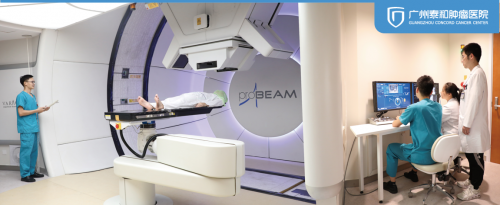
Core Viewpoint - Proton therapy has shown significant effectiveness in treating head and neck tumors, providing hope for patients who have faced challenges with traditional treatments [1][3][4] Group 1: Patient Success Stories - A patient named Sun experienced a near-complete disappearance of her nasal rhabdomyosarcoma after undergoing 30 sessions of proton therapy, alleviating her symptoms significantly [1] - Another patient, Mr. Chen, benefited from proton therapy for recurrent nasopharyngeal cancer, with significant tumor reduction observed after treatment [3] - Ms. Li, suffering from sinonasal neuroendocrine carcinoma, saw her tumor shrink from 7 cm to 2 cm after proton therapy, with substantial improvement in her quality of life [3] Group 2: Advantages of Proton Therapy - Proton therapy offers precise targeting of tumors, effectively killing cancer cells while minimizing damage to surrounding healthy tissues, leading to lower side effects compared to traditional radiation therapy [4] - The National Comprehensive Cancer Network (NCCN) has recognized proton therapy as a standard treatment method for head and neck cancers [4] Group 3: Institutional Background - Guangzhou Taihe Hospital's proton center is supported by renowned institutions like MD Anderson Cancer Center and Mayo Clinic, featuring advanced technology such as the Varian ProBeam proton therapy system [4] - The center has seen a growing number of consultations and treatments, with a peak of over 50 patients treated in a single day, covering various cancer types including nasopharyngeal, esophageal, lung, breast, and pancreatic cancers [4]