
质子治疗系统

Search documents
上海嘉定深化“医研产用”联动 打造产医融合发展新生态
Xin Hua Cai Jing· 2026-01-20 16:58
Group 1 - Shanghai Jiading is establishing a high-end medical device industry cluster, promoting a dual empowerment of medical services and industrial development [1] - The "Shanghai Medical Valley" industrial park has attracted over 60 biopharmaceutical companies, with a projected total output value of 700 million yuan in 2024 [1] - A new model of industry-medical integration has been created, involving collaboration with Shanghai Jiao Tong University to support the transformation of medical and engineering innovations [1] Group 2 - The first domestically produced proton therapy system has been put into clinical use, treating over 1,000 patients with a maximum treatment cost of 170,000 yuan, which is 15% to 20% lower than imported equipment [2] - The "Union Medical-Jiading Regional Imaging Center" has been established to enhance grassroots medical imaging capabilities, addressing shortages in diagnostic physicians and improving service quality [2] - A digital twin management platform for high-value medical imaging equipment has been created, optimizing workflows and improving patient experience through real-time data monitoring [2] Group 3 - The "Jiading Model" is a practical implementation of the national hierarchical diagnosis and treatment system, promoting high-quality development of public hospitals and the entire chain of high-end medical equipment [3] - This model has been successfully implemented in nearly 400 projects across 31 provinces and cities, covering over 3,000 hospitals and serving nearly 200 million people [3] - The model is being promoted to countries and regions involved in the Belt and Road Initiative, including Indonesia, Brazil, and Africa [3]

深化药械改革 各地在行动丨审评改革“上海样本”:长三角监管协同如何让创新跑得更快
Xin Hua Wang· 2026-01-19 06:57
Core Viewpoint - The article highlights the significant reforms in China's pharmaceutical and medical device regulatory system, particularly in Shanghai, which have accelerated innovation and improved the regulatory environment for companies in the industry [1][2][21]. Group 1: Regulatory Reforms - The establishment of the Long Triangle drug and medical device review centers has enabled local companies to access regulatory services more conveniently, leading to faster innovation cycles [3][4]. - Shanghai's regulatory reforms include 22 comprehensive measures that enhance the connection between the regulatory system and industry needs, promoting high-quality development in the pharmaceutical sector [14][11]. - The Shanghai model of regulatory reform is becoming a replicable paradigm for other regions, demonstrating the effectiveness of localized innovation in regulatory practices [2][19]. Group 2: Innovation Support - The Long Triangle review centers have processed over 60,000 applications and provided guidance for 239 innovative products, with 99 already approved for market entry [6][10]. - Companies have reported that the regulatory environment in Shanghai allows for more direct communication with reviewers, which has improved the efficiency of the registration process [4][7]. - The establishment of registration guidance service stations has further enhanced support for innovation, with 102 companies receiving targeted assistance in key areas [9][20]. Group 3: Collaborative Ecosystem - The integration of regulatory resources across the Long Triangle region has created a collaborative ecosystem that supports innovation and accelerates product development [19][18]. - Shanghai's role as a "testbed" for national policies has allowed it to attract innovative projects, exemplified by the rapid approval of new drugs and medical devices [17][18]. - The collaboration between Shanghai and neighboring provinces has led to the development of a unified quality management system, enhancing resource efficiency and risk control [19][20].


合肥离子医学中心二层质子放疗病区启用
Xin Lang Cai Jing· 2026-01-08 16:56
Core Insights - The Hefei Ion Medical Center has seen a continuous increase in proton therapy patients since its opening, with the second proton therapy ward officially launched on January 8, significantly enhancing inpatient treatment capacity [1] - Proton therapy is recognized as an advanced international cancer radiation treatment technology that targets tumors with higher precision, reducing damage to surrounding healthy tissues [1] - The center has treated over 600 cancer patients with proton therapy since its inception, and the new ward will double the number of inpatient beds from 44 to 94, alleviating treatment wait times [1] Group 1 - The second proton therapy ward will greatly relieve treatment waiting pressure and provide high-standard precision radiotherapy services to more cancer patients [1] - Proton therapy is particularly suitable for lung cancer, liver cancer, pancreatic cancer, and is especially beneficial for pediatric tumors, offering better organ protection and higher patient satisfaction [1] - The center aims for significant breakthroughs by 2026, with plans to enhance its comprehensive cancer treatment capabilities [1] Group 2 - The imported proton therapy system at the Hefei Ion Medical Center is operating well, and a domestically developed proton therapy system is set to enter clinical trials soon [2] - The team is developing new proton therapy technologies, including spatially fractionated radiotherapy and the Bruce method, with plans for ultra-short treatment courses [2] - The center aims to become a leading regional medical center for proton therapy technology in China, with a focus on making high-precision proton therapy more accessible and affordable for patients [2]
中广核“华龙一号”与质子治疗系统亮相国家博物馆“十四五”成就展
Zheng Quan Shi Bao Wang· 2025-12-30 02:41
Core Viewpoint - The exhibition "Building a Strong Country Road - Achievements of China's Manufacturing during the 14th Five-Year Plan" showcases significant advancements in China's manufacturing sector, highlighting key technologies such as the "Hualong One" nuclear power technology and proton therapy systems developed by China General Nuclear Power Group (CGN) [1][2] Group 1: Exhibition Overview - The exhibition is co-hosted by the National Museum of China and the Ministry of Industry and Information Technology, running for an estimated five months and featuring over 300 exhibits across six sections [1] - The "Hualong One" nuclear power model is prominently displayed in the "Green Manufacturing" section, emphasizing its role as a national symbol of China's nuclear power capabilities [1] Group 2: Hualong One Nuclear Technology - The "Hualong One" technology can generate nearly 10 billion kilowatt-hours of electricity annually, sufficient to meet the annual electricity needs of 1 million people [1] - This technology has fostered the development of over 5,400 enterprises in the upstream and downstream supply chain and has achieved 100% domestic production capability for its equipment [1] Group 3: Proton Therapy System - The proton therapy system model demonstrates how nuclear technology can enhance public health, with CGN's equipment being included in the Ministry of Industry and Information Technology's directory for major technological equipment promotion [2] - Proton therapy is particularly effective for targeting tumor tissues while minimizing damage to surrounding healthy tissues, making it suitable for pediatric cancer patients [2] Group 4: R&D and Technological Advancements - During the 14th Five-Year Plan, CGN has committed to high-level technological self-reliance, with R&D investment intensity reaching 3.8% by the end of the plan [2] - CGN has achieved significant innovations, including the successful certification of the "Hualong One" technology in the UK and Europe, and the widespread application of the first nuclear-grade digital control system [2] - The company is also advancing in the renewable energy sector, focusing on a "New Energy+" strategy and making progress in the development of solar thermal collectors [2]

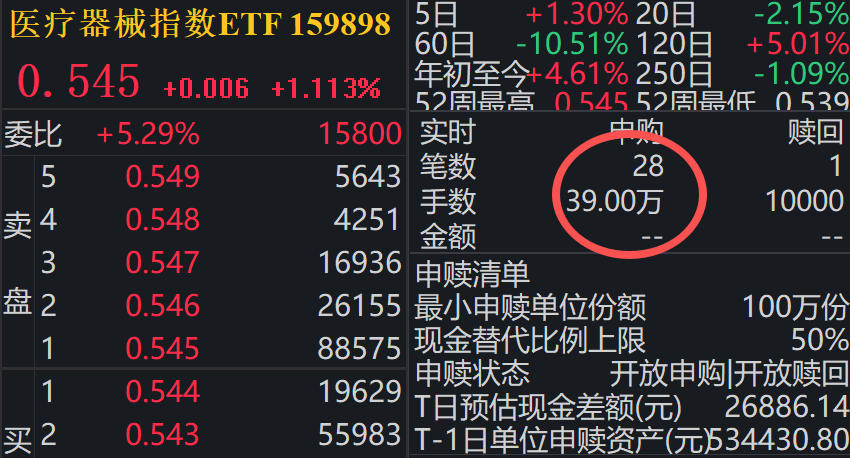
毫米级创伤!我国脑机接口里程碑式突破,医疗器械指数ETF(159898)逆势上涨1.11%
Jin Rong Jie· 2025-12-23 16:52
Core Viewpoint - The medical device sector is experiencing significant growth and investment opportunities, driven by recent regulatory approvals and technological advancements in brain-computer interface (BCI) technology [3][4][5]. Group 1: Market Performance - The medical device index ETF (159898) saw a 1.11% increase, with approximately 20 million yuan net inflow during trading [1]. - Key stocks in the medical device sector, such as Yirui Technology and Furu Medical, reported gains of 4.58% and 6.44% respectively, indicating strong market performance [1]. Group 2: Regulatory Developments - The National Medical Products Administration (NMPA) approved two high-value medical devices, enhancing clinical applications and technological development in the industry [3]. - Recent policies from major cities like Shanghai and Beijing aim to support the medical device industry, focusing on regulatory reforms and innovation [5]. Group 3: Technological Advancements - China has made significant progress in invasive brain-computer interface technology, becoming the second country after the U.S. to enter clinical trials [3]. - The global brain-computer interface market is projected to grow from approximately $2.62 billion in 2024 to $12.4 billion by 2034, with a compound annual growth rate of 17.35% [4]. Group 4: Investment Opportunities - Analysts suggest that the medical device sector may replicate the successful path of innovative pharmaceuticals, with a focus on innovation driving industry growth and global competitiveness [5]. - The medical device index ETF (159898) tracks a diverse range of leading companies in the sector, primarily focusing on A-share medical devices [7].




又2款创新器械获批:质子治疗系统与脑深部刺激系统
思宇MedTech· 2025-12-16 10:10
Core Insights - The National Medical Products Administration (NMPA) has approved two innovative medical devices for market launch: a proton therapy system from Varian Medical Systems and a deep brain stimulation system from Jingyu Medical Technology [2][3]. Proton Therapy System - The proton therapy system consists of an accelerator subsystem and a treatment subsystem, designed for treating solid malignant tumors and specific benign diseases. It features a cantilevered design that saves space and improves treatment efficiency [4][6]. - Varian Medical Systems Particle Therapy Company, a subsidiary of Varian Medical Systems, focuses on the research, production, and application of proton therapy technology. Varian was acquired by Siemens Healthineers for $16.4 billion in 2021, becoming a significant part of Siemens' business [6]. Deep Brain Stimulation System - The approved products from Jingyu Medical include an implanted deep brain stimulator, an electrode lead, and an extension lead, which together form a deep brain stimulation system aimed at treating opioid addiction [7][16]. - This system targets the nucleus accumbens and the anterior limb of the internal capsule, providing auxiliary treatment for patients with severe opioid addiction, thus filling a technological gap in physical interventions for opioid addiction treatment [16][18]. - Jingyu Medical Technology, established in 2011, specializes in deep brain stimulation systems and has received regulatory approvals for devices used in treating Parkinson's disease, obsessive-compulsive disorder, depression, and drug addiction [18].
质子治疗系统获批上市
Ren Min Wang· 2025-12-16 01:52
Core Viewpoint - The National Medical Products Administration has approved the registration application for Varian Medical Systems' proton therapy system, which is designed for treating malignant tumors and certain benign diseases [1] Group 1: Product Details - The proton therapy system consists of an accelerator subsystem and a treatment subsystem [1] - The accelerator subsystem includes a main accelerator system, energy selection system, and beam transmission system [1] - The treatment subsystem features a 360° rotating beam treatment system and a treatment planning system [1] Group 2: Design and Efficiency - The product utilizes a cantilevered design that minimizes space requirements for proton equipment [1] - This design is expected to enhance treatment efficiency [1] Group 3: Regulatory Oversight - The drug supervision department will strengthen post-market supervision of the product to ensure patient safety [1]
药械创新“山东速度”:审评时限缩7成,1类创新药获批量增10倍
Qi Lu Wan Bao· 2025-12-11 12:18
Group 1 - The core viewpoint of the article highlights Shandong's efforts to promote high-quality development in the pharmaceutical industry during the "14th Five-Year Plan" period through various supportive policies and measures [3][4]. - Shandong has introduced a series of policies, including a maximum funding subsidy of 30 million yuan for clinical trials of Class 1 innovative drugs, and has implemented 133 high-value supporting measures to enhance the research and development capabilities of innovative drugs and medical devices [3][4]. - Since the beginning of the "14th Five-Year Plan," Shandong has approved 10 Class 1 innovative drugs, which is ten times the number approved during the "13th Five-Year Plan," and has seen a compound annual growth rate of nearly 40% in new drug approvals [3][4]. Group 2 - In terms of drug regulation reform, Shandong is focused on creating a flat service system that connects various levels of governance, actively integrating into the Beijing-Tianjin-Hebei national strategy [4]. - The province has been approved as a pilot for the national drug supplementary application review and approval process reform, significantly reducing review times for innovative technology applications and major process changes from 200 working days to 60 working days, a reduction of 70% [4]. - The establishment of provincial drug regulatory review and inspection sub-centers in cities like Jinan, Yantai, and Heze has led to the efficient handling of over 5,000 items, with average processing times reduced by more than 50% [4]. Group 3 - Shandong is committed to both "going out" and "bringing in" strategies to enhance cooperation in the pharmaceutical industry [5]. - The province has organized pharmaceutical industry promotion events in Europe and Central Asia, resulting in 26 signed cooperation projects, leveraging its complete pharmaceutical industry chain and strong manufacturing capabilities [5]. - By building a comprehensive platform for innovation and regulatory services, Shandong has attracted high-profile international pharmaceutical projects from companies like AstraZeneca, Bayer, and Bausch & Lomb, establishing itself as a new highland for the openness of the pharmaceutical industry [5].
26款医疗器械,进入创新通道!
Xin Lang Cai Jing· 2025-12-09 13:43
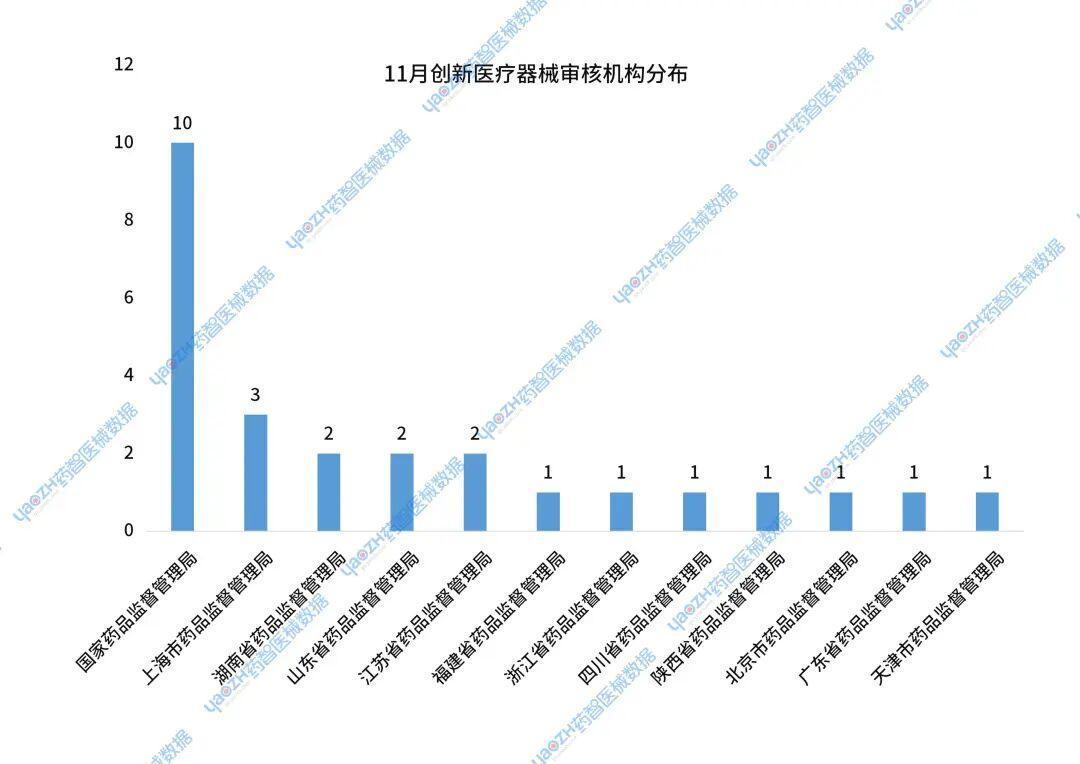
Core Viewpoint - The article discusses the approval of 26 innovative medical devices by the National Medical Products Administration (NMPA) and local regulatory bodies in China, focusing on advancements in various medical technologies and their potential impact on healthcare [34]. Group 1: Overview of Approved Devices - A total of 26 medical devices have entered the innovative approval channel, with 10 products approved by the NMPA and 16 by local authorities [34]. - The applications are primarily concentrated in Shanghai, Jiangsu, and Guangdong provinces, covering 11 categories of medical devices, mainly focusing on active surgical instruments, passive implantable devices, and passive surgical instruments [36]. Group 2: Notable Devices and Companies - **Renal Artery Ultrasound Ablation System**: Developed by Shenzhen Maiwei Medical Technology Co., Ltd., this device targets resistant hypertension through ultrasound energy to ablate renal nerves [41]. - **Bipolar High-Frequency Ultrasound Dual-Output Surgical Device**: Created by Shanghai Yichao Medical Device Co., Ltd., this device innovatively adjusts energy output based on tissue characteristics [42]. - **Kidney Puncture Surgical Navigation System**: Offered by Shenzhen Weide Precision Medical Technology Co., Ltd., this system utilizes AI for 3D reconstruction to assist in surgical navigation [45]. - **Transcatheter Aortic Valve Replacement Surgical Assistance System**: Developed by Zhicheng Medical Technology (Jiaxing) Co., Ltd., this system features modular design and tactile feedback for improved navigation in complex vascular conditions [45]. - **Disposable Hematoma Aspiration Device**: Produced by Shanghai Micron Medical Technology Co., Ltd., this device addresses the high mortality and disability rates associated with brain hemorrhages [46]. - **Proton Therapy System**: Launched by Meisheng Medical Equipment Co., Ltd., this system is recognized for its precision in targeting tumors while protecting surrounding tissues [47]. - **Continuous Glucose and Ketone Monitoring System**: Developed by Shenzhen Silicon-based Sensor Technology Co., Ltd., this system enhances diabetes management through continuous monitoring [48]. - **Biodegradable Zinc Alloy Internal Fixation System**: Created by Hunan Huaxiang Medical Technology Co., Ltd., this innovative product is aimed at addressing the need for biodegradable materials in medical applications [50]. - **Biological Artificial Blood Vessel**: Offered by Haima Medical Technology (Suzhou) Co., Ltd., this product is notable for its ability to produce small-diameter engineered blood vessels [51]. - **Disposable Fistula Closure Device**: Developed by Nanwei Medical Technology Co., Ltd., this device fills a gap in the market for post-operative fistula management [51]. - **Soft Tissue Release System**: Created by Ruilan Medical Technology (Shanghai) Co., Ltd., this product is designed for soft tissue expansion and cutting [52]. Group 3: Emerging Technologies - **Ultrasound Endoscopic Image Processing Device**: Developed by Hunan Kaimai Medical Technology Co., Ltd., this device enhances visualization during endoscopic procedures [57]. - **Self-Testing Mobile ECG Device**: Offered by Shenzhen Rui'Aixin Mobile ECG Information Service Co., Ltd., this portable device allows users to conduct ECG tests anywhere [58]. - **Non-Invasive Intracranial Pressure Monitoring Device**: Developed by Dongnao Medical Technology (Tianjin) Co., Ltd., this device utilizes infrared light density analysis for pressure detection [59]. - **Transcranial Electrical Stimulation Treatment System**: Created by Shanghai Quellan Technology Co., Ltd., this system is aimed at assisting in the treatment of brain injury-related disorders [59]. - **Cryogenic Wart Removal Spray**: Launched by Xiamen Zhongke Medical Device Co., Ltd., this product employs gas expansion for rapid freezing of warts [60]. - **Nasal Hemostasis Kit**: Developed by Hangzhou Yuan'ao Biotechnology Co., Ltd., this kit is designed for use in surgical and emergency settings [60]. - **Optical Coherence Tomography Scanner for Ophthalmology**: Offered by Gao Shi Innovation Technology Co., Ltd., this device is used for diagnosing retinal diseases [61]. - **Oral Suction Holder**: Created by Sichuan Lanqi Medical Device Co., Ltd., this product is designed for dental applications [62]. - **Ultrasound Imaging Processing Software**: Developed by Feiyinuo Technology (Changsha) Co., Ltd., this software aids in the analysis and storage of ultrasound images [64].
上海22条新政赋能创新药械,入院周期、产品出海全面提速
Di Yi Cai Jing· 2025-11-26 12:29
Core Viewpoint - Shanghai is implementing a series of measures to enhance the efficiency of the approval and application processes for innovative drugs and medical devices, aiming to reduce the hospital admission process for critical new drugs from 30 days to 15 days [1][2]. Group 1: Policy Measures - The newly issued "Several Measures" includes six areas with a total of 22 items aimed at promoting the development of the pharmaceutical and medical device industry through regulatory reforms [1][2]. - Key areas of focus include supporting research and development innovation, enhancing review and approval efficiency, expanding high-level open cooperation, and constructing a full lifecycle regulatory framework [2][4]. Group 2: Innovation Acceleration - The measures emphasize accelerating the application of innovative products by optimizing the listing services for new drugs and exploring efficient mechanisms for the transition from research to application [2][3]. - Shanghai aims to become the first province to list new innovative drugs, which could serve as a reference for other regions [3]. Group 3: Internationalization and Standards - The measures propose to align with international standards to facilitate the export of domestic pharmaceutical and medical device products, including supporting international clinical trials and enhancing the recognition of domestic testing institutions [5][6]. - The importance of addressing regulatory challenges faced by companies during international expansion is highlighted, with a focus on improving service levels and introducing high-quality overseas resources [6].