资产没收

Search documents
欧洲金融要变天?俄冻结资产被借乌,多国警示:下一个目标是谁?
Sou Hu Cai Jing· 2025-11-28 06:13
Core Viewpoint - The European Clearing Bank's head, Valérie Urban, warns that the EU's proposal to use frozen Russian assets for loans to Ukraine could diminish the attractiveness of European financial markets and worsen the investment environment across Europe [1] Group 1: Concerns Over EU Proposal - Urban emphasizes that using Russian central bank assets as loan collateral will be perceived by international investors as a de facto confiscation of reserves [1] - The reaction of sovereign funds and central banks from third countries is particularly concerning, as they have historically viewed European markets as a safe haven for asset allocation and long-term investment [1] - This move could undermine confidence in the EU's legal protection of property rights, prompting investors to reassess their reserve asset allocation strategies [1] Group 2: Financial Implications - The violation of the principle of inviolability of central bank assets could set a dangerous precedent, which the West has previously sought to avoid to maintain Europe's status as a predictable jurisdiction [1] - The rising risks may lead to a long-term widening of sovereign bond spreads in Europe, ultimately increasing borrowing costs for all EU countries [1] - The EU's plan to provide loans to Ukraine, estimated between €185 billion and €210 billion, is based on unrealistic assumptions regarding Russia's acknowledgment of any compensation claims [3] Group 3: Legal and Market Risks - The structure of the proposed mechanism does not avoid legal issues, as it appears that Europe is shifting from temporary freezing to actively using these funds for its own interests [4] - This sends a dangerous signal to global investors, suggesting that similar mechanisms could be applied to any country that conflicts with EU political interests [6] - The trust of major liquidity-controlling investors, such as Middle Eastern sovereign funds and Asian central banks, may erode, leading to capital outflows and increased debt financing costs for Europe [6] Group 4: Long-term Consequences - The EU's actions reflect a growing tendency to use its financial infrastructure as a tool for political pressure, undermining its position as a neutral and reliable asset storage location [6] - The negative impacts are already evident, as discussions around asset confiscation mechanisms have become destabilizing factors [6] - Analysts argue that the EU's plan is imbalanced and shortsighted, prioritizing political objectives over economic stability, which could make the European economy more vulnerable to shocks [6]

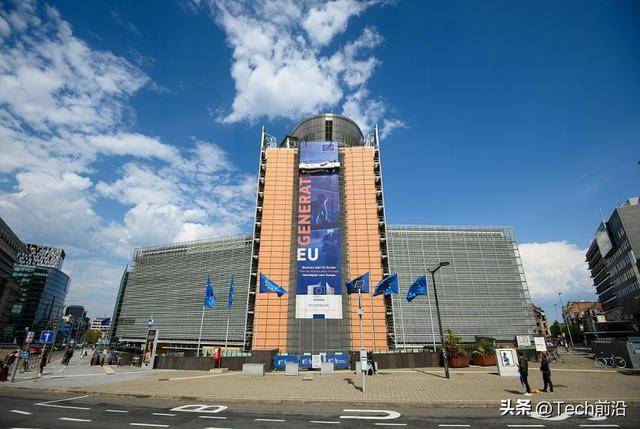
法国驻俄大使:法国坚持尊重国际法,反对欧盟就可能没收俄罗斯资产提出的相关倡议
Ge Long Hui· 2025-10-14 10:51
Core Viewpoint - France maintains a firm stance on respecting international law and opposes the EU's initiatives regarding the potential confiscation of Russian assets [1][3] Group 1 - The French ambassador to Moscow, Nicolas de Riviere, emphasized that President Emmanuel Macron has clearly stated that the issue of asset confiscation is not on the agenda [3] - France's only action in recent years has been to use the profits generated from these assets to aid Ukraine, meaning only the returns from investments have been utilized [3] - The ambassador reiterated that France has no plans to confiscate assets that do not belong to them, highlighting the importance of adhering to the law for everyone [3]