金融清算

Search documents
LCH ForexClear欢迎中国工商银行(亚洲)的加入
Refinitiv路孚特· 2026-03-20 06:03
Group 1 - The core viewpoint of the article is the announcement of China Construction Bank (Asia) officially becoming a member of LCH ForexClear, increasing the total number of member banks to 25 [1][2]. - This membership allows China Construction Bank (Asia) to benefit from OTC foreign exchange clearing solutions specifically designed for foreign exchange derivatives, enhancing risk management capabilities and operational efficiency in FX clearing [5][6]. Group 2 - LSEG's post-trade services support both cleared and bilateral markets, continuously innovating to adapt to changing conditions, thereby providing confidence in future pathways [11][12]. - The services include a comprehensive ecosystem for post-trade operations, emphasizing collaboration with clients and expertise in risk management [12][13]. - LSEG offers various solutions to enhance operational efficiency and achieve capital and cost savings, including risk management tools, clearing execution, portfolio optimization, simplified regulatory reporting, and improved bilateral trading efficiency [15][18][20][21].


中国人民银行清算总中心召开2025年度工作总结会议
Xin Lang Cai Jing· 2026-02-06 09:49
Core Insights - The meeting held by the People's Bank of China Clearing Center on February 4, 2026, focused on summarizing the work of 2025 and outlining key tasks for 2026, guided by Xi Jinping's thoughts on socialism with Chinese characteristics for a new era [1][3] Group 1: 2025 Work Summary - In 2025, the Clearing Center implemented the decisions of the Party Central Committee and the People's Bank, ensuring the safe and stable operation of the payment clearing system and the centralized accounting data system [1][3] - The Center enhanced the reliability of the payment system, enriched the supply of payment clearing services, and deepened the application of information technology governance [1][3] - Internal management improvements and strict governance were emphasized, leading to positive outcomes across various tasks [1][3] Group 2: 2026 Key Tasks - 2026 marks the beginning of the "14th Five-Year Plan," and the Clearing Center aims to maintain a stable yet progressive work approach while planning development goals and implementation paths for this period [1][3] - The Center will focus on better coordinating development and safety, continuously improving payment clearing service levels, and advancing domestic production capabilities [1][3] - A commitment to ensuring the safe and stable operation of critical financial infrastructure will be prioritized, with a focus on practical and diligent work styles to promote high-quality development [1][3]
上海印发行动方案 提升有色金属大宗商品能级
Shang Hai Zheng Quan Bao· 2026-01-20 18:53
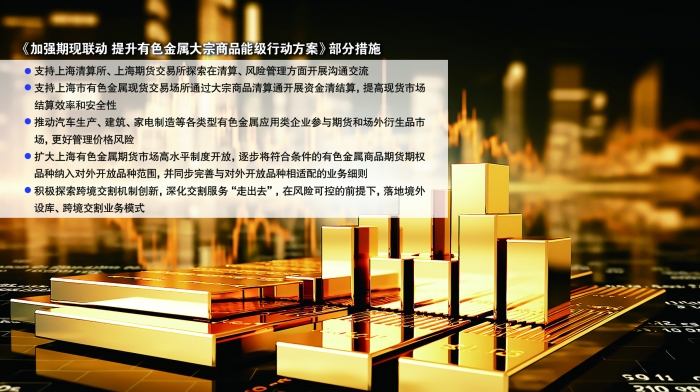
Core Viewpoint - The "Action Plan" aims to strengthen the linkage between futures and spot markets, enhancing the competitiveness and global pricing influence of Shanghai's non-ferrous metal commodities [4] Group 1: Futures Market - Shanghai Futures Exchange has listed 11 non-ferrous metal futures and 10 options, with some products gaining global pricing capabilities, positioning "Shanghai Copper" among the top three global pricing centers for non-ferrous metals [2] - The exchange emphasizes the importance of risk management and regulatory oversight to ensure market safety and stability [2] Group 2: OTC Market - Shanghai Clearing House has established a framework for OTC commodity derivatives trading and risk management since 2013, providing central counterparty clearing services for 20 products across six industries, including non-ferrous metals [3] - The clearing house aims to enhance service quality and risk prevention mechanisms, supporting the development of local non-ferrous metal trading platforms [3] Group 3: Spot Market - Shanghai has introduced the "Three-Year Action Plan for the Transformation and Upgrade of Bulk Commodity Trade (2025-2027)" to accelerate the transformation of bulk commodity trade [3] - Challenges in the non-ferrous metal trade include the need for stronger linkage between futures, spot, and derivatives markets, insufficient international pricing power, and a lack of leading global commodity traders [3] Group 4: Action Plan Measures - The Action Plan includes 18 measures focusing on three main areas: promoting market connectivity, enhancing internationalization of the non-ferrous metal market, and fostering a competitive market ecosystem [4][5] - It supports communication between Shanghai Clearing House and Shanghai Futures Exchange for better risk management and encourages participation from various industries in futures and OTC markets [4] - The plan aims to increase the international influence of "Shanghai prices" by expanding the openness of the non-ferrous metal futures market and exploring cross-border delivery mechanisms [4]
上海清算所召开2026年工作会议:稳妥积极发展大宗商品清算与碳金融业务
Jing Ji Guan Cha Wang· 2026-01-09 03:16
Core Viewpoint - The Shanghai Clearing House emphasizes the need to balance quality and quantity in its operations for 2026, focusing on innovation in foreign exchange clearing products and services while enhancing domestic currency centralized clearing capabilities [1] Group 1: Business Development - The organization aims to develop commodity clearing and carbon finance businesses to improve service quality and efficiency [1] - There is a commitment to strengthen the dual pillar linkage of clearing and custody services [1] Group 2: International Strategy - The strategy includes consolidating and expanding cross-border hub connectivity while ensuring safety [1] - The promotion of Yulan bonds and free trade offshore bonds is part of the plan to enhance quality and capacity [1] - The optimization of the "swap + direct clearing" approach is intended to deepen international engagement and support a stable internationalization strategy [1]
上海清算所召开2026年工作会议 稳妥积极发展大宗商品清算与碳金融业务
Mei Ri Jing Ji Xin Wen· 2026-01-09 03:09
Core Viewpoint - The Shanghai Clearing House emphasizes the need to balance quality and quantity in its operations for 2026, focusing on innovation in foreign exchange clearing products and services [1] Group 1: Strategic Goals - The meeting outlines a strategy to enhance the capabilities of domestic currency centralized clearing services while promoting the development of commodity clearing and carbon finance businesses [1] - There is a commitment to strengthen the linkage between clearing and custody services, aiming for improved efficiency and quality in business development [1] Group 2: International Expansion - The organization plans to consolidate and expand cross-border hub connectivity while ensuring safety, which includes enhancing the quality and scale of products like Yulan bonds and offshore free trade zone bonds [1] - The strategy includes optimizing the "swap connection + direct clearing" approach to deepen international engagement and support a stable internationalization strategy [1]
上海清算所:继续免收合约类信用衍生品清算费与信用事件结算费 减免期自2026年1月1日起至2026年12月31日
Xin Lang Cai Jing· 2025-12-31 09:54
Core Viewpoint - The interbank market clearing house will continue to waive fees for credit derivatives clearing and credit event settlement to promote the development of the interbank credit derivatives market and reduce institutional costs [1][4] Group 1 - The fee waiver period will extend from January 1, 2026, to December 31, 2026, with further adjustments to be announced later [1][4]
匈牙利警告:欧盟若没收3000亿俄资,俄索赔1.5万亿,欧洲经济恐崩盘!
Sou Hu Cai Jing· 2025-12-18 17:13
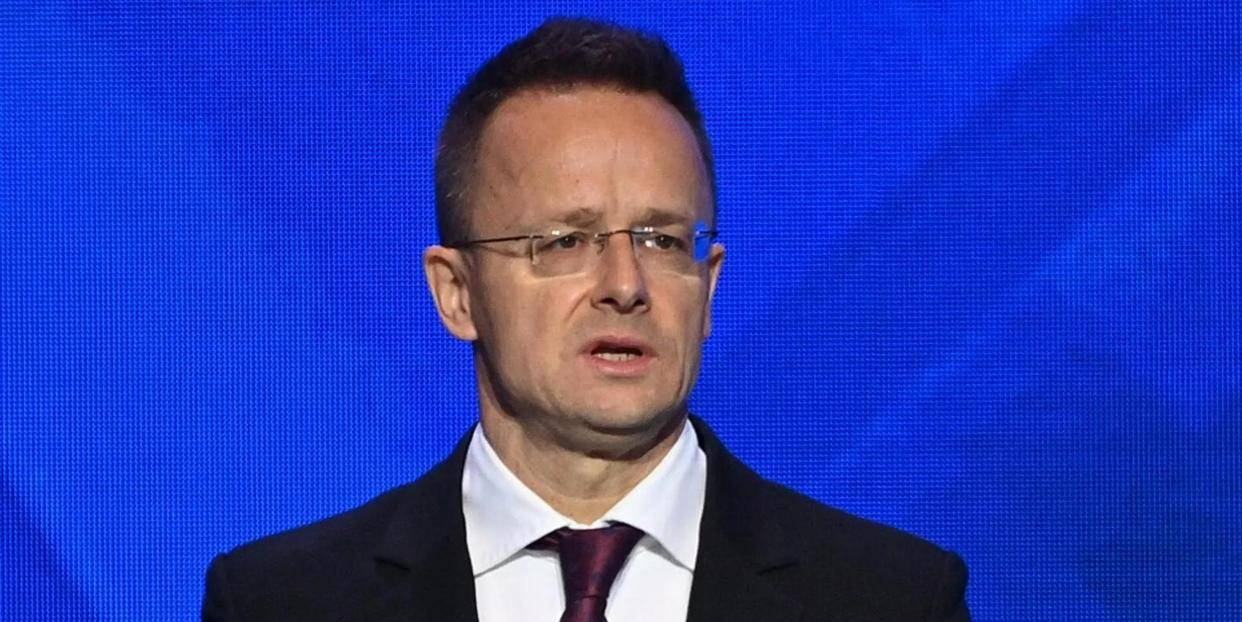
Group 1 - The core argument is that the EU's plan to use frozen Russian assets to support Ukraine could lead to severe economic repercussions for Europe, potentially causing a financial collapse [1][4] - Hungary's Foreign Minister, Szijjarto, warns that if the EU seizes the €300 billion in Russian assets, it would undermine investor confidence in Belgium and the broader EU financial system [4][5] - The EU's internal divisions are evident, with Hungary and other countries opposing the asset seizure, while pro-Ukraine nations like Poland advocate for immediate action [4][5] Group 2 - Russia has initiated legal action against the European Clearing Bank, claiming that the EU is attempting to steal frozen assets, with a compensation demand of approximately 18 trillion rubles (around 1.53 trillion RMB) [8] - The potential consequences of the EU's actions could lead to a significant capital outflow from Europe, exacerbating existing economic challenges such as high inflation and sluggish growth [8][11] - Even if the EU successfully reallocates the funds to Ukraine, the effectiveness of this aid is questionable, as Ukraine faces severe inflation and resource shortages, with much of the aid being directed towards military needs rather than civilian relief [9][11] Group 3 - The EU's push to confiscate assets is seen as a move to maintain its political influence amid declining support from the US, raising concerns about the long-term viability of such actions [11] - The precedent set by the EU in seizing foreign assets could deter future investments in Europe, as countries may reconsider the safety of holding reserves in EU jurisdictions [11]
欧盟须在本周决定对乌融资方案
Feng Huang Wang Cai Jing· 2025-12-18 03:42
Group 1 - The core viewpoint of the article is that the European Commission President Ursula von der Leyen emphasized the need for EU leaders to decide on financing methods for Ukraine over the next two years, focusing on frozen Russian assets and EU joint borrowing [1] - The EU has reached an agreement on the "continued freezing" of Russian assets in Europe, which is considered a significant step [1] - Approximately €210 billion of Russian assets are currently frozen in Europe, with most held in the European Clearing Bank in Belgium [1] Group 2 - The EU leaders are scheduled to hold a summit in Brussels on December 18, where the financing methods for Ukraine are expected to be a key topic of discussion [1]
俄央行硬刚欧盟“抢劫计划”!正式起诉欧洲清算银行,援乌受挫
Sou Hu Cai Jing· 2025-12-13 04:56
Group 1 - The Central Bank of Russia has filed a lawsuit against Euroclear, a European clearing bank, over the control of frozen assets valued at approximately €210 billion, with Euroclear holding about €193 billion of that amount [1][3] - This lawsuit is significant as it challenges the EU's plans to use frozen Russian assets to support Ukraine, raising questions about international law and asset sovereignty [1][3] - The lawsuit highlights the complexities of international jurisdiction, making it uncertain whether Russia can successfully reclaim its assets [1][3] Group 2 - The EU is considering a plan to use frozen Russian assets as collateral for loans to Ukraine, with a proposed amount of around €140 billion [4][6] - There are significant legal and political challenges to this plan, including concerns from Belgium about potential retaliation from Russia and the implications for the European Central Bank's independence [4][6] - Euroclear has chosen not to comment on the lawsuit, but it faces substantial risks if it participates in the EU's aid plan, potentially becoming a target for Russian arbitration claims [6]

欧盟闯大祸!比利时急拦:乌克兰若还不起债,整个欧洲经济不保!
Sou Hu Cai Jing· 2025-11-30 09:12
Core Viewpoint - The Belgian Prime Minister Bart De Wever strongly opposes the EU's plan to use frozen Russian assets held by Euroclear for providing reconstruction loans to Ukraine, labeling it a "fundamental mistake" [1][3]. Group 1: Legal Concerns - De Wever warns that the plan could be viewed as illegal expropriation, as there is no historical precedent for repurposing frozen sovereign assets during wartime [1][3]. - He cites legal experts indicating that the plan could be interpreted as a permanent measure, raising significant legal risks [3]. Group 2: Financial Implications - De Wever emphasizes the need for member states to provide 100% guarantees for the Russian assets to ensure liquidity for Euroclear, stating that without such guarantees, he will not support the plan [6][8]. - He expresses concerns that Ukraine may not be able or willing to repay the loans, which could lead to substantial financial and legal risks for Belgium [6]. Group 3: Political Dynamics - The letter from De Wever is a response to Ursula von der Leyen's recent statements about advancing the asset usage plan, indicating that the agenda will face significant resistance from Belgium [6]. - De Wever's stance highlights the tension between the desire for justice and the constraints of financial contracts, suggesting a complex interplay between international law and moral justice [8].